
A U.S. appeals court has allowed Perplexity AI to use its shopping tools on Amazon's platform, marking the first major federal ruling on how AI agents can access major online marketplaces.
The decision limits Amazon's ability to block third-party AI tools and raises questions about platform security and data access.
For Amazon, the ruling is less about short-term revenue and more about control — the company must now balance the risk of appearing too restrictive against potential benefits, especially as competitors like Walmart and Costco also invest in AI-driven shopping.
What happened
A U.S. appeals court overturned a previous ruling and allowed Perplexity to use its AI shopping tools on Amazon's platform. This is the first federal appellate decision on how AI agents may access and operate on major online marketplaces.
Why it matters
The ruling limits Amazon's control over third-party tools on its marketplace, raising questions about platform security, data access, and how AI agents shape the shopping experience. Amazon now must balance the legal risk of appearing too restrictive against potential benefits for customers and sellers, especially as competitors like Walmart and Costco invest in AI-driven shopping.
What to watch
The decision could influence how Amazon sets rules for external tools and may prompt policy changes across the marketplace. Investors should monitor how Amazon manages security and compliance demands if more AI agents operate on its platform, and whether the company's margins and infrastructure costs are affected.
Ask the AI about this article →
The appeals court decision represents a watershed moment for AI integration into major e-commerce platforms. By allowing Perplexity's shopping agents to operate on Amazon, the court has signaled that marketplace operators cannot use broad anti-hacking laws or terms of service to exclude AI tools that do not pose a clear security threat. For Amazon, the ruling challenges a long-standing competitive advantage: the company's ability to control which third-party tools and services integrate with its platform. Historically, Amazon has used this gatekeeping power to protect user data, ensure quality, and maintain margins — but the court has decided those interests, while legitimate, do not extend to blanket prohibition of AI agents.
The practical implications cut in multiple directions. On one hand, allowing Perplexity and potentially other AI agents to shop on Amazon could increase transaction volume and reinforce Amazon's role as core infrastructure for online commerce. On the other hand, the ruling opens new compliance and security demands: Amazon will need to monitor how these agents access data, handle user sessions, and interact with the marketplace without degrading the shopping experience for human customers. The body notes that this touches directly on Amazon's narrative around AI efficiency and automation — but it also complicates the company's margin story, because infrastructure and compliance costs will likely rise if third-party agents become a significant share of marketplace traffic.
For example, today's edition would include:
AI-summarized, only the topics you pick — one digest a day via Email, Slack, or Discord.
Free · takes 30 seconds · unsubscribe anytimeWhat is AIToday? →
Ask AI anything about this article. Q&As are published on this page for other readers too.
Israeli startup DataAgent Ltd

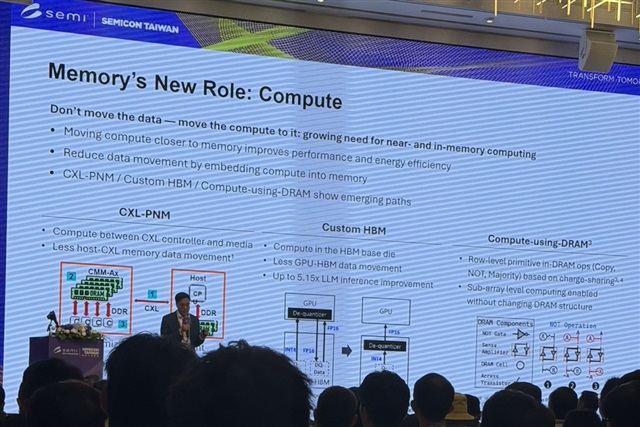
SK Hynix presented a custom HBM concept at SEMICON Taiwan 2026, where compute functions are placed in the base…
Taoyuan is positioning itself as a northern hub for AI data centers (AIDC), citing the Tatan area and an LNG c…
The U.S. Department of Defense announced on August 31 that it has deployed ChatGPT Mil, a customized version o…

Nvidia reported earnings that were both remarkable and boring, reflecting its focus on avoiding a consolidated…

Anthropic has agreed to a $35bn cloud-computing contract with Lambda, a Nvidia-backed cloud provider