Tomofun, a Taiwan-headquartered pet-tech startup behind the Furbo Pet Camera, migrated its pet behavior detection inference workloads from GPU-based Amazon EC2 instances to EC2 Inf2 instances powered by AWS Inferentia2 to reduce costs while maintaining accuracy for always-on monitoring across hundreds of thousands of devices.
The BLIP vision-language model (a model that interprets images and generates text descriptions) was decomposed into three components—Image Encoder, Text Encoder, and Text Decoder—each compiled independently using torch_neuronx and combined into the inference pipeline without altering the original pretrained logic, using lightweight wrapper classes to standardize inputs and outputs.
The architecture uses Elastic Load Balancing and EC2 Auto Scaling groups across two layers: one for API servers and one dedicated to model inference on Inf2 instances, with Amazon CloudWatch monitoring latency, throughput, and error rates to maintain service-level objectives as demand shifts.
Summaries like this, in your inbox every morning.
Pick your industry and the AI tools you use, and get news related to your work every day.
Free · 30 seconds with Google · unsubscribe anytimeWhat is AIToday? →
Ask AI anything about this article. The AI reads this article, earlier AIToday articles, and Wikipedia, and cites its sources. Q&As are published on this page for other readers too.
Cammarata reinterprets InceptionV1's cat-car neuron as a V-shape detector, not two unrelated concepts

Google Deepmind's Gemini 4 Argon scored 97.5 percent on ARC-AGI-3 at a cost of $4,800, second only to GPT-6 As…

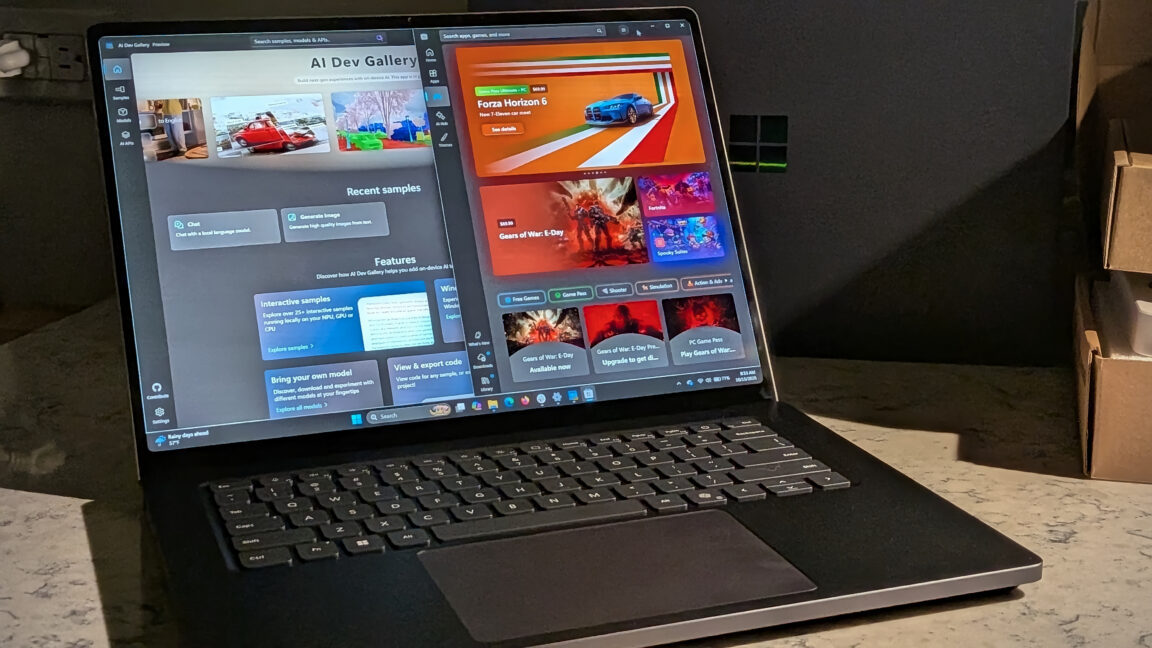
Microsoft's Surface Laptop Ultra, using Nvidia's RTX Spark platform, starts at $2,599 (up to $5,899)
Meta's new commercial terms, effective October 30th, appear to let it crawl and train AI on content from websi…

Vercel data published Thursday shows TypeSafe AI's Jev, a lightweight decision model for choosing among predet…

Reflection AI introduced Beam, an open-weight model for agentic coding and long-horizon tasks, with 501 billio…