What happened
Snowflake announced general availability of a redesigned Observe MCP (model context protocol) server and a new Observe CLI with full parity—every operation the MCP exposes to agents is also available as a CLI command. General availability is rolling out now across all clusters; eu-2 and ca-1 will follow shortly.
Why it matters
Observability platforms must now serve both humans and AI agents. The new tools let agents query production telemetry directly without human intervention—coding assistants can investigate errors, AI SREs can correlate failures across services, and custom alert-triage agents can automatically pull debugging context when alerts fire. This means observability data is now accessible through APIs, MCP, and the CLI, not just the UI.
What to watch
The redesigned MCP server removes the LLM intermediary from the old architecture, reducing latency and cost—agents now connect directly to Observe's APIs instead of sending queries to a single endpoint where Observe's LLM interpreted questions. Both the CLI and MCP server ship with prebuilt skills for common observability workflows (incident investigation, failure tracing, outlier detection) that work immediately after configuration.
Summaries like this, in your inbox every morning.
The shift toward AI agents consuming telemetry represents a fundamental change in how observability platforms function. Historically, telemetry systems were built primarily for human operators reading dashboards and logs; the new requirement is that these systems also expose data to AI agents through programmatic interfaces. Snowflake's announcement reflects this reality: engineers are already building custom alert-triage agents and incident-investigation copilots, but the Observe platform was not originally designed to serve them efficiently.
The economic architecture of the old MCP server illustrates why this redesign matters. By embedding an LLM intermediary that interpreted agent queries before returning answers, Snowflake was duplicating reasoning work—the agent would form a question, send it to Observe's LLM, wait for an interpretation and answer, then potentially ask a follow-up. The new design drops this middleman, letting agents connect directly to Observe's backend APIs and reason over raw data themselves. This reduces both latency (fewer network hops) and cost (no redundant LLM call per query). The body notes that several engineering teams had already built workarounds to bypass this inefficiency, underscoring the market demand for direct access.
The parity between the MCP server and the new CLI is a pragmatic choice. By ensuring every operation available to agents through MCP is also available as a command-line command, Snowflake enables the same custom workflows to run in interactive terminal sessions, within agent environments like Claude Code, or even autonomously in the background without an engineer present. This flexibility supports both immediate incident response (an engineer guiding an investigation) and routine background tasks (autonomous error triage), broadening the platform's utility.
Pick your industry and the AI tools you use, and get news related to your work every day.
Free · 30 seconds with Google · unsubscribe anytimeWhat is AIToday? →
Ask AI anything about this article. The AI reads this article, earlier AIToday articles, and Wikipedia, and cites its sources. Q&As are published on this page for other readers too.
Cammarata reinterprets InceptionV1's cat-car neuron as a V-shape detector, not two unrelated concepts

Google Deepmind's Gemini 4 Argon scored 97.5 percent on ARC-AGI-3 at a cost of $4,800, second only to GPT-6 As…

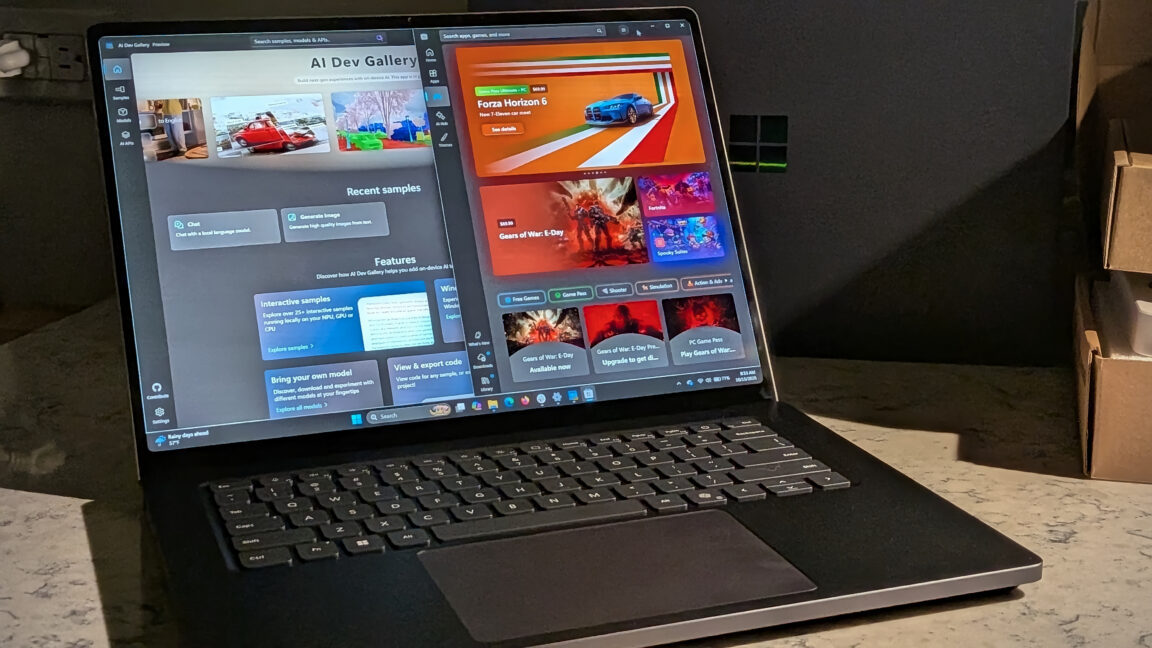
Microsoft's Surface Laptop Ultra, using Nvidia's RTX Spark platform, starts at $2,599 (up to $5,899)
Meta's new commercial terms, effective October 30th, appear to let it crawl and train AI on content from websi…
Vercel data published Thursday shows TypeSafe AI's Jev, a lightweight decision model for choosing among predet…

Reflection AI introduced Beam, an open-weight model for agentic coding and long-horizon tasks, with 501 billio…