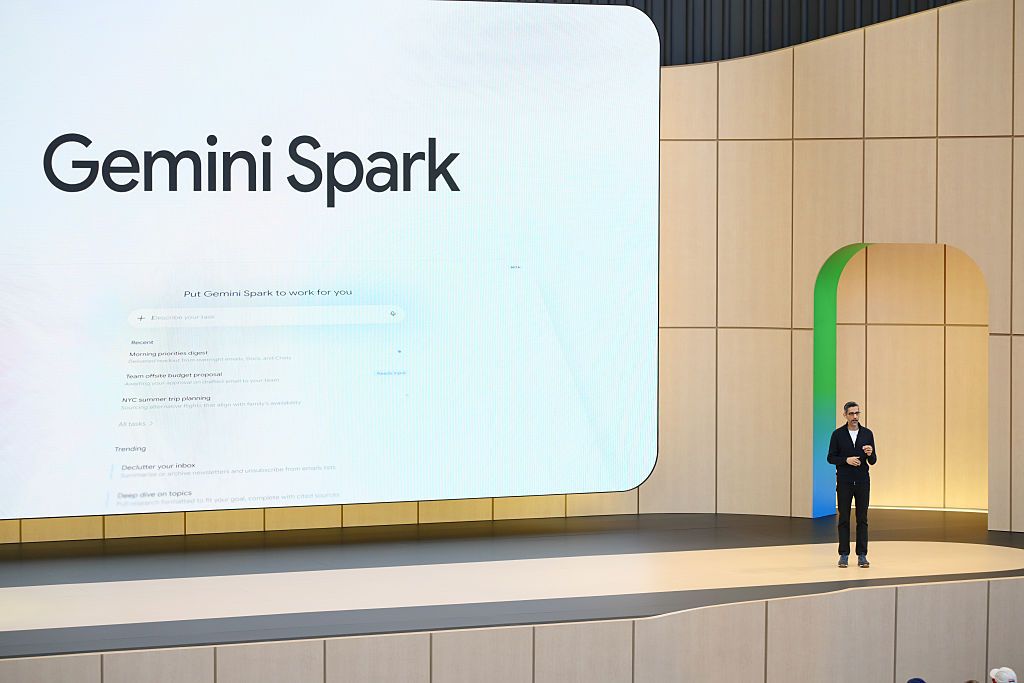
Google's Gemini app has a branding problem. It splits chat, Spark, and Daily Brief into separate features, confusing users.
Other AI apps like Claude and ChatGPT do the same.
Simpler approaches, like Apple's Siri updates and text-based AI services, may win over consumers instead.
What happened
Google announced new Gemini Live voice features on Wednesday, but its Gemini app now separates chat, Spark, and Daily Brief as distinct branded features with separate icons, making the experience more complex rather than simpler.
Why it matters
The fragmentation forces everyday users to learn brand names for what are essentially interaction modes, and the Daily Brief feature has been criticized for surfacing irrelevant or creepy suggestions like resurfacing old Google searches instead of only urgent, actionable items.
What to watch
Apple's approach with Siri—making existing features like Spotlight Search and Photos smarter without requiring new interfaces—and text-based AI services like Poke and Ollie may win consumers by avoiding this branding complexity.
Ask the AI about this article →
Google's Gemini announcement this week highlighted a growing tension in AI product design. The company promises simplicity—that users shouldn't guess which feature to use—but then structures the app around three separately-branded features: chat, Spark, and Daily Brief, each with its own icon and navigation slot. That internal architecture is exposed directly to consumers, forcing them to understand the product's engineering rather than just using it.
The problem extends beyond Google. Anthropic's Claude app splits interactions into "Chat" and "Cowork" modes, which until this week didn't even share memory. ChatGPT similarly requires swapping between "Chat" and "Work." This pattern suggests the AI industry is optimizing for internal team structures rather than user experience. Meanwhile, a16z investment partner Justine Moore noted that people want a contact they can text like a friend, with iMessage as the gold standard. That observation helps explain why text-based AI services are rising and why Apple's understated approach to Siri—enhancing existing tools without new interfaces—may ultimately prove more consumer-friendly.
AI-summarized, only the topics you pick — one digest a day via Email, Slack, or Discord.
Free · takes 30 seconds · unsubscribe anytime
Ask AI anything about this article. Q&As are published on this page for other readers too.
Netflix is making a competition reality show based on Willy Wonka & the Chocolate Factory, and it will use AI…
JPMorgan has softened its stance on share-backed loans, as reported by Private Banker International, to target…

Palantir CEO Alex Karp said at a company boot camp last week that society cannot accept all AI value going to…

Goldman Sachs has deployed AI agents in its banking operations, but they are proving difficult to fully replac…
Google has moved its AI-responsibility team out of the DeepMind lab, according to an exclusive report by The W…
Mark Zuckerberg had a bold plan to replace Meta staff with AI, but the plan imploded, according to the article