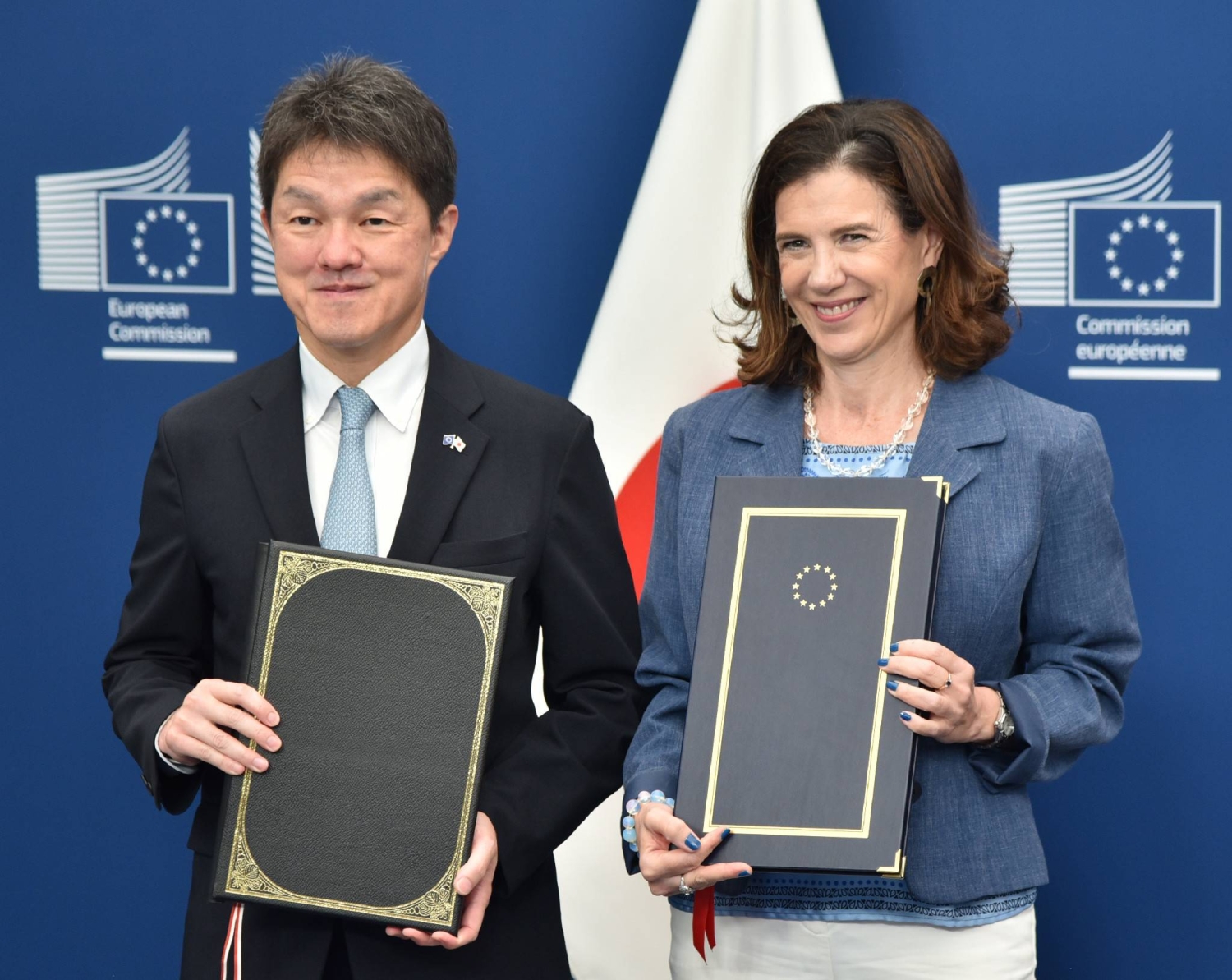
What happened
Japan signed an agreement on Thursday to become an associated country in the European Union's Horizon Europe research and innovation program, which runs through 2027 with a budget of €93.5 billion. This makes Japan the 23rd non-EU country or territory to join the framework, alongside 22 others including Canada and South Korea.
Why it matters
Japanese companies, universities, and research institutions can now apply directly for EU funding and lead projects—capabilities they lacked as mere third-country participants. Previously they faced funding limitations and could not take leading roles; as an associated member, they gain full access to eligible funding and can act as project coordinators, opening doors to international collaboration in digital technology, renewable energy, and other fields.
What to watch
The agreement covers research across digital technology and renewable energy among other fields through 2027. Takashi Hamada, Japan's charge d'affaires at the EU Mission, said the deal will strengthen research and innovation ecosystems through enhanced researcher exchanges and joint projects.
Summaries like this, in your inbox every morning.
Japan's move to join Horizon Europe as an associated country represents a formal upgrade in its research partnership with the European Union. Until now, Japanese entities could participate in EU research projects but only as peripheral partners without direct funding access or project leadership opportunities. This structural barrier was a constraint on deeper scientific collaboration, particularly as both regions prioritize innovation in digital technology and renewable energy. By formalizing Japan's status, the EU signals that Japanese institutions are valued as equal partners rather than external contributors. The timing reflects broader momentum in bilateral research ties; Japan now joins a consortium of 22 other non-EU countries already embedded in the framework, a network that includes Canada and South Korea—both major innovation economies competing in overlapping research domains.
Pick your industry and the AI tools you use, and get news related to your work every day.
Free · 30 seconds with Google · unsubscribe anytimeWhat is AIToday? →
Ask AI anything about this article. The AI reads this article, earlier AIToday articles, and Wikipedia, and cites its sources. Q&As are published on this page for other readers too.

