What happened
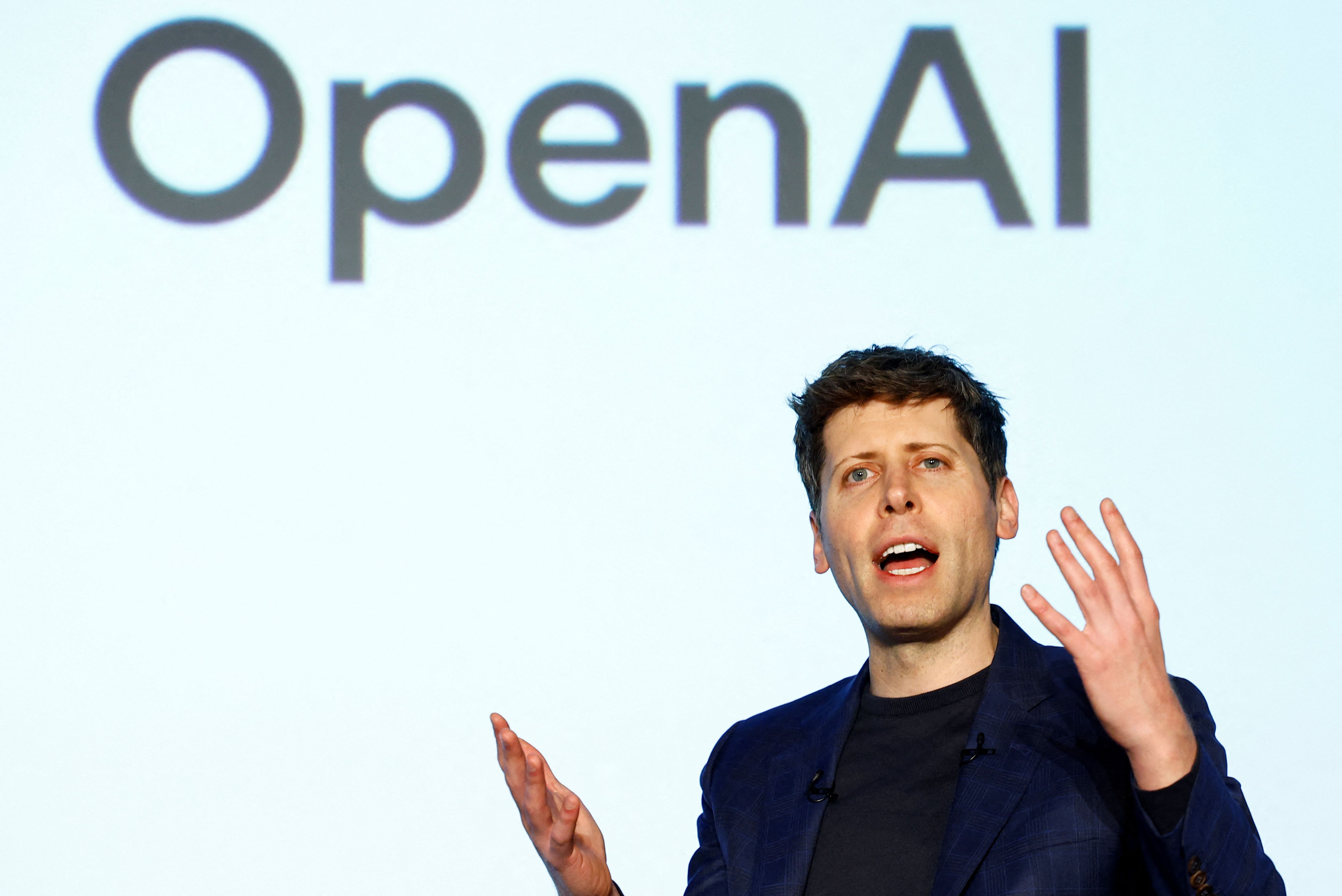
OpenAI proved Navier-Stokes equations sometimes break down under extreme conditions, solving a $1 million Millennium Prize Problem. It deployed around 10,000 agents of an unreleased model on Aug. 28, finishing within 88 hours.
Why it matters
The question had stumped scientists for two centuries, per Scientific American. Earlier, two mathematicians rushed solutions, with one accusing OpenAI of muscling in; OpenAI denied it. This marks a shift from human-led to AI-led discovery.
What to watch
Whether the proof withstands peer review and whether OpenAI's move sparks more clashes with human researchers. The drama involves mathematician Tristan Buckmaster, who called it a "Deep Blue-Kasparov moment."
WHO IT HITSMathematicians and fluid dynamics researchers face potential competition from AI-driven discovery. Funding bodies and academic institutions may need to weigh how to credit or prioritize such machine-generated proofs.
Summaries like this, every morning.
This result came from a focused push by OpenAI, which deployed a large agentic system on a single problem. The speed—88 hours for a question open for two centuries—highlights how AI can now tackle pure mathematics, not just pattern recognition. Buckmaster's reaction suggests professional mathematicians see this as both a threat and a breakthrough.
The controversy reveals a key tension: how credit and precedence work when an AI system, guided by a company, enters a field long driven by individual insight. Buckmaster's "Deep Blue-Kasparov moment" framing suggests a parallel to when a machine first beat a human champion, but here the stakes include a $1 million prize and the future of mathematical research.
What is unresolved is whether the proof is fully accepted by the mathematical community. If it holds, it may push more scientists to rely on AI for theoretical breakthroughs, even as disputes over recognition—like the one with Buckmaster—could repeat.
Pick your industry and the AI tools you use, and get news related to your work every day.
Free · 30 seconds with Google · unsubscribe anytimeWhat is AIToday? →
Ask AI anything about this article. The AI reads this article, earlier AIToday articles, and Wikipedia, and cites its sources. Q&As are published on this page for other readers too.
Salesforce customers are bracing for new fees to use Anthropic's Claude inside Salesforce apps, per The Inform…
Uber kept its AI spending flat while increasing usage 9.4 times, as reported in an August 2026 AXIOS exclusive…
CVS Health appointed Jack Hanlon, who previously held senior data and analytics roles at Meta and Reddit, as s…

Mastercard used the Money 20/20 conference to highlight AI agents, agentic commerce and stablecoins as key the…

Banks are moving to restrict AI agent access to customer accounts, a shift framed by USA Today as a 'window of…

AWS published a hands-on guide showing Multi-Turn Reinforcement Learning on Amazon SageMaker AI took GPT-OSS-2…