What happened
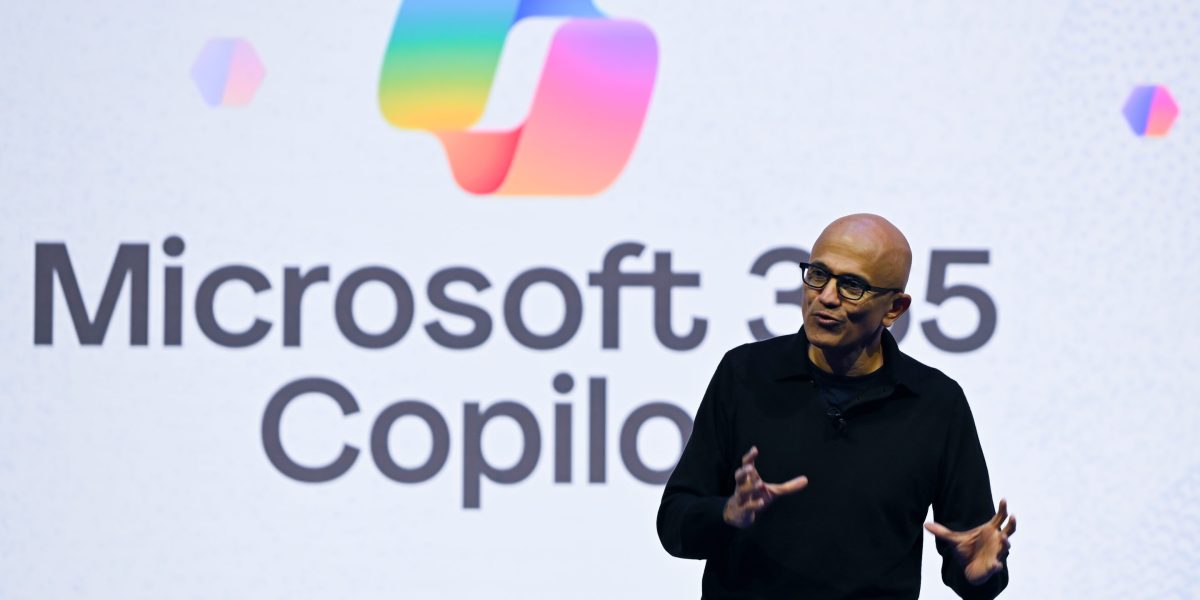
Microsoft has begun integrating its consumer and enterprise Copilot applications into a unified platform, starting this week with a subset of users. The rollout includes changes to navigation, feature availability, and sign-in experience, with color-coded cues to distinguish business and personal accounts. Beginning Aug. 18, some consumer Copilot features—including Podcasts, Group Chat, and Deep Research—will be discontinued, and the Microsoft 365 app will be renamed "Microsoft Copilot."
Why it matters
The integration is the opening phase of Microsoft's push to launch a super app featuring chat, GitHub Copilot coding tools, the Copilot Cowork tool, and a new agentic workflow capability called Autopilot. This effort is central to Microsoft's strategy to compete with market leaders like Anthropic and OpenAI while expanding its enterprise business, which reached over 30 million paid seats for its 365 Copilot service. The project is being led by Jacob Andreou, a 33-year-old executive whom CEO Satya Nadella is entrusting to strengthen Microsoft's AI strategy.
What to watch
Microsoft plans to release the super app within coming months. The company's Azure cloud business—which crossed $100 billion in annual revenue in its most recent quarter—remains its growth engine, though much of that growth stems from AI demand and OpenAI partnership revenue. Microsoft is simultaneously working to diversify its AI capabilities, having unveiled its first reasoning model, MAI-Thinking-1, this week and releasing a coding model that is 25% more efficient than its previous version.
Summaries like this, in your inbox every morning.
Microsoft's decision to unify its Copilot offerings reflects a strategic pivot to consolidate its fragmented AI product line and compete more effectively in a crowded market. The company has historically maintained separate consumer and enterprise applications, but the new super app design aims to streamline the user experience while capturing value across both segments. This move is particularly significant given that Microsoft's 365 Copilot service has already reached over 30 million paid seats, indicating substantial enterprise traction that the company wants to amplify.
The timing of this integration aligns with broader industry pressures. CEO Satya Nadella has recently emphasized the need for multiple AI models to address different challenges, acknowledging that no single model can solve all problems. Microsoft's unveiling of its first reasoning model, MAI-Thinking-1, and a 25% more efficient coding model this week signals the company's effort to diversify beyond its dependence on OpenAI. While Microsoft's Azure cloud business—which crossed $100 billion in annual revenue—remains robust largely due to AI demand and OpenAI partnership revenue, the company is clearly working to reduce that concentration risk by developing and promoting its own AI capabilities.
Pick your industry and the AI tools you use, and get news related to your work every day.
Free · 30 seconds with Google · unsubscribe anytimeWhat is AIToday? →
Ask AI anything about this article. The AI reads this article, earlier AIToday articles, and Wikipedia, and cites its sources. Q&As are published on this page for other readers too.
Hewlett Packard Enterprise stock is down 5% at $55.87

The Motley Fool argues Amazon is the AI company of the two, since AWS was just 21% of first-half 2026 revenue…

OpenAI is launching the Rosalind Academic Plan, offering eligible research labs at US universities up to 30 fr…

Google Deepmind's Gemini 4 Argon scored 97.5 percent on ARC-AGI-3 at a cost of $4,800, second only to GPT-6 As…

Cammarata reinterprets InceptionV1's cat-car neuron as a V-shape detector, not two unrelated concepts

Microsoft's Surface Laptop Ultra, using Nvidia's RTX Spark platform, starts at $2,599 (up to $5,899)