What happened
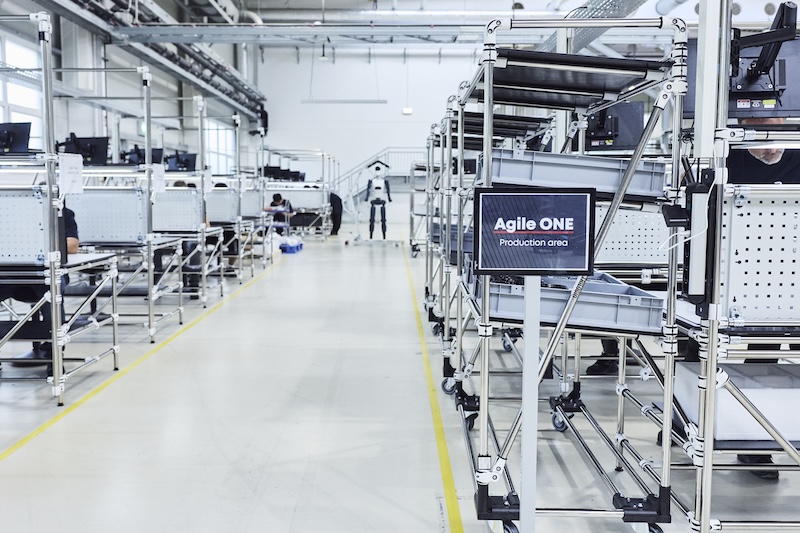
Agile Robots CEO Zhaopeng Chen said at the company's Physical AI Media Day that "physical AI is going to be 10x bigger than automotive," as its 174 cm, 69 kg humanoid Agile ONE entered initial production in Fürstenfeldbruck.
Why it matters
Agile Robots is betting its integrated body-brain-application stack and in-house training data can make humanoids practical for manufacturing and logistics, a claim that would put physical AI well beyond the automotive market's scale.
What to watch
Agile ONE is only in initial production, so its 20 kg payload and factory use depend on whether the company's data pipeline and deployments deliver. Agile Robots says it holds more than 650 patents across more than 25 sites.
WHO IT HITSManufacturers and logistics operators weighing humanoid and robotic arms for assembly, server assembly and material handling will see Agile Robots pitch an integrated hardware-and-AI stack. Robotics and automation engineers evaluating European suppliers may watch whether initial production in Fürstenfeldbruck scales.
Summaries like this, in your inbox every morning.
Agile Robots was founded in Munich in 2018 as a spin-off from the German Aerospace Center, or DLR, and has since grown into a company that operates more than 25 sites globally and says it holds more than 650 patents. At its Physical AI Media Day, it opened its engineering laboratories, Robots Academy and manufacturing operations to journalists, presenting a strategy it describes as a combination of body, brain and application. That framing matters because the company is trying to connect the physical robot to the AI models and the data that make it autonomous, rather than selling hardware alone.
The centerpiece is Agile ONE, a 174 cm humanoid that has entered initial production in Fürstenfeldbruck. The supporting infrastructure is the Robots Academy in Munich, which collects training data through teleoperation and human task demonstrations, adding to data from deployed robots, simulation and other visual sources. Agile Robots says its physical AI systems are already being used for variable production tasks, server assembly, intralogistics, material handling and dexterous manipulation.
Chen's prediction that physical AI will be 10x bigger than automotive is a claim about the eventual market, not a current measure. Whether it holds will likely depend on whether the company can turn initial production and its data-gathering setup into reliable, repeatable deployments for manufacturers and logistics operators. For those buyers, the practical test is whether Agile ONE's 20 kg payload and factory applications prove out over time.
Pick your industry and the AI tools you use, and get news related to your work every day.
Free · 30 seconds with Google · unsubscribe anytimeWhat is AIToday? →
Ask AI anything about this article. The AI reads this article, earlier AIToday articles, and Wikipedia, and cites its sources. Q&As are published on this page for other readers too.
ITRI said robotics is shifting from traditional automation equipment into a productivity tool for every indust…
Anthropic said that from October 6 onward, Cowork tasks on the Claude Pro and Max plans run in the cloud, and…

Itoki and Matsuo Institute analyzed anonymized data from 854 workers across 70 behavioral features, using VAR-…

Over the trailing five years, insiders at Nvidia, Palantir, and Alphabet filed Form 4s showing roughly $17.5 b…

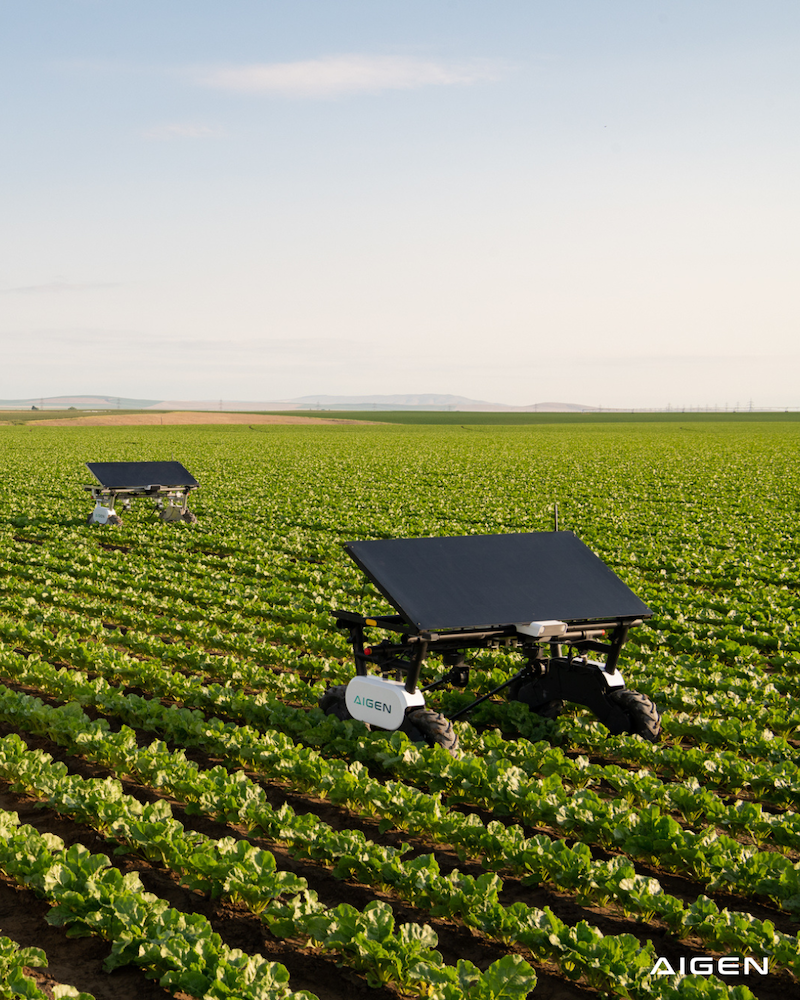
Aigen says Element learned lettuce in its Alchemy simulation, then deployed to the field in under a week
Cohere launched North 2, a revamped enterprise platform with orchestration that coordinates AI agents tapping…