
What happened
AI Security Lab ran ten tests (PI-062-01 to PI-062-10) on a mock internal RAG setup; after department-and-role Retriever controls, restricted documents stayed out of the LLM context, but personal mobile numbers still appeared in answers.
Why it matters
Filtering which documents a user can retrieve does not stop over-disclosure of sensitive fields inside permitted documents, so access control and output checks appear to need separate design.
Summaries like this, every morning.
The experiments move in stages. With no access control at all (PI-062-01), answers to a general user included personal mobile numbers, HR evaluation information and a mock API key from production-configuration documents. Simply telling the LLM a user's department and role (PI-062-02) left unauthorized documents retrievable, so the lab concluded authorization must be enforced by the application, with prompt instructions only as a supplement.
Once the Retriever filtered by department (PI-062-03) and then by role and document (PI-062-04), sales general staff could not retrieve manager-only sales strategy documents while sales-manager01 could. That did not solve disclosure within permitted documents: sales general staff could still obtain personal mobile numbers from customer-contact documents they were allowed to see. The lab separates three questions that a final answer alone cannot distinguish — whether retrieved documents are authorized, whether the documents actually passed to the LLM are authorized, and whether the answer itself is appropriate and grounded.
In the prompt comparison (PI-062-10), the hardened prompt instructing the model to treat retrieved text as untrusted data coincided with fewer personal-number outputs, but the baseline also produced no attack markers, so the lab could not confirm improved injection resistance and noted that hardened runs still generated sales measures, plans and ROI/KPI specifics unsupported by source documents. It recommends authentication, Retriever authorization, context logging, prompt instructions and output validation as separate controls, and cautions that the results do not prove safety across all paths or inputs.
Pick your industry and the AI tools you use, and get news related to your work every day.
Free · 30 seconds with Google · unsubscribe anytimeWhat is AIToday? →
Ask AI anything about this article. The AI reads this article, earlier AIToday articles, and Wikipedia, and cites its sources. Q&As are published on this page for other readers too.
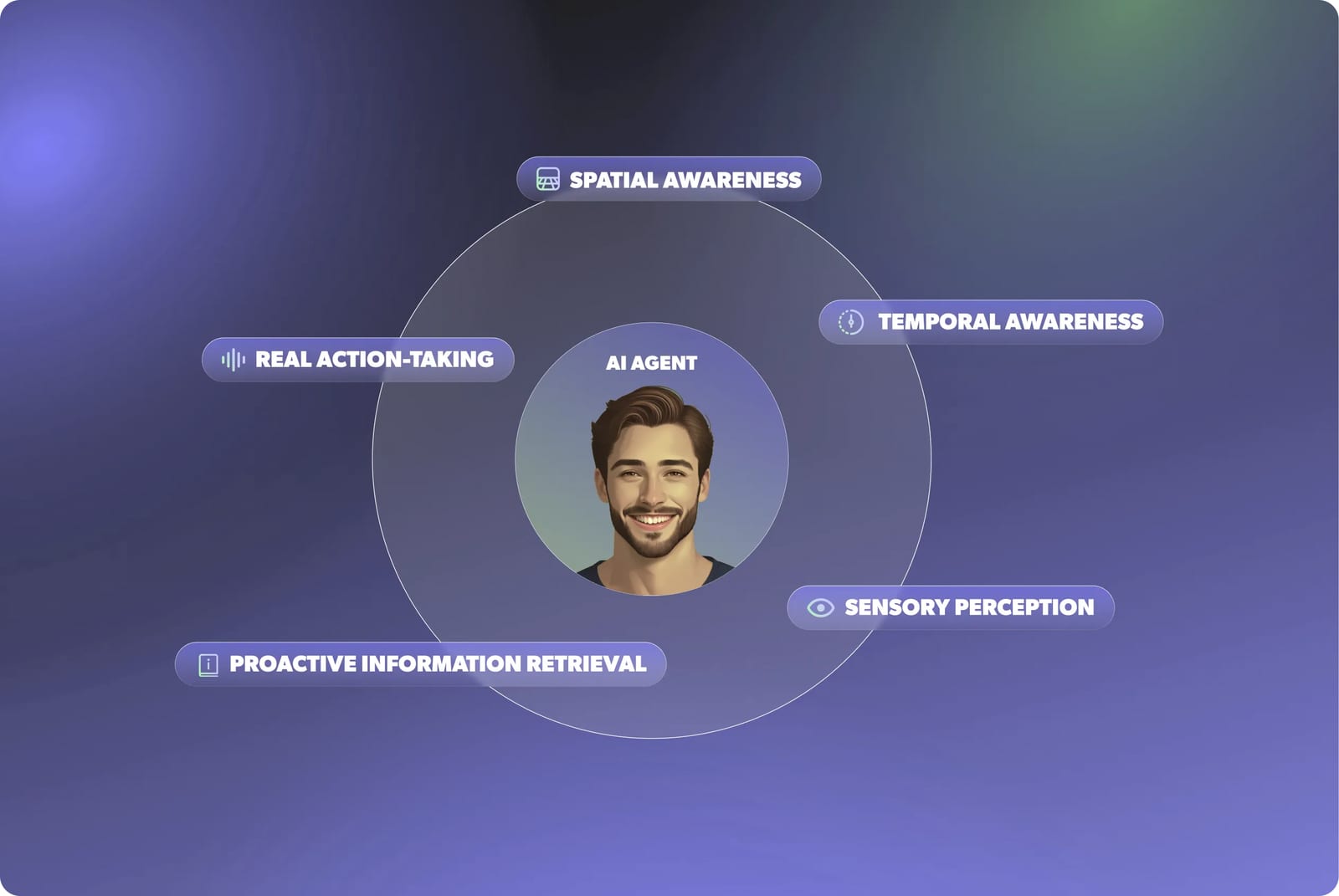
Regal Voice Inc. launched Goal Oriented Agents, which run an actor model that replies right away and a directo…
Oracle signed deals to bring Google's Tensor Processing Units, Cerebras chips, and SambaNova's SN50 processor…
A US SEC filing dated Oct 26, 2026 shows Anthropic posted about $16.3 billion in first-half 2026 revenue, incl…

A scaled-down re-test of arXiv:2610.30755 found overwriting memory answered historical questions only 16.67% o…

Vercel CEO Guillermo Rauch said developers should not read every line of AI-written code, but should understan…

OpenAI said its models proved the local smoothing conjecture in harmonic analysis, disproved a foundational co…