What happened
Kenya Kondo's Ariadne Boundary Repair Theorem, illustrated on a three-value model, shows repair is possible without observations, but a concrete repair needs x and y — 2 queries if both unknown, 1 if one is known.
Why it matters
This separates the cost of judging 'can this be fixed?' from the cost of returning an actual fix, suggesting AI-assisted refactors could be checked against a spec without humans reading every line.
What to watch
The result holds only in the small finite-field model; applying it to real code still requires verifying the code-to-model mapping, building it into ArchSig, and real-world validation, all listed as future work.
WHO IT HITSDevelopers and teams delegating refactors to AI agents may benefit most, since the result points to a way of confirming a protected spec is preserved without reading every generated line — though the practical tooling, ArchSig, does not yet exist.
Summaries like this, in your inbox every morning.
Pick your industry and the AI tools you use, and get news related to your work every day.
Free · 30 seconds with Google · unsubscribe anytimeWhat is AIToday? →
Ask AI anything about this article. The AI reads this article, earlier AIToday articles, and Wikipedia, and cites its sources. Q&As are published on this page for other readers too.
A non-engineer operator says one person ships four smartphone apps on Google Play, three on the App Store, wit…
A developer released agent-guardrails, a one-script Python standard-library plugin that guards Bash, Write, Ed…
The walkthrough points the CLI at a local mock via the ANTHROPIC_BASE_URL environment variable
A Zenn guide explains systems to install before letting AI agents, bots or scheduled jobs post, send, publish…
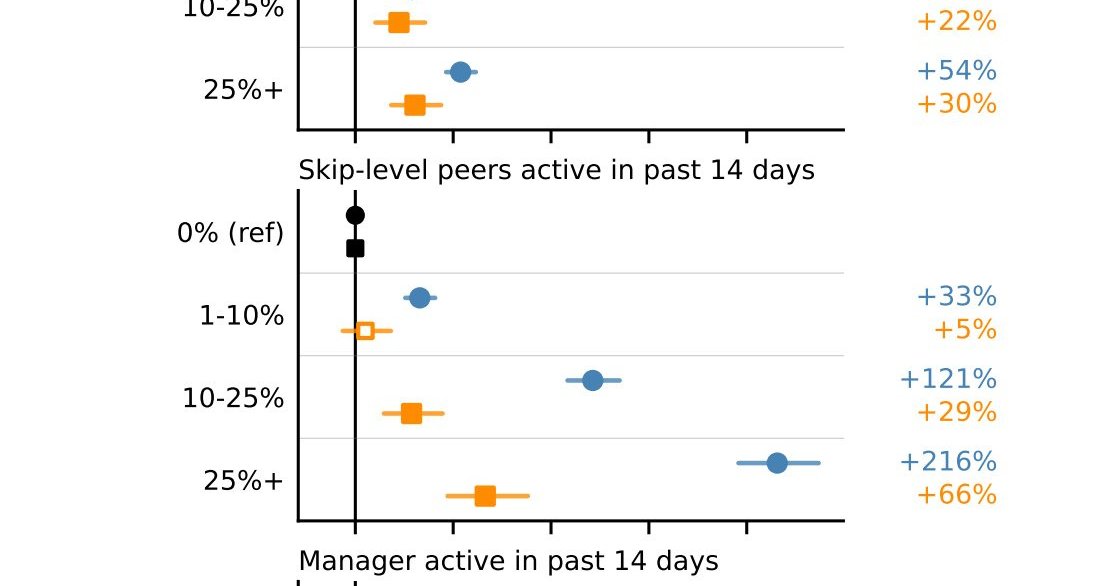
Researchers at Microsoft published a paper titled "Adoption and Impact of Command-Line AI Coding Agents: A Stu…
Meta released open weights for Muse Spark Open, an 816B-parameter model built for coding and long-running agen…