
A system architect published an analysis arguing Spring Boot business apps should weigh moving from Thymeleaf to JTE, which converts templates into Java classes at build time rather than interpreting them at runtime.
Summaries like this, in your inbox every morning.
The piece frames the choice as a design change rather than a syntax swap. Thymeleaf has long been the de facto only option for Spring Boot apps with screens, and it binds controllers to templates by name, leaving the controller-to-template boundary to be protected separately. JTE shifts templates under Java's type checking and compiler, which the architect says makes the scope of a change mechanically visible. To hold that boundary, the recommended pattern is one ViewModel record per screen passed as a single Model attribute, plus rendering tests over the main screens.
A notable caveat is that JTE itself has had security issues: an XSS caused by a JavaScript template string inside script (CVE-2025-23026) was reported and fixed in 3.1.16, and the architect says dependency updates are needed for any engine. On speed, the architect advises measuring in your own environment first, since Thymeleaf also caches templates in production and the dominant bottleneck in business apps is normally the database and external integrations.
The migration guidance is staged: shared layouts, then parts, then leaf screens, comparing normalized HTML before and after for regressions, with all-template precompilation required in CI. JTE's type safety does not extend to display specs, authorization, or security correctness, and the architect says the size of the AI-related benefit depends on the existing tests and CI setup.
Pick your industry and the AI tools you use, and get news related to your work every day.
Free · 30 seconds with Google · unsubscribe anytimeWhat is AIToday? →
Ask AI anything about this article. The AI reads this article, earlier AIToday articles, and Wikipedia, and cites its sources. Q&As are published on this page for other readers too.
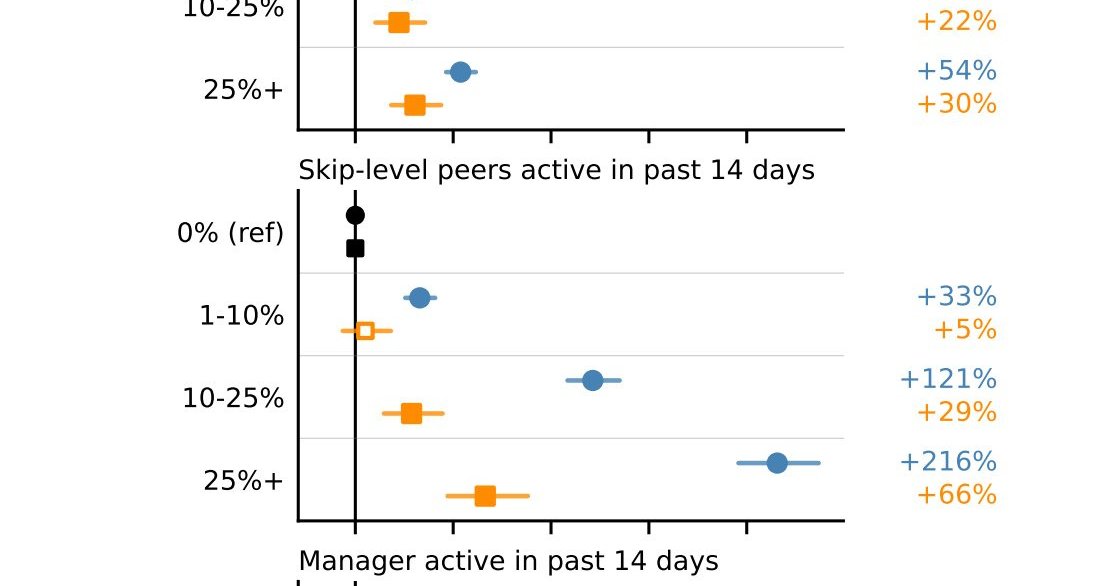
Researchers at Microsoft published a paper titled "Adoption and Impact of Command-Line AI Coding Agents: A Stu…
Meta released open weights for Muse Spark Open, an 816B-parameter model built for coding and long-running agen…

In a Zenn article, EC自動化工房 laid out a pre-generation cleanup step for product masters, adding notation rules t…
OpenAI announced GPT-6 Sol / Luna in September 2026, and the notable change was not the top model's performanc…
Three one-line requests and three requests with written completion criteria to Claude Code produced functional…
Kamei detects confidential and identifying information in text or code, swaps it for pseudonyms that keep thei…

