Semiconductor and hyperscaler stocks are in free fall despite tight memory supply and strong contract prices, sparked by fears that cloud giants are overspending on AI infrastructure. South Korea's Kospi fell nearly 11% on Tuesday while the U.S. semiconductor index SOX dropped as much as 6%, dragging the Nasdaq toward correction. Analysts argue the sell-off is indiscriminate panic: memory prices are rising 20%–30%, Google and Meta have locked in five-year contracts, and no new supply is expected until 2028—yet investors are focused on whether hyperscalers' massive capex increases will deliver returns.
Summaries like this, in your inbox every morning.
Sign up free →What happened
South Korea's Kospi fell nearly 11% on Tuesday, its eighth circuit breaker of 2026, while the U.S. semiconductor index SOX dropped as much as 6% in its fourth straight losing session, dragging the Nasdaq-100 down 9.7% from its record high—just short of a correction territory.
Why it matters
The sell-off appears disconnected from fundamental conditions: DRAM contract prices are settling 20%–30% higher this month, Google and Meta have locked in five-year supply contracts, and analysts do not expect meaningful new supply until 2028. The real worry is hyperscaler spending—Alphabet raised capex guidance to as much as $205 billion(約33兆円) for this year from $91 billion(約15兆円) in 2025, with 2027 projected to be higher still. Investors fear the return on that investment remains unclear, even as memory remains scarce.
Why it matters
Concerns about a Chinese memory maker's $8.6 billion(約1.4兆円) debut and domestic lithography production are overblown, according to analysts; China still lacks the advanced EUV technology that ASML alone supplies, and CXMT chips are largely confined to Chinese devices. The actual constraint is real: Intel cannot meet demand, and Apple has raised consumer prices due to the semiconductor squeeze.
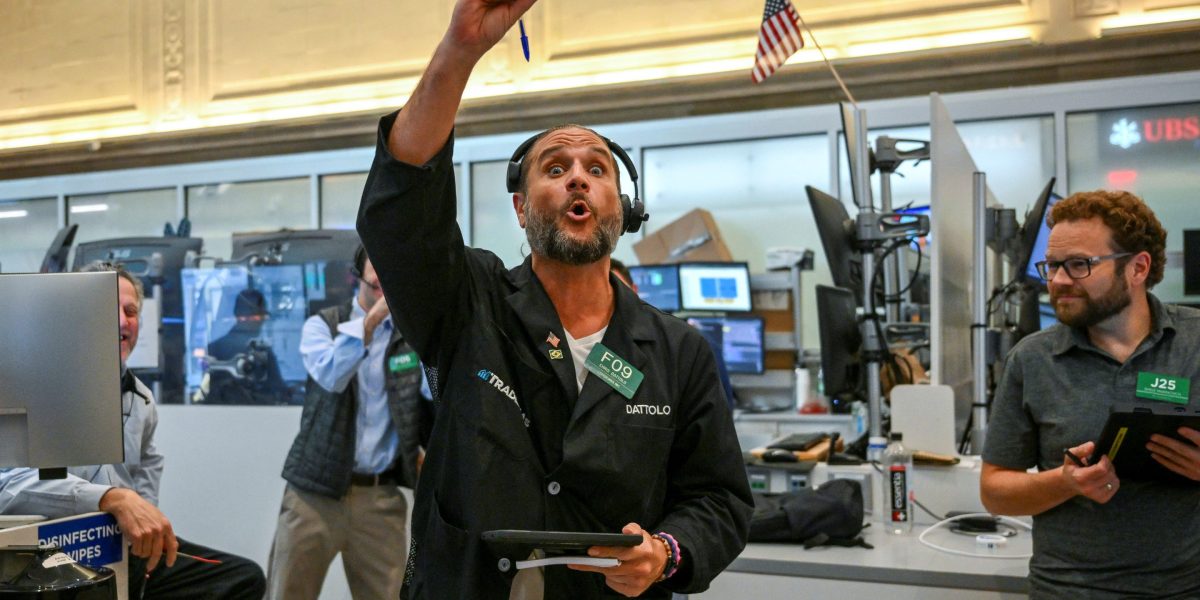
South Korea's stock market suffered one of its worst days of the year on Tuesday, with the Kospi closing down nearly 11%—its eighth circuit breaker of 2026. The carnage spread westward: the American semiconductor index SOX fell as much as 6% in its fourth straight losing session, dragging the Nasdaq-100 down 9.7% from its record high, bringing it to the edge of correction territory.
Yet the sell-off sits oddly against supply realities. Memory prices are climbing, not falling: third-quarter DRAM contracts are settling 20%–30% higher this month. Google and Meta have signed five-year contracts locking in both prices and volumes, insulating them from near-term supply swings. Analysts generally do not expect meaningful new memory supply until 2028. Intel has publicly said it cannot meet demand, and Apple has been forced to raise consumer device prices due to the chip shortage. "None of those things make sense in a world where spending is about to slow," said Matt Bryson, who covers semiconductors at Wedbush, speaking to Fortune.
Three explanations for the panic have been circulating, though two do not withstand scrutiny. First, China's CXMT made its debut Monday, surging 466% in Shanghai after raising $8.6 billion(約1.4兆円). Second, the Information reported that a Chinese state-based company has begun mass producing DUV (deep ultraviolet) lithography machines—a technology ASML alone has controlled for about a decade. Third, fears have grown about hyperscalers over-spending on AI infrastructure. Bryson and other analysts say the first two worries are overblown. China has actually had access to DUV for years; what matters is EUV (extreme ultraviolet), a far more advanced process with a shorter wavelength that prints finer features on chips. Only ASML manufactures EUV machines globally, and export controls keep them from China. Chipmakers can build advanced memory with DUV, but it requires more processing passes, making it more expensive. That technological gap separates Western leaders like Micron, Samsung, and SK Hynix from CXMT. Even if CXMT had EUV capability, distribution outside China would likely face protectionism and possible infringement suits from Western memory makers. For now, CXMT's chips are going mostly into Chinese PCs and handsets.
The third concern—hyperscaler spending—is harder to dismiss. Alphabet reported its largest quarterly profit in corporate history last week, with cloud revenue up 82%, yet its stock fell anyway. The culprit: the company raised capex guidance to as much as $205 billion(約33兆円) for this year, from $91 billion(約15兆円) in 2025, with a warning that 2027 would be higher still. Moody's expects the six largest hyperscalers to spend roughly $785 billion(約130兆円) this year and close to $1 trillion(約160兆円) in 2027, and noted last week that the ultimate return on all of it "is unclear." Nvidia has faced similar treatment after reports emerged of a deal involving a customer guarantee—though some analysts, including Gil Luria at DA Davidson, argue the backstop is a financial instrument to lower customers' cost of capital rather than an obligation Nvidia expects to fund. Luria told Fortune that "right now there's a lot of panic around the AI investment, and the panic appears to be indiscriminate."
The market dynamics have shifted sharply. For months, the trade was "buy the semis and sell the hyperscalers," based on the idea that semiconductor makers would profit most from the AI boom. The correlation between the two groups fell to -31% this month, an all-time low, according to Wells Fargo's Ohsung Kwon, while semis began trading in line with capital goods instead of diverging from hyperscalers. Kwon expects that trade to reverse: if the real question is hyperscaler return on investment and whether capex gets cut if returns disappoint, semis and hyperscalers should move together, not in opposite directions. He notes that semiconductors track earnings more closely than any other industry group, and after the recent drop they are pricing forward earnings growth of 28% against current growth near 70%—implying just 18% growth six months out at a valuation of nearly 19 times forward earnings. With Microsoft and Meta reporting Wednesday, Apple and Amazon reporting Thursday, and the Federal Reserve's rate decision wedged in between, Kwon described the coming week as "make or break" for equities.
The market's panic around semiconductor and AI spending does not align with on-the-ground supply conditions. Memory prices are climbing—third-quarter DRAM contracts are settling 20%–30% higher this month—and long-term demand appears locked in: Google and Meta have signed five-year price and volume contracts, while analysts do not expect meaningful new supply until 2028. Intel has publicly stated it cannot meet demand, and Apple has raised consumer device prices due to the semiconductor squeeze, both signals of genuine supply tightness.
Three sources of fear have been circulating. First, China's CXMT debuted Monday with an $8.6 billion(約1.4兆円) raise and a 466% surge, triggering concerns about new competition. Second, reports of a Chinese state company mass-producing DUV lithography machines sparked worries about Chinese self-sufficiency. Third, and most substantive, is concern over hyperscaler capital spending: Alphabet raised 2026 capex guidance from $91 billion(約15兆円) to as much as $205 billion(約33兆円), with a note that 2027 will be higher still, and Moody's projects the six largest hyperscalers will spend roughly $785 billion(約130兆円) this year and close to $1 trillion(約160兆円) in 2027. Yet the returns on that investment remain unclear.
Analysts who track the memory supply chain, however, argue the first two fears do not hold. China has had access to DUV for years; building the machines domestically does not change what Chinese firms can produce, since the real binding constraint is EUV (extreme ultraviolet) technology—a more advanced process that only ASML manufactures and that export controls keep out of China. CXMT's chips are mostly confined to Chinese PCs and handsets for now, and would likely face protectionism and infringement suits if they tried to distribute widely outside China. The real question is whether hyperscalers' spending will deliver returns—a concern that has little to do with Chinese memory competition.
AI-summarized, only the topics you pick — one digest a day via Email, Slack, or Discord.
Free · takes 30 seconds · unsubscribe anytime
No comments yet. Be the first to share your thoughts!
Log in to join the discussion


Get curated AI news from 200+ sources delivered daily to your inbox. Free to use.
Get Started FreeFree · takes 30 seconds · unsubscribe anytime