
What happened
OpenAI's report says median internal token use hit $2,400 per researcher per day in October on Codex and Dots, up 62 percent in a month; in a 101-person survey, the median would give up 40 percent of staff to keep agents.
Why it matters
That trade-off signals how deeply coding agents are now woven into OpenAI's own model-development work, with researchers preferring to lose colleagues or compute rather than the tools.
WHO IT HITSOpenAI's research and engineering staff are the immediate users affected, as the report shows their daily workflows now depend on Codex and Dots; the survey results suggest retention and team planning at AI labs may increasingly hinge on keeping such tools available.
Summaries like this, every morning.
OpenAI's second internal research-acceleration report documents how quickly coding agents have moved from novelty to daily infrastructure inside the company. Between March and October, the estimated success rate of autonomous agents on two- to four-hour tasks rose from 23 to 46 percent, and on four- to eight-hour tasks from 13 to 35 percent. Yet the same data shows the systems mainly handle simpler work: monitoring training runs and answering technical questions go well, while building evaluation environments or writing inference and serving code succeeds far less often.
Qualitative interviews with ten researchers point to a persistent gap in what the report calls research taste. The models get lost in unnecessary steps, make wrong assumptions in analyses, and submit subpar code changes along with unusable data artifacts, making close human oversight essential to avoid wasted compute. The teams said the key conceptual ideas for GPT-6 Astra and GPT-6.2 Astra came exclusively from humans in post-training and safety, with only pretraining for GPT-6.2 Astra yielding important insights through dialogue with Codex.
OpenAI cautions that the data so far may not extrapolate linearly, pointing to recent abrupt breakthroughs in mathematics as a possibility for deep-learning research itself as models gain autonomy. The report follows METR's eleven-week look inside Anthropic, which estimated AI use there had nearly doubled the pace of development, and OpenAI's own first report in early September declaring it had reached its self-imposed goal of an automated AI research intern.
Pick your industry and the AI tools you use, and get news related to your work every day.
Free · 30 seconds with Google · unsubscribe anytimeWhat is AIToday? →
Ask AI anything about this article. The AI reads this article, earlier AIToday articles, and Wikipedia, and cites its sources. Q&As are published on this page for other readers too.
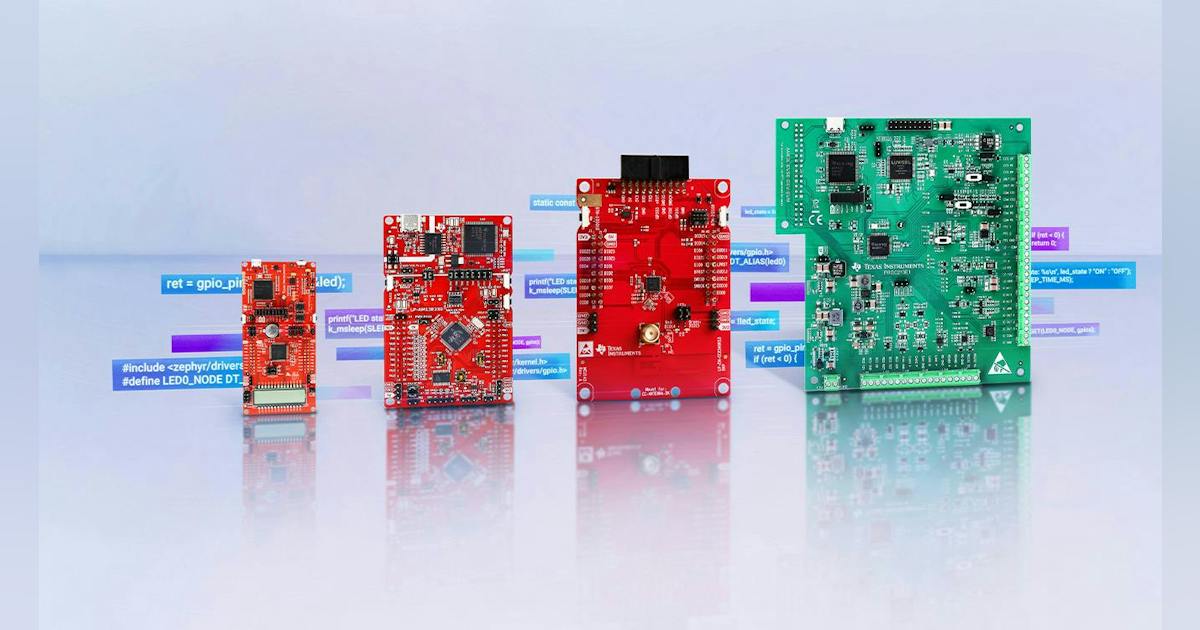
At Open Source Summit Europe 2026 in Prague, a Texas Instruments-moderated panel said embedded engineers are b…
A Seeking Alpha analyst upgraded Broadcom (AVGO) to Strong Buy, arguing it should lead investors out of the cu…

Merck has signed an AI-related deal, one of several pharma items in a news roundup that also covers China and…

The Rhode Island Small Business Development Center and Meta are hosting a free, hands-on AI workshop on Decemb…

Dell shares are up 165.55% year to date but 26.68% lower over the past month, at $330.75 versus a 52-week high…

Intel is promoting laptops with its Core Ultra chips as AI PCs for the holidays, spotlighting on-device featur…