What happened
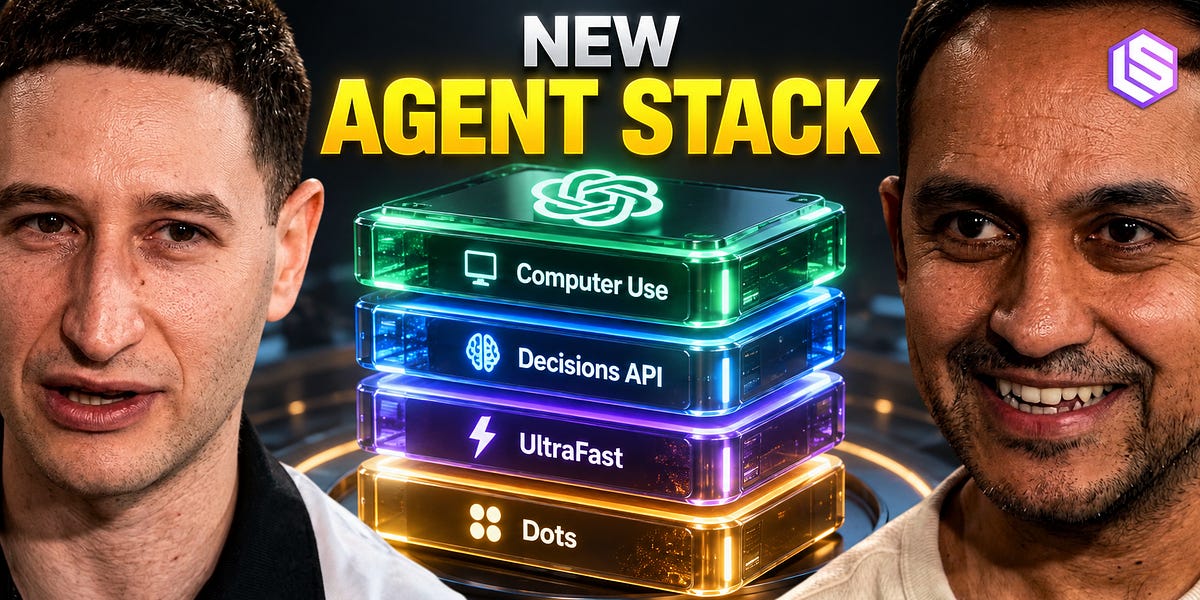
At OpenAI DevDay, Ari Weinstein, who leads Computer Use, said the field is "180 degrees different" than months ago, crediting models that debug and retry their own failures.
Why it matters
Weinstein said Computer Use is now faster than the average human at most tasks, with the next frontier being "literally superhuman" performance — potentially making agents a default way people work.
What to watch
Weinstein attributes the jump to an open research question — how to combine the fast Decisions API with the larger long-horizon Computer Use models — so whether the speed holds up on complex tasks is the test.
WHO IT HITSDevelopers building agent-powered products and enterprise teams looking to automate repetitive software workflows will feel this most, since OpenAI is now exposing the same Computer Use capabilities behind Codex and ChatGPT through its Agents API.
Summaries like this, in your inbox every morning.
OpenAI's DevDay announcements arrive against a backdrop of skepticism. Three months ago, Dwarkesh Patel publicly asked why progress on computer use had been so slow, given that it is so clearly verifiable — a question that, in the podcasters' framing, upset many in the field. Ari Weinstein, who worked on computer automation at Apple and then founded Sky before joining OpenAI, is positioned as the direct answer to that skepticism.
The changes Weinstein describes are not just better models. He points to a shift in how Computer Use agents operate: instead of screenshotting, scrolling, and repeating, agents now write and execute JavaScript to perform many actions at once, and draw on screenshots, accessibility data, the DOM, and Playwright depending on the task. The features demoed at DevDay — Dots with their own Linux virtual computers, app shots that capture rich metadata rather than flat screenshots, and GPT-6.1 Sol at a seventh of the cost for Computer Use — are the packaging of that shift for developers.
The stakes hinge on whether these gains transfer from demo conditions to complicated, long-horizon tasks. Weinstein himself flags that combining the fast Decisions API with the larger Computer Use models remains an open research question, and he notes that in some benchmarks a non-trivial share of time is now spent simply waiting for third-party sites like doordash.com to load. Whether Computer Use reaches what he calls "literally superhuman" performance — or gets stuck on those paper cuts — is the open question developers building on the new APIs will be watching.
Pick your industry and the AI tools you use, and get news related to your work every day.
Free · 30 seconds with Google · unsubscribe anytimeWhat is AIToday? →
Ask AI anything about this article. The AI reads this article, earlier AIToday articles, and Wikipedia, and cites its sources. Q&As are published on this page for other readers too.
DIGITIMES reported the SiC substrate market is finally seeing signs of recovery, after prices collapsed when w…

HENNGE said on October 1 it set up HENNGE AI, a subsidiary with only two directors and no other employees, whe…

Pershing Square sold its entire Alphabet stake and topped off Microsoft while it sat about 20% below its Q2 hi…
Aolani will integrate Karman's power orchestration platform, built on a custom NVIDIA Jetson Orin Nano and tar…

CloudNC raised $20 million led by Nimble Ventures, with Calculus Venture Capital, Entrepreneur First and LM Ve…

Solomon Asamoah laid out a framework for Ghana's AI infrastructure, arguing data-centre approvals should start…