
A Goldwater Institute report by Arizona State University economist Domenico Ferraro argues that artificial intelligence represents a major technological opportunity whose benefits—like time savings, skill development, and better information organization—are likely to outweigh its real but manageable costs to jobs and the environment.
The report urges policymakers to support responsible AI deployment and help workers adapt, while treating data centers as essential infrastructure rather than burdens.
What happened
A Goldwater Institute report by Arizona State University economist Domenico Ferraro argues that AI 'represents a once-in-a-generation technological opportunity,' citing ways people save time, learn skills, and organize information through the technology.
Why it matters
Public debate has focused heavily on AI's risks to jobs, the electric grid, and the environment, but the report contends AI's benefits are likely to outweigh those costs—though both must be addressed responsibly. Policymakers need to enable AI deployment while helping workers adapt to change.
What to watch
The Goldwater Institute argues that data centers—the physical infrastructure underpinning AI—should be recognized as essential infrastructure for the digital future rather than treated as isolated burdens.
Ask the AI about this article →
The Goldwater Institute report reflects a broader effort to rebalance public discourse on artificial intelligence. While concerns about AI's impact on employment, infrastructure, and environmental costs dominate much of the policy conversation, the report argues these fears, though legitimate, may overshadow AI's tangible everyday benefits. Economist Domenico Ferraro frames AI as a once-in-a-generation opportunity, acknowledging that its value is often hard to quantify because benefits accrue in less visible ways—incremental time savings, skill acquisition, and improved information management rather than discrete, easily measurable outputs.
The report's framing carries clear policy implications. By characterizing data centers as essential rather than burdensome infrastructure, the institute implicitly argues against regulatory or zoning approaches that treat AI infrastructure as a cost to be minimized. Instead, it suggests policymakers should focus on enabling deployment while creating pathways for workers and communities to adapt to technological change. This reflects a tension between innovation and equity that appears central to the institute's position.
For example, today's edition would include:
AI-summarized, only the topics you pick — one digest a day via Email, Slack, or Discord.
Free · takes 30 seconds · unsubscribe anytimeWhat is AIToday? →
Ask AI anything about this article. Q&As are published on this page for other readers too.
Israeli startup DataAgent Ltd

Taoyuan is positioning itself as a northern hub for AI data centers (AIDC), citing the Tatan area and an LNG c…
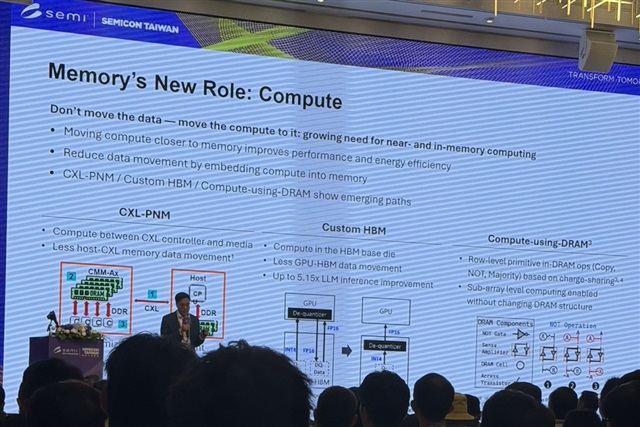
SK Hynix presented a custom HBM concept at SEMICON Taiwan 2026, where compute functions are placed in the base…
The U.S. Department of Defense announced on August 31 that it has deployed ChatGPT Mil, a customized version o…

Nvidia reported earnings that were both remarkable and boring, reflecting its focus on avoiding a consolidated…

Anthropic has agreed to a $35bn cloud-computing contract with Lambda, a Nvidia-backed cloud provider