What happened
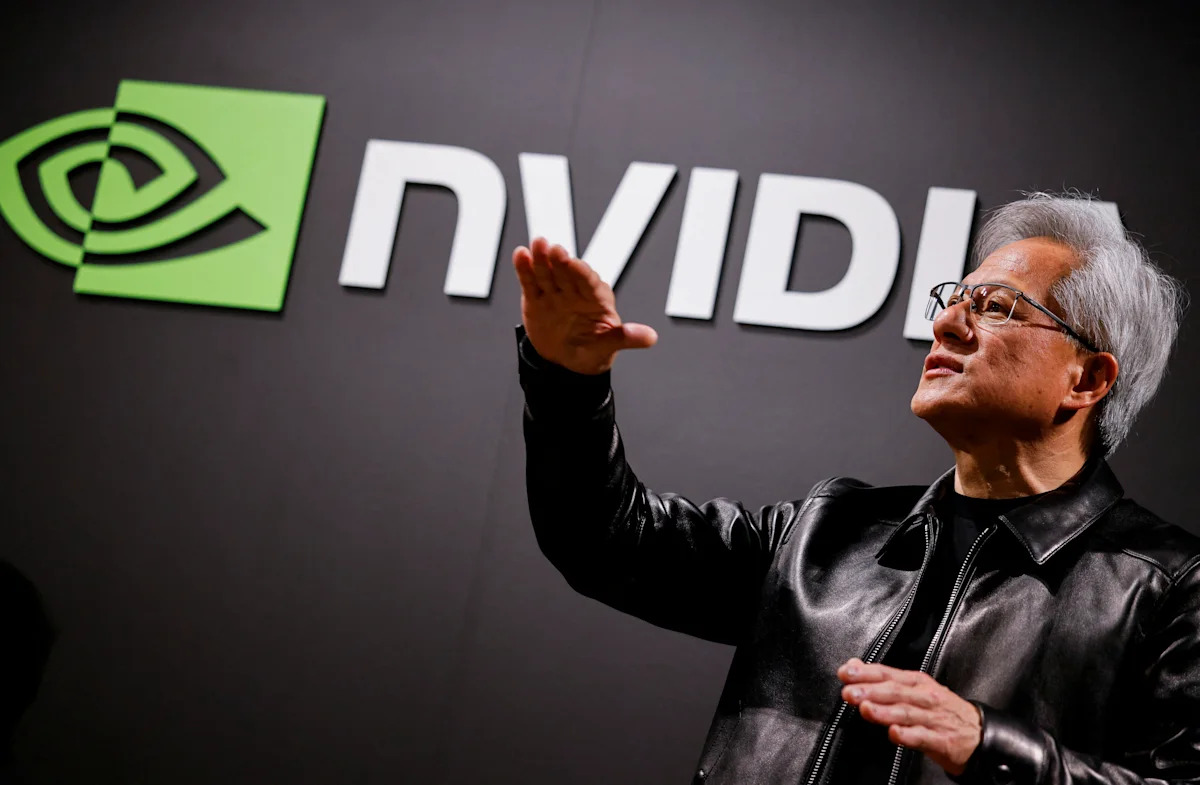
Nvidia stock climbed more than 10% over the week as investor concerns about AI sector valuations eased. The Philadelphia Semiconductor Index rose more than 8% over the last five trading days. SpaceX announced during its first earnings call on Tuesday that it will build data centers on Earth and in orbit using exclusively Nvidia's chips, including the Vera Rubin-based NVL72 rackscale system.
Why it matters
Semiconductor stocks had been hit hard the prior week on doubts about whether lofty valuations matched fundamentals; this recovery signals traders have turned more positive on the sector. The SpaceX partnership provides a concrete large-scale use case for Nvidia's hardware. The news comes despite a report that Nvidia is testing lower-memory versions of its upcoming Rubin Ultra chip (192GB and 256GB of HBM) to address a global memory shortage, instead of the originally planned 1TB.
What to watch
AMD stock underperformed despite reporting better-than-anticipated Q2 earnings and an upbeat Q3 outlook on Tuesday, sinking roughly 8% after that report before ending the week up just shy of 2%. AMD stock is up 180% over the last 12 months, while Nvidia shares are up 28% in the same time frame. AMD's Helios rackscale platform is expected to compete directly with Nvidia's NVL72.
Summaries like this, in your inbox every morning.
Nvidia's strong weekly performance reflects a broader reversal in semiconductor investor sentiment. The prior week had seen the sector take a sharp hit as traders questioned whether AI companies' steep valuations were grounded in real fundamentals and earnings power. The recovery suggests that concerns have eased, at least temporarily, allowing major chip names to recapture losses.
The SpaceX announcement provides a concrete catalyst for that sentiment shift. Elon Musk's commitment to build data centers using only Nvidia hardware—both terrestrial and orbital—anchors Nvidia's dominant position in the AI infrastructure buildout to a high-profile, capital-intensive customer. This gives investors tangible evidence of demand beyond the generalized "AI buildout" narrative that had begun to feel overextended.
Parallel to the rally, Nvidia faces a supply-side challenge that could moderate upside: testing lower-memory configurations of the Rubin Ultra chip signals the company is navigating a genuine global shortage of high-bandwidth memory. The gap between the planned 1TB and tested versions (192GB–256GB) is substantial, suggesting memory constraints are forcing engineering trade-offs. This detail, reported the same week as the stock surge, indicates investors are willing to look past near-term supply friction in favor of longer-term competitive positioning.
For example, today's edition would include:
AI-summarized, only the topics you pick: one digest a day via Email, LINE, or Slack.
Free · 30 seconds with Google · unsubscribe anytimeWhat is AIToday? →
Ask AI anything about this article. The AI reads this article, earlier AIToday articles, and Wikipedia, and cites its sources. Q&As are published on this page for other readers too.
Google Cloud revenue hit $24.77 billion, up 82%
Hera Hyeonseo Lee said workers are using their deferred wages to finance the AI designed to eliminate their jo…

China's AI sector is shifting from catch-up to commercialization, with value concentrating in hardware bottlen…

China is reportedly weighing whether to let ByteDance and Alibaba buy some of Nvidia's lower-end GPUs

TSMC's monthly 2nm capacity could reach about 120,000 wafers by the end of 2026, ahead of earlier expectations…

In a Sept. 27, 2026 Motley Fool video, Rick Orford compared GE Vernova and Bloom Energy as two routes to the A…