What happened
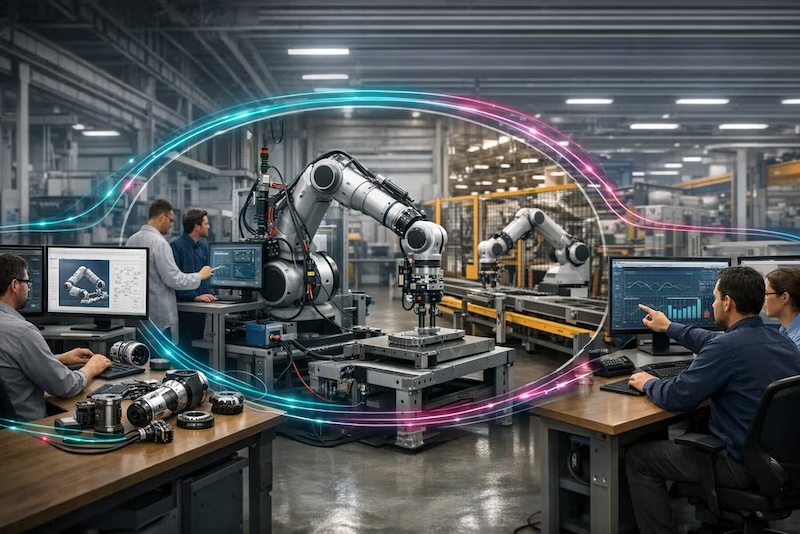
At SPS 2026, Siemens introduced an Autonomous Production Planner within Intelligence Center X, where AI agents build and optimize schedules validated by a digital twin; it expects 70 percent less manual planning and up to 20 percent lower costs.
Why it matters
If the projected reductions hold, manufacturers using the planner could cut planning effort and costs, though Siemens describes the figures as expectations rather than confirmed results.
WHO IT HITSManufacturers and machine builders evaluating autonomous production tools may see reduced manual planning effort and lower costs, while those selling into the EU may need to track Siemens' Cyber Resilience Act preparations to meet their own regulatory obligations.
Summaries like this, every morning.
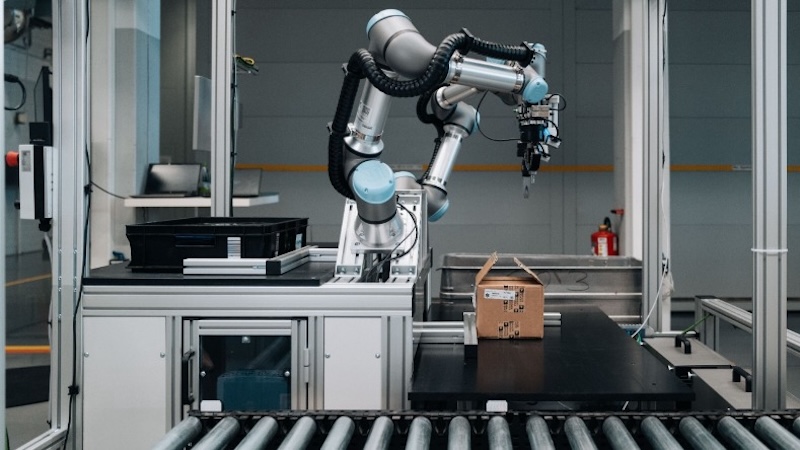
Siemens is positioning its industrial AI push around a shift from conventional robot programming to systems that interpret their surroundings. In its Electronics Factory in Erlangen, the company is developing an AI-powered robotic system to autonomously unpack incoming goods, a task that variations in packaging types and sizes have traditionally made difficult to automate. The system uses cameras to capture its surroundings in real time, enabling AI-based robot foundation models to interpret the environment and determine the actions required to open cartons and remove electronic component reels for further processing.
Alongside this physical AI work, Siemens is introducing its Autonomous Production Planner as part of Intelligence Center X, its industrial AI orchestration software. Multiple AI agents collaborate to create and optimize production schedules, which are validated using a physics-based digital twin before being released to production. Siemens expects the technology to reduce manual planning effort by 70 percent and lower costs by up to 20 percent.
The company is also expanding its Eigen Engineering Agent to adapt automation code, verify code through simulation and support engineering tasks in process industries, and its Industrial AI Suite brings AI directly into machine control systems for applications such as AI-based motion control. Rainer Brehm, president of automation at Siemens, framed the effort as targeting tasks that were previously impossible to automate, and noted that greater Industrial AI in production makes cybersecurity more important, citing almost 40 years of experience in industrial cybersecurity. Siemens is also preparing products for the European Union's Cyber Resilience Act and supporting machine builders with their own regulatory obligations.
Pick your industry and the AI tools you use, and get news related to your work every day.
Free · 30 seconds with Google · unsubscribe anytimeWhat is AIToday? →
Ask AI anything about this article. The AI reads this article, earlier AIToday articles, and Wikipedia, and cites its sources. Q&As are published on this page for other readers too.
Fujitsu said on November 25, 2026 it joined OpenAI's Daybreak Defense Network and started a vulnerability asse…
Shake implemented seven AI-assisted workflows at Hiramipan, including sales-target back-calculation and shift…

Uravation handled program design, materials and instructors for Itochu Interactive's corporate AI agent implem…
At Microsoft Ignite 2026 in San Francisco, Fortinet said FortiGate VM — its virtual next-generation firewall —…

Appaloosa's third-quarter 13F shows it sold all 197,500 AMD shares and all 150,000 Broadcom shares, while grow…

HBK published Why Reliability Will Define the Next Decade of Robotics, arguing commercial success depends on m…