Running Claude Code sub-agents as company departments for about a year, the author found that only 4 of 11 — dev, marketing, sales and publishing — had automated execution set up. Four of the other seven departments' STATE.md files had not been updated in over six months.
Summaries like this, every morning.
The author's setup is unusually literal: .claude/agents/ holds 17 agent definitions and .company/departments/ holds 11 department directories, each with a STATE.md file as its living state. What broke the correspondence between the two was not enthusiasm but a cost structure. When he measured the real cost of unattended claude -p runs in September, he found a single call cost $0.27–0.47, and cache creation accounted for about 41,000 tokens. Only 5,800 of those were his own files; the rest was Claude Code's fixed overhead, meaning prompt trimming saves little and only the number of calls is genuinely reducible. He then routed every unattended run through one wrapper, claude-run.sh, that captures real cost as JSON, caps each call at --max-budget-usd 3, and tags records so that monthly spend per department becomes visible. Scheduling follows the wrapper: a monthly auto-agent-health-check.sh simply looks at STATE.md modification dates and flags any department untouched for more than 30 days. As of October 7, publishing, marketing, sales and dev had recent updates and their own jobs, while consulting, finance, legal, tax, cs and hr had neither. The author is explicit that stopping those departments was the right call, and he now advises counting revenue-generating business lines first — publishing, contract development and SaaS in his case — and creating departments on a one-to-one basis with them, leaving accounting and legal to be called as skills when needed. His other warnings are operational: a CLAUDE.md that grew past 1,000 lines began producing instructions opposite to what was written, so orchestrator instructions are now kept under 200 lines with department-specific detail split into each agent definition; giving a department agent Write permission on a schedule can lead it to rewrite files instead of producing a report, so recurring report jobs are pinned to --allowedTools "Read,Bash" and only writing departments go through an approval queue. Verification, he argues, is a matter of logs — the last run time and the number of cost records — because if both have stopped, the department effectively does not exist.
Pick your industry and the AI tools you use, and get news related to your work every day.
Free · 30 seconds with Google · unsubscribe anytimeWhat is AIToday? →
Ask AI anything about this article. The AI reads this article, earlier AIToday articles, and Wikipedia, and cites its sources. Q&As are published on this page for other readers too.
W.E.'s Conversion UP began distributing service materials on November 25, 2026 for three plans covering landin…

Epochal AI Inc. launched with $100 million in funding from CEO Guodong Zhang and debuted the Epochal Time Port…

Anthropic announced on November 24 that "Install as app" lets Claude's conversational Artifacts — charts, web…
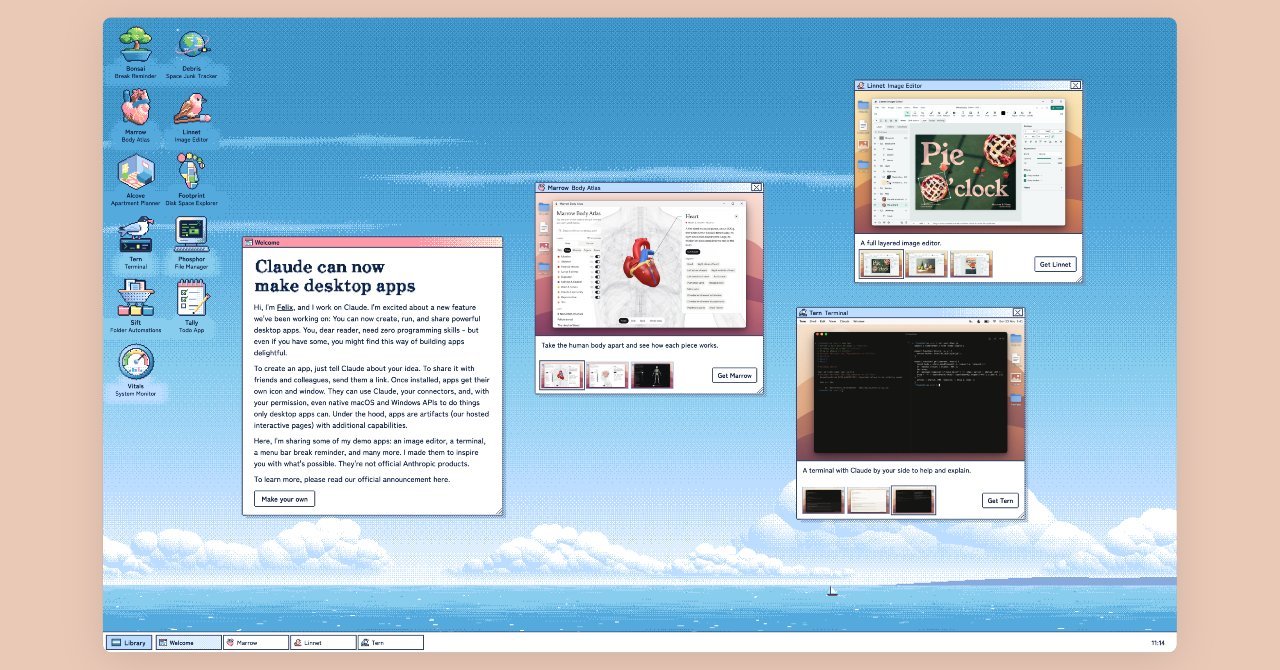
Anthropic launched "Install as app" in beta for Claude for Mac and Windows
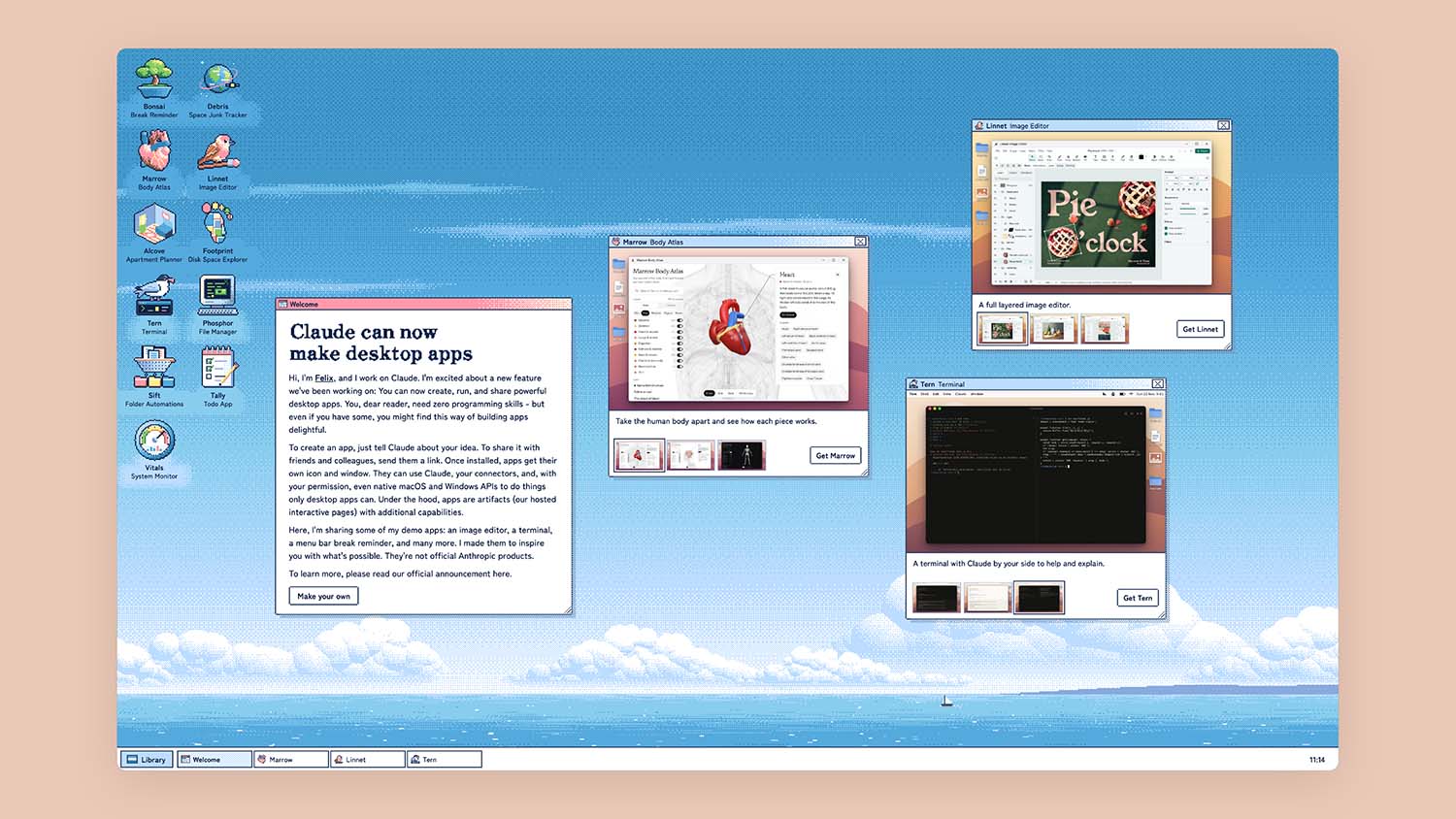
Tencent published Hy MT3 on November 24, 2026 in three sizes — Hy-MT3-30B-A3B, Hy-MT3-7B and Hy-MT3-1.8B — all…
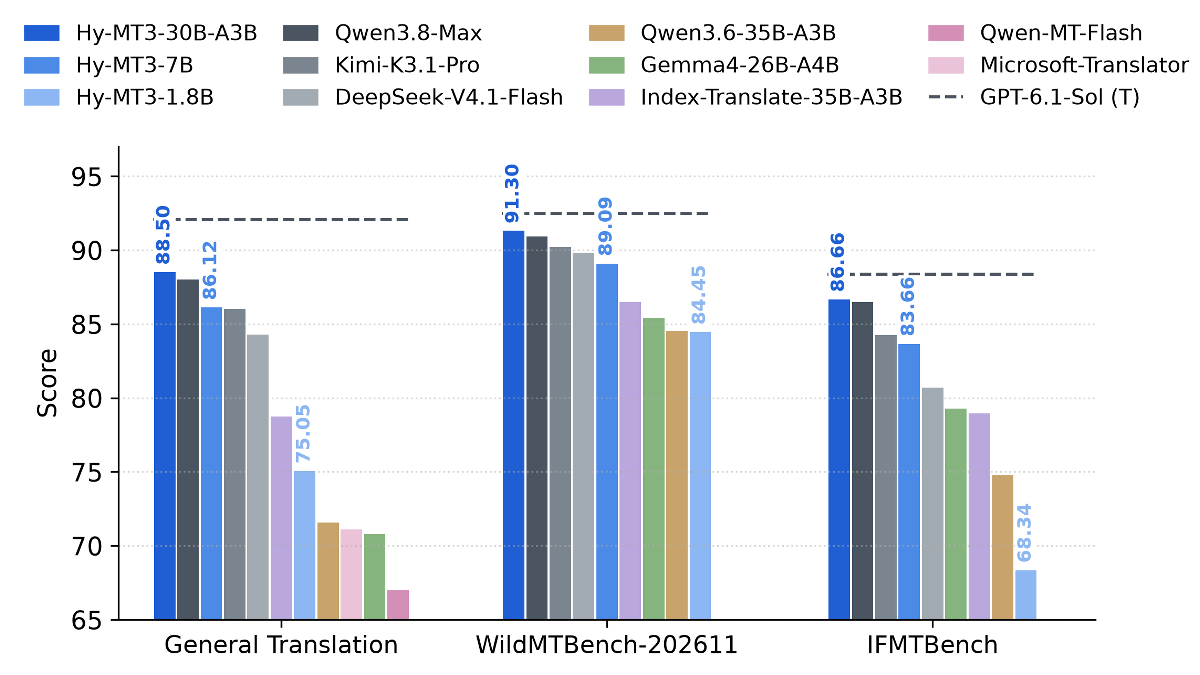
Engineer Danny Boland developed the Super Network Adapter, which uses the SNES controller port to connect onli…