What happened
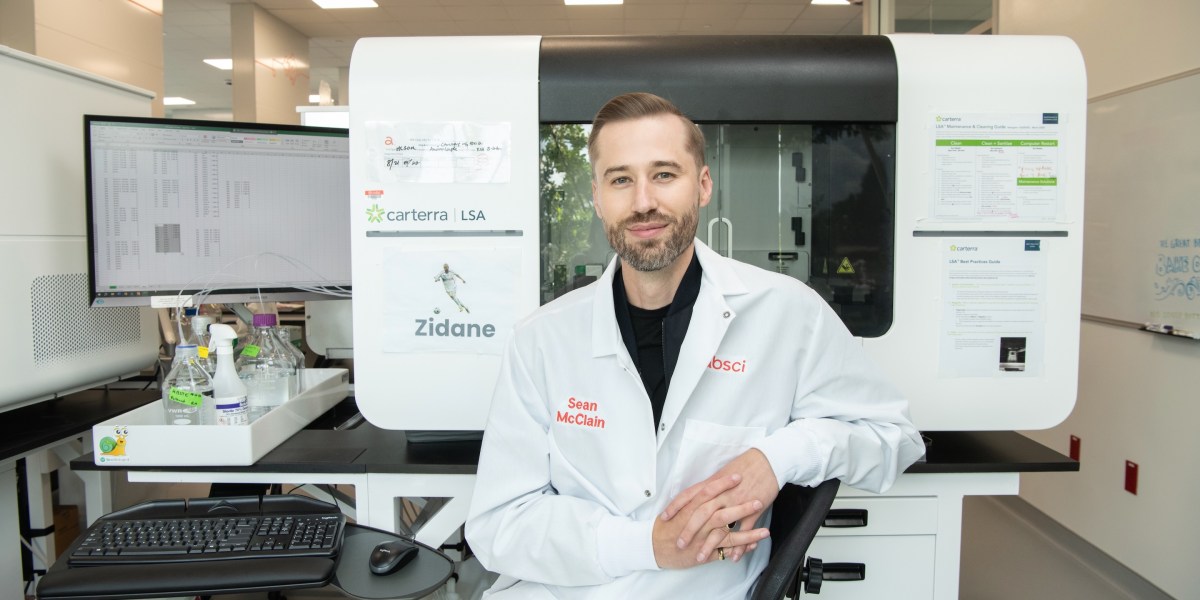
Eli Lilly led a $100 million(約160億円) stock offering in Absci, an AI drug company, investing $40 million(約64億円) itself. Absci designed ABS-201, an injectable antibody targeting hair loss and endometriosis, using generative AI. The deal closed the same day Absci released positive Phase 1 safety data.
Why it matters
Lilly is betting that AI-designed drugs can succeed where traditional approaches haven't—no approved injectable antibody currently treats either condition ABS-201 targets. The deal signals confidence in Absci's strategy to use AI plus lower-cost clinical trials in China to compress development costs from $150 million(約240億円) to $15–$20 million(約32億円), potentially reshaping drug economics.
What to watch
Absci's broader ambition is to eventually combine ABS-201 with a GLP-1 compound (used for weight loss) into a single shot. The injectable market is projected to be a $650 billion(約100兆円) opportunity in 2026, with GLP-1s alone projected to hit $190–$200 billion(約32兆円) by 2030. Whether ABS-201 becomes the first AI-designed antibody to prove efficacy in humans remains unknown.
Summaries like this, in your inbox every morning.
Pick your industry and the AI tools you use, and get news related to your work every day.
Free · 30 seconds with Google · unsubscribe anytimeWhat is AIToday? →
Ask AI anything about this article. The AI reads this article, earlier AIToday articles, and Wikipedia, and cites its sources. Q&As are published on this page for other readers too.
Hewlett Packard Enterprise stock is down 5% at $55.87

The Motley Fool argues Amazon is the AI company of the two, since AWS was just 21% of first-half 2026 revenue…

CoreWeave fell 5% in premarket trading Friday and was on track to finish the week down 15%, after rebounding f…
A longtime Anthropic investor told Fortune he expects shares priced around $1.8 trillion, below the company's…

In Q2, billionaires or their funds sold six 'Magnificent Seven' AI stocks
Nvidia was rising early Friday, even as the wider chip sector kept falling, Barron's reported