Google's Gemini AI assistant and healthcare platform Zocdoc have launched integrated appointment booking, allowing users to schedule doctor visits directly within the app.
The partnership reduces typical wait times from 31 days to 72 hours while protecting user medical data, making healthcare scheduling faster and more convenient for Gemini users.
What happened
Google and Zocdoc have integrated real-time healthcare appointment booking directly into the Gemini app, allowing users to schedule doctor visits without leaving the AI assistant.
Why it matters
The integration cuts median patient wait times from 31 days to 72 hours while keeping medical data private, addressing a major friction point in healthcare access for Gemini users.
What to watch
The feature is now live in the Gemini app; Zocdoc Founder & CEO Oliver Kharraz emphasized that data privacy is maintained throughout the booking process.
Google and Zocdoc have launched a direct integration that allows users of Google's Gemini AI assistant to book doctor appointments in real time without leaving the app. According to Zocdoc Founder & CEO Oliver Kharraz, the partnership significantly improves the appointment scheduling experience: median patient wait times have dropped from 31 days to 72 hours. The integration maintains data privacy throughout the booking process, addressing a key concern for users sharing medical information with an AI system. The feature is now available directly within the Gemini app, making healthcare scheduling a core capability of the AI assistant rather than a separate step requiring users to switch applications.
This partnership bridges two major user pain points: the friction of healthcare scheduling and the desire for AI assistants to handle practical tasks end-to-end. By embedding Zocdoc's appointment network directly into Gemini, Google transforms the AI from an information tool into a transaction platform for healthcare access. The dramatic reduction in wait times—from 31 days to 72 hours—suggests that friction itself was a major barrier; removing the need to leave Gemini and navigate a separate service likely explains much of the improvement. The explicit commitment to data privacy is notable, as medical information remains among the most sensitive categories of user data, and building trust in AI-mediated healthcare booking likely depends on clear privacy protection.
AI-summarized, only the topics you pick — one digest a day via Email, Slack, or Discord.
Free · takes 30 seconds · unsubscribe anytime
Ask AI anything about this article. Q&As are published on this page for other readers too.
IBM and OpenAI announced a strategic partnership on August 13, 2026, embedding OpenAI frontier models like GPT…
Apple is in talks with publishers to pay them for content licensing, as the company works to improve its AI-po…

CrowdStrike Holdings (NASDAQ:CRWD) posted Q2 2026 results with Net New Annual Recurring Revenue of $256M (up 3…

S&P Global expanded its partnership with Microsoft to integrate its financial, company, and energy intelligenc…

Pfizer has developed a federated AI pipeline that enables multiple parties to collaborate on machine learning…

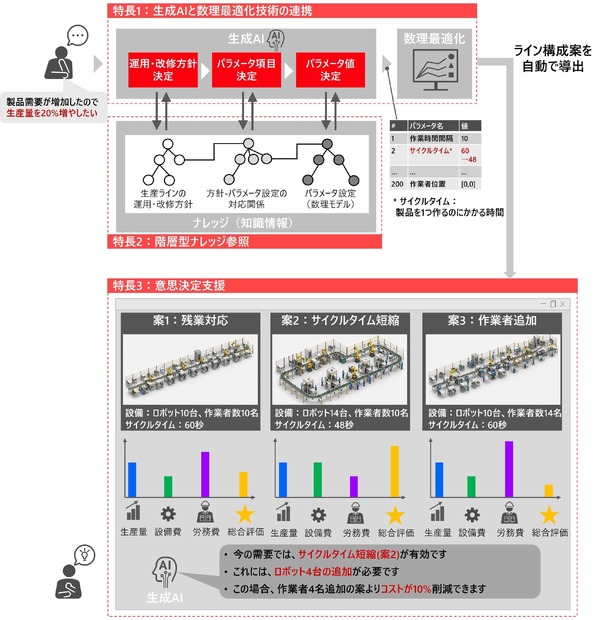
Hitachi and SZTAKI have developed a technology that links generative AI with mathematical optimization to auto…
The AI news that matters, in one minute each morning.
Sign up free