What happened
Apple researchers introduced PROOF-Gen, a method that recovers successful training examples from failed AI attempts. On τ2-bench, it recovered 93% of failed scenarios, and models fine-tuned with it showed big gains, like Qwen3-4B improving from 0.132 to 0.529 on Pass@1.
Why it matters
Standard AI training discards failed attempts, but most failures are near-misses—two-thirds have only one decisive error. PROOF-Gen uses these to create better training data, which boosts performance in deployed systems, including a +6.3pp improvement in goal completion and positive results on-device.
What to watch
The method improved non-English locales by an average of +1.48pp, suggesting it could make AI assistants more capable globally. This could be a practical way for companies to improve AI without relying solely on expensive frontier models.
Summaries like this, in your inbox every morning.
This research tackles a hidden inefficiency in AI development: most training pipelines discard failed attempts, even though two-thirds of those are near-misses with just one mistake. By recovering these failures, PROOF-Gen turns wasted compute into useful training data, which is a more cost-effective way to improve models.
The method's success on non-English locales is particularly notable, as it suggests a way to improve global AI performance without needing more human-curated data in every language. This could make AI assistants more reliable for users worldwide, a key goal for companies like Apple that ship products internationally.
For businesses, the implication is that smarter use of existing data—even failures—can yield significant performance gains. This could reduce the need to constantly rely on the most expensive frontier models, making AI development more accessible and sustainable.
Pick your industry and the AI tools you use, and get news related to your work every day.
Free · 30 seconds with Google · unsubscribe anytimeWhat is AIToday? →
Ask AI anything about this article. The AI reads this article, earlier AIToday articles, and Wikipedia, and cites its sources. Q&As are published on this page for other readers too.
Hewlett Packard Enterprise stock is down 5% at $55.87
The Motley Fool argues Amazon is the AI company of the two, since AWS was just 21% of first-half 2026 revenue…

Google Deepmind's Gemini 4 Argon scored 97.5 percent on ARC-AGI-3 at a cost of $4,800, second only to GPT-6 As…
Cammarata reinterprets InceptionV1's cat-car neuron as a V-shape detector, not two unrelated concepts

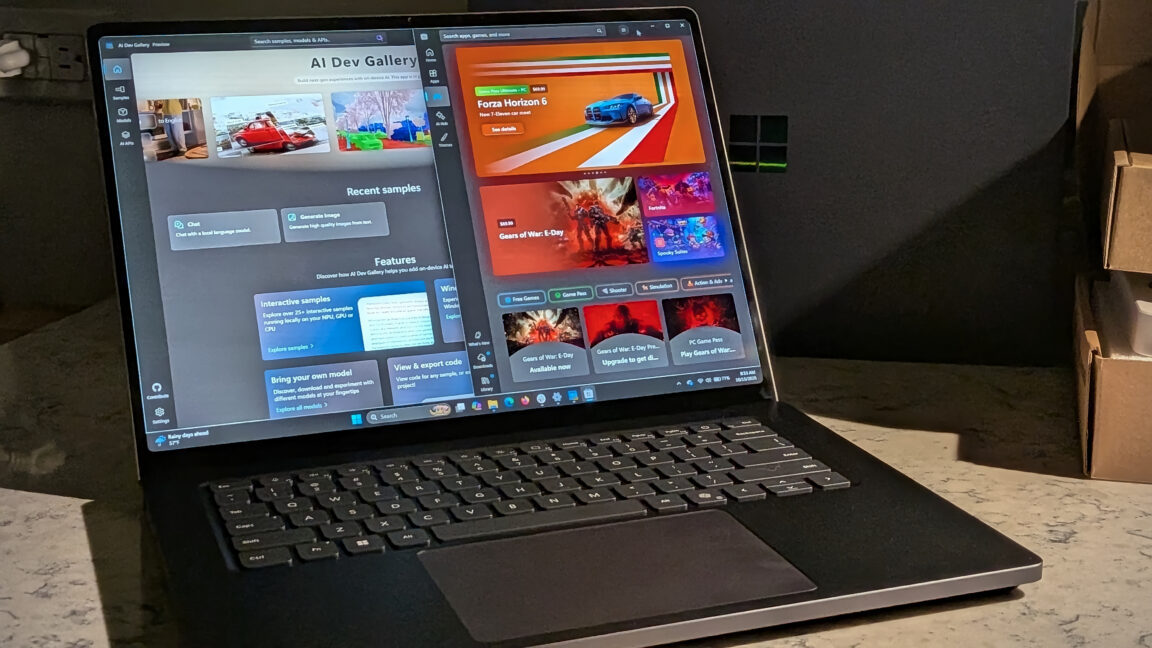
Microsoft's Surface Laptop Ultra, using Nvidia's RTX Spark platform, starts at $2,599 (up to $5,899)
Meta's new commercial terms, effective October 30th, appear to let it crawl and train AI on content from websi…