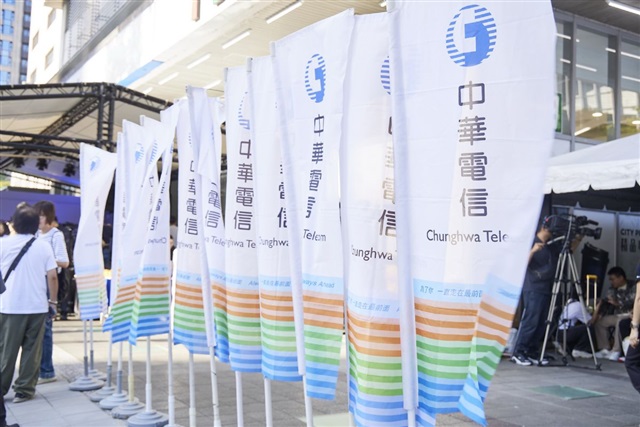
Taiwan's Intelligent Asia 2026 conference, which opened August 19 in Taipei, highlighted the country's opportunity to become a major hub for AI robotics manufacturing by leveraging its existing precision manufacturing expertise.
Industry and government speakers called for keeping more production locally and strengthening domestic supply chains, rather than outsourcing the hardware side of the AI robotics boom.
What happened
Intelligent Asia 2026 opened on August 19 at TaiNEX 1 and TaiNEX 2 in Taipei, with industry and government speakers emphasizing that Taiwan should leverage its manufacturing expertise to keep more AI robotics production domestically while strengthening regional supply chains.
Why it matters
Taiwan's precision manufacturing base—historically built around semiconductors and electronics—stands to capture a larger share of the emerging AI robotics market if it can integrate local talent and supply networks rather than ceding production to other regions. The framing signals a strategic effort by Taiwan's government and industry to position the island as a hub for hardware innovation tied to AI.
What to watch
The conference's specific announcements about investment commitments, new partnerships, or timelines for domestic robotics production capacity—details that would show whether this is a rhetorical goal or a funded initiative.
Ask the AI about this article →
The event represents a strategic inflection point for Taiwan's manufacturing sector. Historically concentrated in semiconductors and electronics assembly, Taiwan's industrial base is now positioning itself to capitalize on the global shift toward AI-powered robotics—a hardware-intensive category where the country's supply chain depth and precision manufacturing expertise offer a natural advantage. The repeated emphasis by speakers on anchoring production locally, rather than allowing it to migrate elsewhere, suggests Taiwan's government and industry leaders recognize that the initial wave of AI hardware opportunity—before the market matures and commoditizes—offers a window to establish manufacturing dominance. By connecting domestic suppliers, talent, and production capacity around robotics, Taiwan aims to replicate the integrated-ecosystem model that made it a global leader in semiconductors.
For example, today's edition would include:
AI-summarized, only the topics you pick — one digest a day via Email, Slack, or Discord.
Free · takes 30 seconds · unsubscribe anytimeWhat is AIToday? →
Ask AI anything about this article. Q&As are published on this page for other readers too.
AI system scaling has pushed interconnect requirements inside data centers from chips and boards up to racks…

Chinese large-model developer Z.ai says it can now support large-scale inference using roughly 100,000 domesti…

Analyst Ming-Chi Kuo says Nvidia has revived the Rubin CPX AI accelerator with a substantially redesigned arch…

Palantir Technologies stock has posted multi-year gains, including an 11x return over 3 years

Apple has escalated its legal battle against OpenAI, claiming in a new court filing that OpenAI is actively de…

Samsung Electronics has locked up as much as 70% of its memory production capacity under long-term supply agre…