What happened
Miraigent laid out a minimal setup: a seven-field change history — change date and owner, target workflow, before/after, reason, source of truth, reviewer and review date, stale surfaces and next review — recorded in an existing repository, spreadsheet, or internal wiki, with a sample entry CHG-2026-08-16-001.
Why it matters
Recording only the change in chat or commits leaves the next owner unable to separate what should be used now from past judgment calls, so the history is framed as a handoff aid rather than a commemorative log.
Summaries like this, in your inbox every morning.
The guide starts from a familiar failure mode: as AI answer quality is improved, prompts, FAQs, intake forms, reviewers, and target workflows change little by little. If only the change itself is left in chat or commits, the next person cannot tell the currently correct information from past decisions. The proposed fix is deliberately small — a shared set of columns rather than a new system.
The division of labor is the substance of the argument. AI can summarize diffs and surface blank-field candidates, list related links and templates that may be stale, and draft the history; humans confirm the facts and the reason. Publishing, the scope of disclosure, and the actual reflection of changes are not delegated in principle, and changes touching contracts, pricing, personal data, complaints, or external publication are not auto-approved. A change is also not treated as published until a source of truth is fixed; without one, it is held in a state such as needs_source.
The guide closes by reframing the record: a change history is not a log for commemorating changes but a decision aid so the next owner can safely resume. It suggests that if the history keeps coming up empty, the question to examine is which change event to use as the starting point, not where to record it — and asks which workflow saw the most AI-related changes in the last 30 days.
Pick your industry and the AI tools you use, and get news related to your work every day.
Free · 30 seconds with Google · unsubscribe anytimeWhat is AIToday? →
Ask AI anything about this article. The AI reads this article, earlier AIToday articles, and Wikipedia, and cites its sources. Q&As are published on this page for other readers too.
Infineon Technologies said on October 21 it is expanding work with Nvidia on 800-volt direct current power arc…
BloFin Research outlined three defensive moves for a potential 2027 AI correction: shift some S&P 500 exposure…
Shares fell 6.9% Thursday, extending the drop from the June 2 peak to 50%, with market capitalization at about…
Schneider Electric, Nvidia and HPE formed a strategic collaboration to launch Industrial AI Agents at the Edge…
Anthropic released Claude Duet, built on Claude Opus 5.5

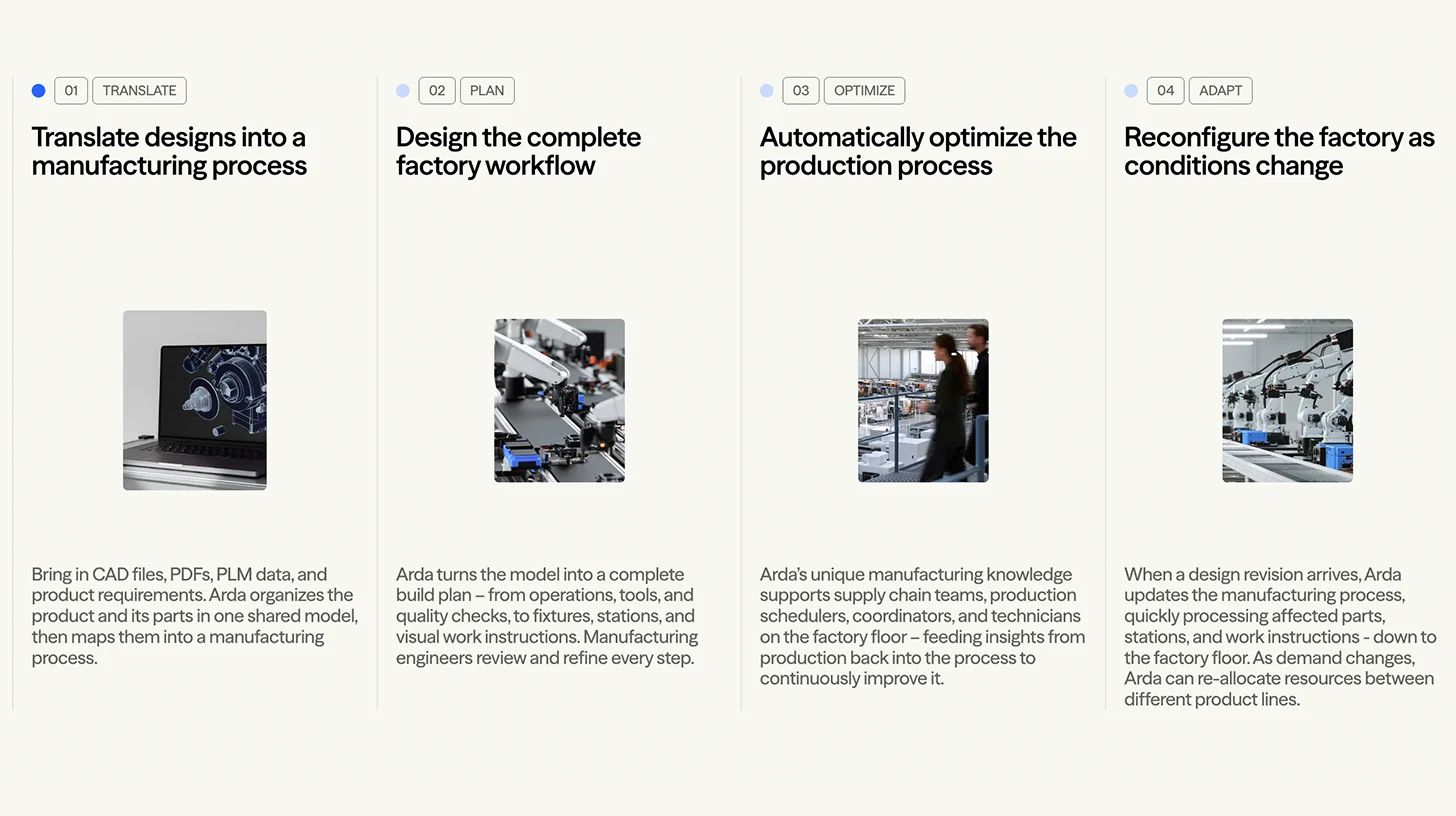
Bob McGrew's Arda launched Oct