What happened
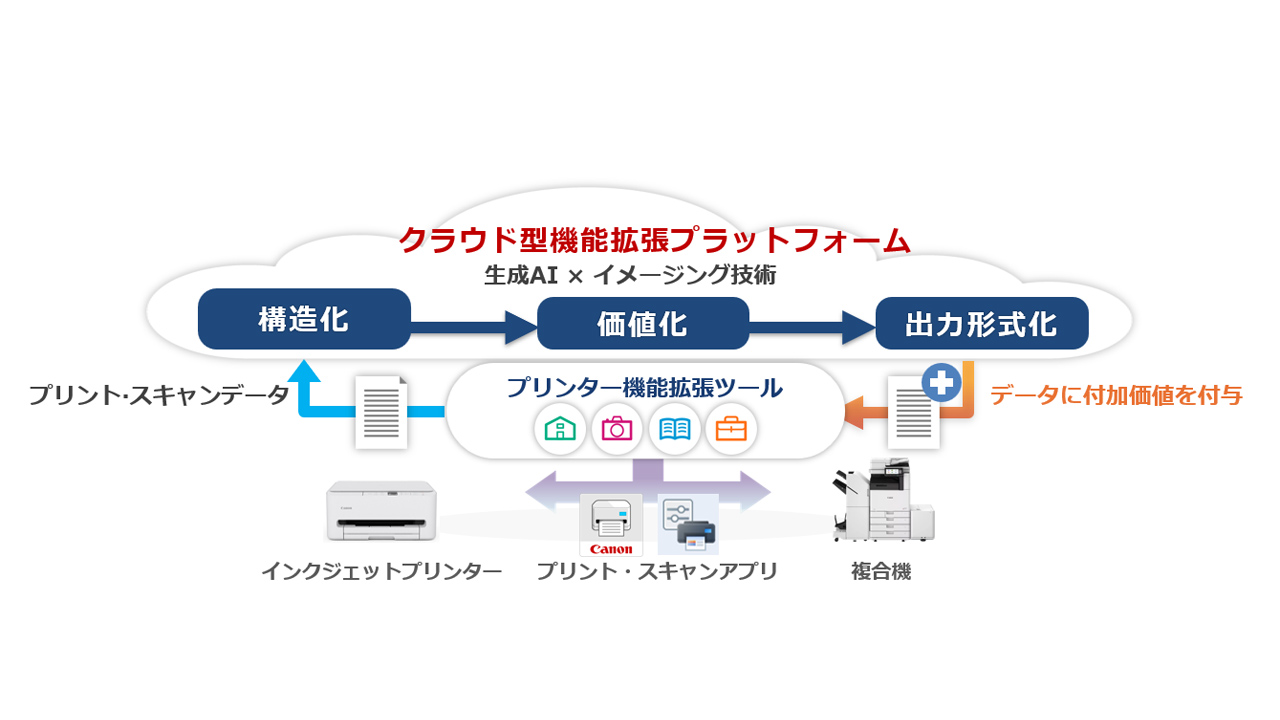
Canon launched a cloud-based function-extension platform using generative AI and imaging technology, and began free new tools for the PIXUS series, including printers already in use, starting with Web layout printing.
Why it matters
The tools let users add needed functions without installing a separate dedicated app for each one, addressing the hassle of needing different apps to finish a printed document.
What to watch
The free PIXUS Web layout printing is the setup; broader features like auto file-name generation are slated for late November 2026 on PC and 2027 on mobile, so the test is whether those arrive on schedule.
WHO IT HITSHome printer owners in Canon's PIXUS series and, more broadly, users of Canon's printing products for home to office use, will be able to add print/scan features through apps instead of separate dedicated apps.
Summaries like this, in your inbox every morning.
Canon's move is a response to how home printing needs have broadened. The article notes that people increasingly want not just printing but editing and layout functions too. Until now, they had to install a separate dedicated app for each function, making it time-consuming to finish the document they wanted. Canon is building its cloud-based function-extension platform to cover a wide range of printing products, from home printers to office multifunction devices.
The platform uses generative AI and imaging technology to analyze documents and images, extract the needed information, and reorganize it into data usable in print and scan flows. These functions are delivered through PC and smartphone apps, and users choose the functions they need. For PC, Canon is releasing Canon Print Assistant Ver.2.0, which supports Microsoft's new printing platform, and for smartphones, Canon PRINT Ver.4.0. A key change is that users no longer need a dedicated app per function; they can pick and add what they need inside their normal print workflow.
The first tool is Web layout printing for the PIXUS series, which uses generative AI to analyze information on frequently printed sites like recipe and news pages, remove ads and unnecessary white space, and re-layout the content for printing. More functions are planned for work, study, hobbies and daily life. Whether this approach succeeds hinges on whether the promised later features, such as auto file-name generation in late November 2026 on PC and 2027 on mobile, arrive as scheduled, since the value of a function-extension platform depends on the pipeline of tools it can actually deliver to existing printers.
Pick your industry and the AI tools you use, and get news related to your work every day.
Free · 30 seconds with Google · unsubscribe anytimeWhat is AIToday? →
Ask AI anything about this article. The AI reads this article, earlier AIToday articles, and Wikipedia, and cites its sources. Q&As are published on this page for other readers too.
Applied Materials reported record revenue for its fiscal third quarter on Aug

Eli Lilly's Brian Lewis detailed LillyPod at CoreWeave's Fully Connected 2026, an Nvidia DGX SuperPOD B300 sys…
Berkshire invested an additional $10 billion in Alphabet via private stock purchase, buying $5 billion of Clas…

Sell ratings are 13.1% of 61 analyst recommendations on Tesla — the lowest share since April 2023, down from a…

On Micron's fiscal Q4 2026 earnings call, CEO Sanjay Mehrotra said humanoid robots are expected to need memory…

Marvell Technology trades at 25.1 times sales versus 3.0 times for the S&P 500, with 79% of fiscal Q2 2027 rev…