What happened
A new report estimates AI agent tasks generate 450% more network traffic than the same tasks done by humans, and says inference is pushing infrastructure back on-premises, reversing cloud-first consolidation.
Why it matters
That shift could force enterprises to rethink network architecture, since distant hyperscale clouds are described as neither economical nor practical for latency-sensitive inference, and traffic from AI agents is exposing bandwidth bottlenecks in legacy underlay infrastructure.
Summaries like this, every morning.
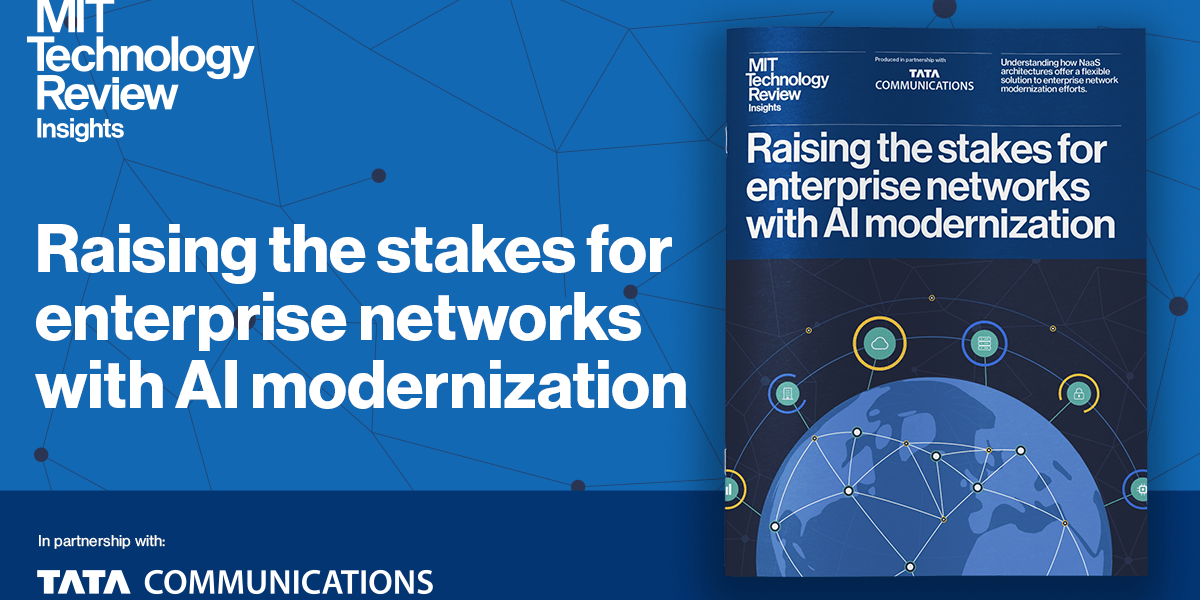
The report frames enterprise networks as straining under a surge of demand from artificial intelligence. A key driver it identifies is agentic AI: tasks conducted by AI agents are estimated to generate 450% more network traffic than the same tasks done by human workers. At the same time, AI inference is shifting from hyperscale training clouds—the large centralized data centers where raw AI models ingest vast datasets and learn—to real-time, latency-sensitive applications. That shift, the report says, is pushing infrastructure back on premises or near premises, reversing years of cloud-first consolidation and forcing new approaches to data center architecture, connectivity, and physical infrastructure.
The report also points to physical network capacity, saying the traffic increase from agentic AI combined with inference moving on-premises is exposing bandwidth bottlenecks in legacy underlay infrastructure. It argues that network modernization should be an ongoing strategy rather than a one-off project, supported by architectural governance, reusable design templates, and retained internal expertise so organizations can adapt to events such as mergers and acquisitions, vendor changes, or technology upgrades without rebuilding from scratch. Network-as-a-service and AI-driven observability are cited as ways to improve efficiency and reduce complexity.
Separately, the report notes that data sovereignty and sovereign AI will create infrastructure challenges for global enterprises. Regulators worldwide are passing laws requiring data and AI processing to remain within national borders, which conflicts with how multinational companies currently operate and will require building sovereign-capable infrastructure for each geography—significant new investment that complicates operations.
Pick your industry and the AI tools you use, and get news related to your work every day.
Free · 30 seconds with Google · unsubscribe anytimeWhat is AIToday? →
Ask AI anything about this article. The AI reads this article, earlier AIToday articles, and Wikipedia, and cites its sources. Q&As are published on this page for other readers too.
Chase Coleman's Tiger Global bought more shares of Nvidia, Cerebras, and Intel in Q3, lifting Nvidia from its…

Anthropic has traded for only three sessions and sits 9.81% below its $97.17 first close at $87.64, with its m…

Nvidia's board fired Jensen Huang without all the facts, then reversed itself six days later and rehired him s…

SoftBank completed its acquisition of the Robotics and AI Institute from Hyundai Motor Group; financial terms…

Axios reports, citing more than two dozen insiders, that many OpenAI and Anthropic employees now consider thei…

Anthropic researcher Levent Alpöge says his AI-assisted proof of the generalized Riemann hypothesis is mathema…