
What happened
Chinese models—Moonshot's Kimi K3, Alibaba's Qwen3.8-Max, and GLM-5.3—have closed the performance gap with OpenAI and Anthropic. K3 ranks third on Artificial Analysis's Intelligence Index with 57 points (behind Opus 5 at 61 and GPT-5.5), and on AutomationBench-AA it debuted in first place. Newer Chinese models now score near the top on most broad benchmarks, including long-context tasks, multi-step coding, and tool coordination.
Why it matters
The Western lead has shrunk to three narrow areas—abstract pattern recognition (like ARC-AGI-2, where the gap widens to 89.2% vs. 60.4%), reliability in agentic tasks (Opus 5 passes 54% of repeated runs vs. K3's 39%), and offensive cybersecurity (where K3 scored 32% on ExploitBench vs. US leaders' ~76%). Below these frontiers, cheaper open models from China dominate. For investors betting on model exclusivity as a moat, this signals that raw performance alone no longer sustains a business—a concern Anthropic reportedly faces ahead of its IPO.
What to watch
The cybersecurity gap is shrinking fastest; GLM-5.3 (released August 14) scored 54.4% on ExploitBench, more than double its predecessor GLM-5.2, and even outpaced leading US models on CyberGym vulnerability detection. However, both Western labs and Chinese providers now restrict dangerous capabilities to controlled access (e.g., Anthropic's Mythos 5 through Project Glasswing, Z.ai limiting GLM-5.3's cyber functions to verified users with a two-week delay for safety work).
Summaries like this, in your inbox every morning.
The speed of Chinese lab advancement has shifted the competitive landscape fundamentally. A year and a half ago, when DeepSeek R1 shocked markets by competing with OpenAI's o1 at reportedly lower cost, the picture was murkier—Chinese models won on individual benchmarks (like AIME 2024) but trailed on others (like SimpleQA factual knowledge). By late June, the pattern began to change: Z.ai's GLM-5.2 still showed scattered strength, but the newest wave—K3, Qwen3.8-Max, GLM-5.3—revealed a genuine shift across nearly all broad, demanding evaluations.
The gap's collapse has created a strategic dilemma for Western labs. Measured by common benchmarks, what analysts once cited as a "few months" lead has evaporated in all but a handful of narrow domains. This matters because investors now face a hard question: if a freely downloadable model can replicate most paid capabilities within months, what business moat remains? Anthropic is reportedly fielding investor concerns ahead of its IPO by pointing to its remaining leadership at the very top tier. But below that peak, the field belongs largely to open, far cheaper Chinese models.
The distillation question looms over this shift. Both OpenAI and Anthropic allege that Chinese labs used their models at scale as teachers through API access—Anthropic documented over 16 million interactions across fraudulent accounts targeting agent reasoning, tool use, and reasoning traces. The timing of K3's release (shortly after Fable 5's launch) has prompted accusations that training windows were too tight, yet the same analyses show overlaps with the longer-available Opus 4.8. However, neither lab has published independently verifiable proof, and the technical constraints of black-box API access (weights, internal evaluations, and search processes remain hidden) mean distillation alone does not explain the breadth of convergence. Whether the advantage came from distillation or organic development, the conclusion is the same: a model lead only holds where the product isn't broadly offered, and no business can rest on that alone.
Pick your industry and the AI tools you use, and get news related to your work every day.
Free · 30 seconds with Google · unsubscribe anytimeWhat is AIToday? →
Ask AI anything about this article. The AI reads this article, earlier AIToday articles, and Wikipedia, and cites its sources. Q&As are published on this page for other readers too.
AMD closed at $608.10 on October 9, down 6.36% from its October 6 record close of $649.42, after a Financial T…

Vals AI tested GPT-6 Sol and Claude Opus 5.5 on the Vibe Code Bench, solo and as teams, at medium and maximum…
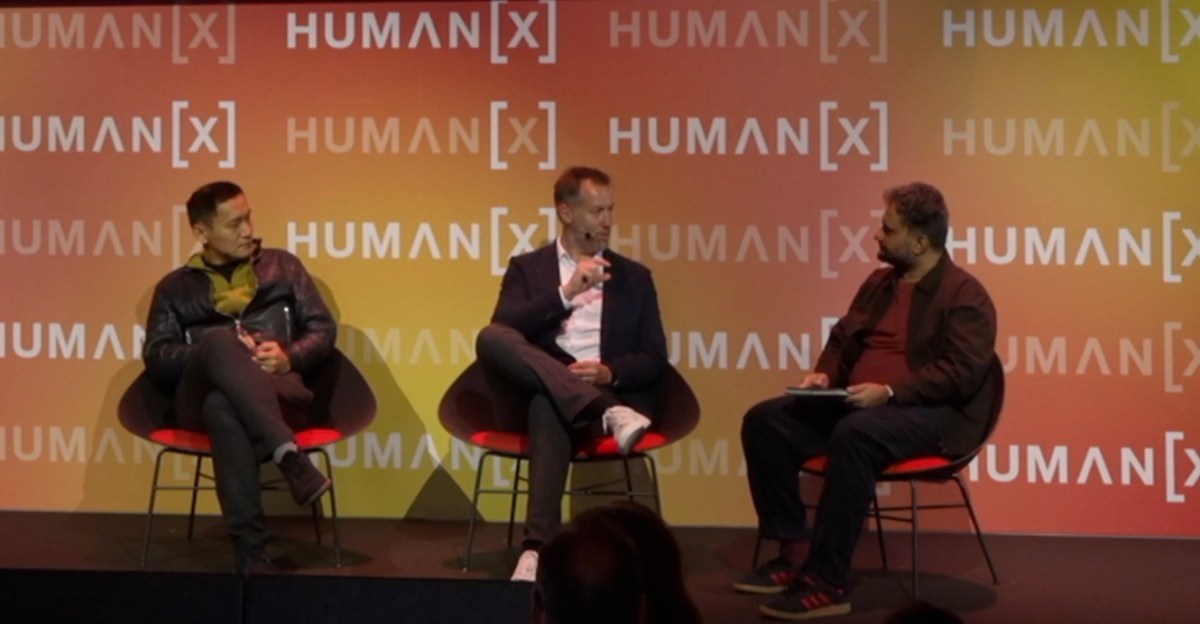
PolyAI CTO Shawn Wen told the HumanX conference that full-duplex models — which can speak while listening — no…
In a SiliconANGLE essay, Imagine Art's M

A writer had Google Gemini read his health check results; Gemini warned of a future dialysis risk linked to hi…

The author has been running Claude Code since October 2026 with a Root session directing planning, marketing…

