
Policy gradient algorithms, which have advanced language model reasoning, naturally decrease entropy during training, limiting the diversity of explored trajectories and constraining a model's exploration capabilities
The reduction in entropy-driven exploration undermines a key strength of these algorithms: their ability to learn from diverse solutions generated through self-exploration
Researchers argue for active monitoring and control of entropy throughout the training process to preserve exploration diversity and foster more creative and varied solutions
Ask the AI about this article →
For example, today's edition would include:
AI-summarized, only the topics you pick — one digest a day via Email, Slack, or Discord.
Free · takes 30 seconds · unsubscribe anytimeWhat is AIToday? →
Ask AI anything about this article. Q&As are published on this page for other readers too.
CrowdStrike is introducing Falcon Guardian, its flagship solution for the AI Detection and Response (AIDR) cat…

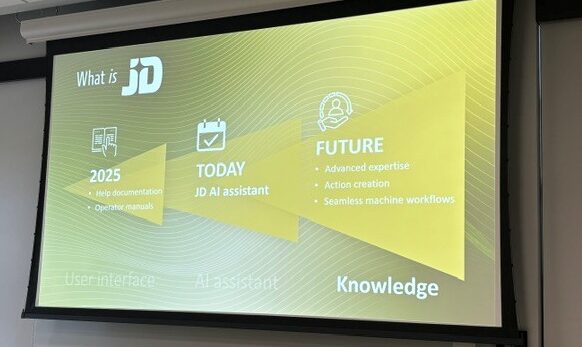
John Deere introduced its AI assistant, 'JD,' on Monday, embedded in its Operations Center

John Deere is introducing an AI assistant called JD
AT&T, Dell Technologies, and AMD have announced OTel 2.0, the largest and best-performing open-source model bu…

AT&T's legal department built an in-house center of expertise called Legal Edge, described as an AI-first lega…

Studio Inc. announced Agentic Web Platform Studio.Drop and opened pre-registration today for a closed beta sta…