What happened
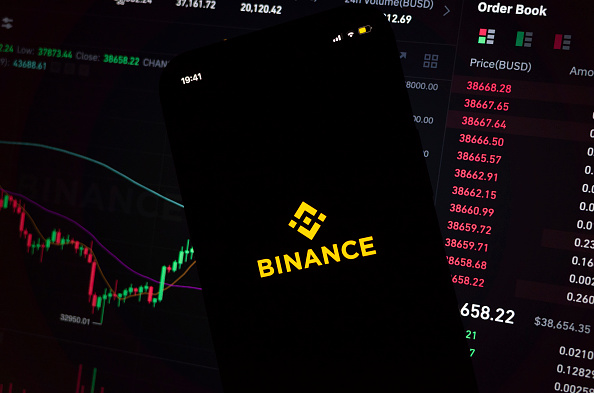
Binance launched Agent OS on Thursday, a platform that lets AI agents analyze markets and execute trades on behalf of users. The platform connects AI applications—including OpenAI's ChatGPT, Anthropic's Claude, and others—directly to Binance's trading infrastructure, allowing agents to access market data, view accounts, and place orders.
Why it matters
As AI moves from answering questions to taking financial action, Binance has placed most responsibility for oversight on users themselves. The exchange does not impose caps on how much an agent can trade or lose within a sub-account; instead, users must manually set permissions, configure dedicated sub-accounts for agents, and decide whether agents can trade freely or must seek approval for each order. Binance cannot see the reasoning behind an agent's decisions—only the resulting trades—leaving limited visibility into whether a decision was compromised or based on faulty information.
What to watch
Binance's Agentic Wallet (used for decentralized-finance and payment transactions) carries Binance-set daily limits: $50,000 for regular swaps, $100,000 for DeFi transactions, and $20 for x402 payments. Competing exchanges—Kraken, Coinbase, and OKX—have already launched their own AI agent trading tools, signaling this is becoming a standard feature across the crypto industry.
Summaries like this, in your inbox every morning.
Binance's launch of Agent OS reflects a broader shift in the AI industry away from passive chatbots toward agents that take direct action on behalf of users—in this case, managing real financial assets. The platform integrates established Binance services (APIs, wallet infrastructure, payment systems) with support for the Model Context Protocol, a developer standard that enables AI applications to interface with external systems. By choosing to emphasize user control over platform-level restrictions, Binance is placing the burden of risk management on users rather than building automated guardrails. This design choice appears deliberate: according to Jeff Li, Binance's vice president of product, the sub-account sandbox and granular permissions model give users "the power" to decide what agents can do, framing this as a feature rather than a limitation. Yet the lack of a separate trading cap and Binance's limited visibility into agent reasoning create potential vulnerabilities—if an agent is compromised through a prompt-injection attack or manipulated by faulty data, Binance's existing security and anti-money-laundering policies offer some protection, but only after the fact. The fact that competing exchanges (Kraken, Coinbase, and OKX) have already launched similar agent-trading platforms suggests this is becoming table stakes in the crypto industry, not a differentiator.
Pick your industry and the AI tools you use, and get news related to your work every day.
Free · 30 seconds with Google · unsubscribe anytimeWhat is AIToday? →
Ask AI anything about this article. The AI reads this article, earlier AIToday articles, and Wikipedia, and cites its sources. Q&As are published on this page for other readers too.
Meta introduced Muse Wonder and Muse Wonder Full, calling them its most capable models for personal and profes…

Intel shared new details on its Intel GPU D-series, code-named Crescent Island, which packs up to 480 GB of LP…

Citi named Constellation Energy the top retail electricity company positioned to handle potential AI-driven di…
Anthropic and Google Cloud released an on-demand technical workshop covering multi-layered memory architecture…

Epic Games delayed its Disney collaboration — a shooter featuring Marvel and Star Wars characters — that had b…

Bank of America analyst Tal Liani upgraded Salesforce to Buy from Underperform and raised his price target to…