AMD, AT&T, and Microsoft have introduced OTel 2.0, an open-source AI model tailored for telecommunications, trained on more than 1 trillion tokens. The collaboration signals a shift toward industry-specific, vendor-neutral AI tools that telecom operators can adapt for their own networks without dependency on a single supplier.
Summaries like this, in your inbox every morning.
Sign up free →What happened
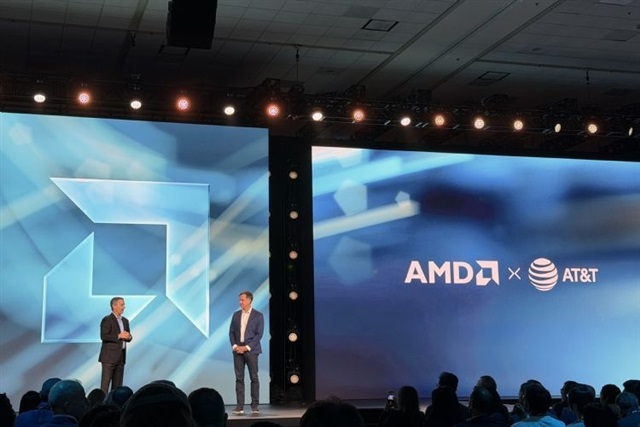
AMD, AT&T, and Microsoft unveiled OTel 2.0, an open-source telecom large language model (LLM — AI that understands and generates text), at AMD's Advancing AI 2026 conference. The model completed training on more than 1 trillion tokens.
Why it matters
Telecom companies need AI systems built specifically for their networks and operations; a jointly developed open-source model means carriers can customize and deploy it without vendor lock-in, reducing costs and enabling faster innovation in how networks serve customers.
What to watch
The model's availability and performance metrics in real telecom deployments; whether other carriers adopt OTel 2.0 or build competing alternatives.
AMD announced OTel 2.0, an open-source telecom large language model, in collaboration with AT&T and Microsoft at AMD's Advancing AI 2026 conference. The model completed a training pipeline of more than 1 trillion tokens, indicating substantial computational investment. AT&T contributed AMD Instinct GPUs to support the training and deployment of the model. By releasing OTel 2.0 as open-source software, the three partners aim to give telecommunications carriers direct access to AI technology tailored to network operations without tying them to a single vendor's proprietary system. This move positions the three companies at the center of AI adoption in the telecom sector and creates a foundation other carriers can build upon.
The unveiling of OTel 2.0 reflects a broader shift in how enterprise AI is being built and deployed. Rather than relying on general-purpose large language models, telecommunications carriers are partnering with hardware makers and cloud providers to create purpose-built AI systems optimized for their specific workloads and infrastructure. By positioning OTel 2.0 as open-source, the three partners enable a telecom ecosystem to standardize on a common foundation while allowing individual carriers to fine-tune and adapt the model to their networks. This approach contrasts with proprietary AI models and suggests that in specialized sectors, collaborative, open development can reduce fragmentation and lower barriers to adoption.
AI-summarized, only the topics you pick — one digest a day via Email, Slack, or Discord.
Free · takes 30 seconds · unsubscribe anytime
No comments yet. Be the first to share your thoughts!
Log in to join the discussion


Get curated AI news from 200+ sources delivered daily to your inbox. Free to use.
Get Started FreeFree · takes 30 seconds · unsubscribe anytime
1 minute a day. The AI essentials.
200+ sources · Email / LINE / Slack