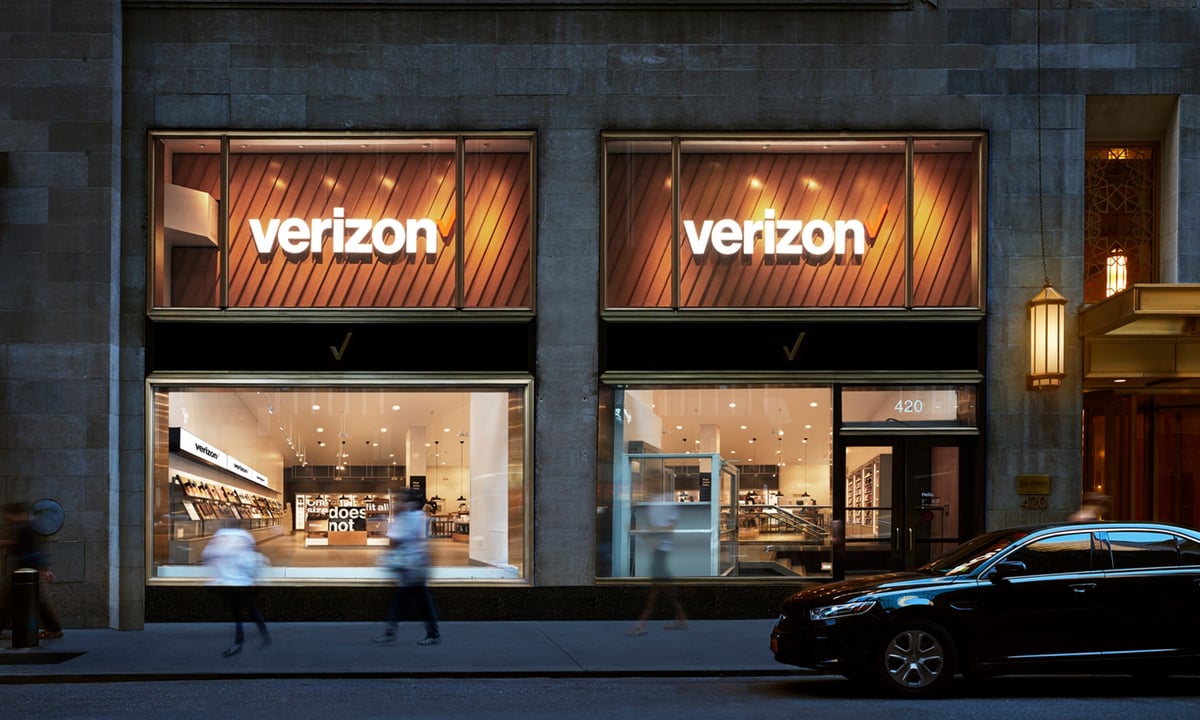
Verizon Communications stock climbed 5.72% on Friday after the company reported strong subscriber growth and surging free cash flow in Q2, along with a more than $1 billion(約1600億円) deal with Google to use its dark fiber infrastructure for AI data centers. CEO Dan Schulman said this Google agreement is the first of multiple AI-focused deals expected by year-end, collectively worth multiple billions of dollars in revenue over the coming years, prompting management to raise its 2026 earnings guidance to 6% to 7% growth.
Summaries like this, in your inbox every morning.
Sign up free →What happened
Verizon shares rose after the telecom reported 184,000 new postpaid phone customers and 348,000 broadband accounts in Q2, with adjusted earnings up 6.6% to $1.30 per share and free cash flow surging 24.4% to $6.4 billion(約1兆円). CEO Dan Schulman revealed a deal with Google valued at more than $1 billion(約1600億円) to use Verizon's dark fiber (unused optical infrastructure) for Google's AI data centers.
Why it matters
Lower customer acquisition costs and churn rates are boosting Verizon's profit margins and cash generation. Schulman signaled this Google deal is "just the beginning," with other AI-focused deals expected by year-end that, taken together, are projected to bring multiple billions of dollars in revenue over the next several years. The company also raised its 2026 full-year earnings forecast to 6% to 7% growth, to between $4.99 and $5.04 per share.
What to watch
Verizon expects to announce additional AI-infrastructure deals by year-end. The company's new flat-rate unlimited mobile plans and bundled offerings are attracting subscribers based on value rather than promotions, a shift that may shape competitive dynamics in wireless and broadband.
Verizon Communications reported Q2 results that sent its stock up 5.72%, driven by a combination of strong subscriber additions and a landmark AI infrastructure partnership. The wireless carrier added 184,000 postpaid phone customers in the quarter, marking its biggest Q2 gain in lucrative postpaid consumer accounts in half a decade. On the broadband side, Verizon added 348,000 accounts, comprising 193,000 fixed wireless customers and 155,000 fiber clients. CEO Dan Schulman attributed these gains to the company's new flat-rate unlimited mobile plans and bundled offerings, which he said help attract and retain subscribers "based on real value rather than subsidized promotions." This strategy is also improving Verizon's financial efficiency: lower customer acquisition costs and churn rates are boosting profit margins and cash generation.
The financial metrics underscore the operational improvement. Adjusted earnings rose 6.6% to $1.30 per share in the quarter. Operating cash flow surged 16.3% to $10.4 billion(約1.7兆円), while free cash flow jumped 24.4% to $6.4 billion(約1兆円). These results prompted management to lift its full-year financial forecast, with the company now projecting adjusted earnings per share growth of 6% to 7%, to between $4.99 and $5.04 in 2026.
The catalyst for today's enthusiasm, however, was Schulman's disclosure of a more than $1 billion(約1600億円) deal with Alphabet's Google. Under the arrangement, Google will use Verizon's dark fiber—unused optical infrastructure available for lease or purchase—to connect its AI data centers. Schulman characterized this as "just the beginning" of a new AI-focused growth strategy and disclosed that "other deals that we expect to announce by year-end...are expected to be worth multiple billions of dollars in revenue over the next several years." The combination of solid operational execution and the emergence of a new infrastructure revenue stream appears to have convinced investors that Verizon has both stabilized its core business and positioned itself to benefit from the AI buildout.
Verizon's stock surge reflects two convergent tailwinds: strong operational momentum in core wireless and broadband, and a new revenue stream from AI infrastructure. The Q2 results—particularly the 184,000 postpaid phone additions (the largest in five years for Q2) and 348,000 broadband adds (including 193,000 fixed wireless accounts)—demonstrate that the company's value-based pricing strategy is working. CEO Schulman attributed this performance to flat-rate unlimited plans and bundles that appeal to subscribers without heavy promotions, a shift that is also lowering customer acquisition costs and churn. This operational efficiency is flowing directly to the bottom line: free cash flow jumped 24.4%, a metric closely watched by investors seeking returns.
The Google announcement, however, signals Verizon's pivot into the AI infrastructure gold rush. By leasing dark fiber to hyperscalers building AI data centers, Verizon monetizes existing infrastructure with minimal incremental capital. Schulman's statement that the Google deal is "just the beginning" and that multiple deals worth "multiple billions of dollars" are expected by year-end suggests management sees this as a material new growth vector. The company's decision to raise full-year earnings guidance (now 6% to 7% growth for 2026) reflects confidence that both subscriber growth and these infrastructure contracts will compound shareholder value.
AI-summarized, only the topics you pick — one digest a day via Email, Slack, or Discord.
Free · takes 30 seconds · unsubscribe anytime
No comments yet. Be the first to share your thoughts!
Log in to join the discussion


Get curated AI news from 200+ sources delivered daily to your inbox. Free to use.
Get Started FreeFree · takes 30 seconds · unsubscribe anytime
