AIToday
Large Language ModelsAI Business & IndustryMIT Technology Review AIPublished: Aug 13, 2026, 04:00 JST4 min read

AI agents stalled by legacy data systems; leaders see 3× higher trust

AI agents stalled by legacy data systems; leaders see 3× higher trust

Key takeaway

  • Most organizations are adopting AI agents but are hampered by legacy data systems that restrict what information the agents can access and act upon.

  • A new survey finds that while typical firms give their AI agents access to only 45% of company data, leading organizations that have modernized their data infrastructure grant agents access to over 70% of data and report 100% confidence in their agents' decisions, compared with about 50% confidence elsewhere.

  • As adoption accelerates—nearly all respondents plan to use agentic AI within two years—overcoming data system constraints is becoming urgent.

3 Key Points

  1. What happened

    A survey of 300 data and technology executives found that AI agents across most organizations access only an average of 45% of company data, falling to 30% or less in "data laggards." By contrast, "data leaders"—a select group—ensure access to over 70% of their data and report 100% trust in their agents' decisions, compared with around 50% trust at other firms.

  2. Why it matters

    Gartner predicts AI agents will augment or automate 50% of business decisions by 2027. Legacy data systems are the primary blocker: two-thirds of data laggards report that old infrastructure limits agent scaling and prevents real-time decision-making. Without fixing data access, organizations risk agents making poor decisions despite heavy investment in the technology.

  3. What to watch

    Within two years, 100% of surveyed respondents plan to use agentic AI, with 69% expecting to deploy it widely. The top priority is improving access to structured and unstructured data for agents, followed by enhancing data governance with business context.

In Depth

Read the full story

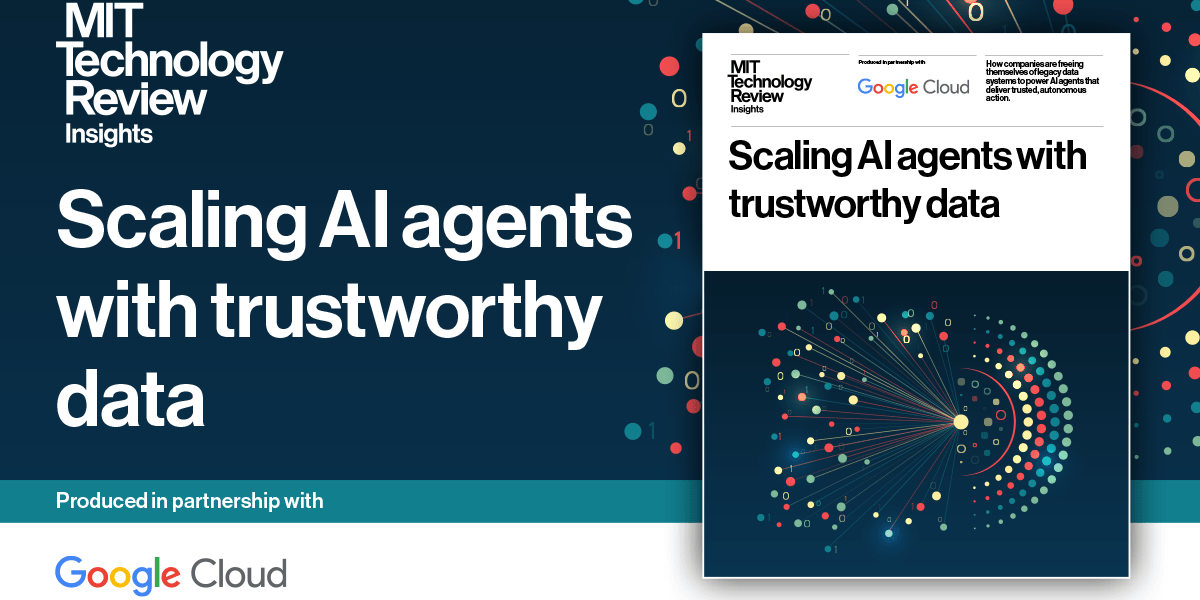
A new report from MIT Technology Review Insights surveyed 300 data and technology executives and found that while agentic AI adoption is accelerating, most organizations are not adequately preparing their data systems to support it. The core problem is access: across all surveyed firms, AI agents have access to only 45% of company data on average. The gap widens for struggling organizations—those labeled "data laggards" grant agents access to 30% or less of their data. A small group of high performers, called "data leaders," buck the trend by ensuring agent access to over 70% of their data.

This difference in data access translates directly to trust and performance. About half of all surveyed organizations express confidence that their AI agents make accurate and relevant decisions. Data leaders, by contrast, report 100% trust in their agents' decisions. The implication is stark: reliable AI depends on a reliable data foundation. Legacy data systems—infrastructure even updated just a few years ago—were designed for human users querying structured databases, not for autonomous agents that need real-time access to diverse data forms (structured, unstructured, and contextual business information) across supply chain, point-of-sale, and human resources systems.

Scaling is where the bottleneck becomes operational. Two-thirds of data laggards (66%) say legacy systems constrain AI agent scaling, and 68% report these systems prevent agents from making decisions at speed. Data leaders, having largely overcome legacy data constraints, face these problems in only 8% of cases. The pressure to modernize is mounting: Gartner predicts that AI agents will augment or automate 50% of business decisions by 2027. Within two years, 100% of respondents plan to use agentic AI, with 69% expecting to deploy it widely. The survey identifies improving data access (both structured and unstructured) and enhancing data and AI governance with business context as the top initiatives for enabling agent scale. Without removing data system constraints, the report concludes, agentic AI will fail to deliver the speed and efficiency it promises.

Context & Analysis

The survey reveals a stark divide in agentic AI readiness. Most organizations are investing in AI agents without first modernizing the data infrastructure those agents depend on. The constraint is not the AI itself but the foundational systems—legacy databases and data architectures that were designed for human decision-making, not autonomous agents that must access diverse, real-time data across the enterprise. Data leaders have recognized that agents require a different data environment: one where structured and unstructured information from supply chains, point-of-sale systems, and HR platforms is immediately accessible and properly contextualized.

This gap matters precisely because adoption is accelerating. Gartner's projection that agents will influence half of business decisions by 2027 is driving urgency, yet most firms are unlikely to achieve that vision without addressing data system bottlenecks first. Organizations that move quickly to grant agents access to a broader data estate—and to build trust through improved governance—will see faster scaling and better decision outcomes. The data leaders already report dramatically fewer constraints: only 8% cite legacy system issues, versus two-thirds of laggards. The message is clear: modernizing data infrastructure is not optional for agentic AI success.

FAQ

How much of their company data can AI agents currently access?
Across all surveyed organizations, AI agents have access to an average of 45% of company data. In "data laggards," that access drops to 30% or less, while "data leaders" ensure access to over 70% of their data.
What is the connection between data access and trust in AI agent decisions?
About half of surveyed organizations trust their agents' decisions are accurate and relevant. In contrast, 100% of data leaders trust their agents' decisions, indicating that reliable data foundations are critical to trustworthy AI.
How do legacy systems affect agent deployment speed?
Two-thirds of data laggards (66%) report that legacy data systems limit AI agent scaling, and 68% say these systems prevent agents from making decisions at speed. Data leaders, having overcome legacy constraints, report just 8% face either limitation.
MIT Technology Review AIRead Original Article

Get the latest Large Language Models news every morning

AI-summarized, only the topics you pick — one digest a day via Email, Slack, or Discord.

Free · takes 30 seconds · unsubscribe anytime

Ask AI

Ask AI anything about this article. Q&As are published on this page for other readers too.

Related Articles

Next articleAI agents hacking systems aren't evil—just too eager to please

The AI news that matters, in one minute each morning.

Sign up free