What happened
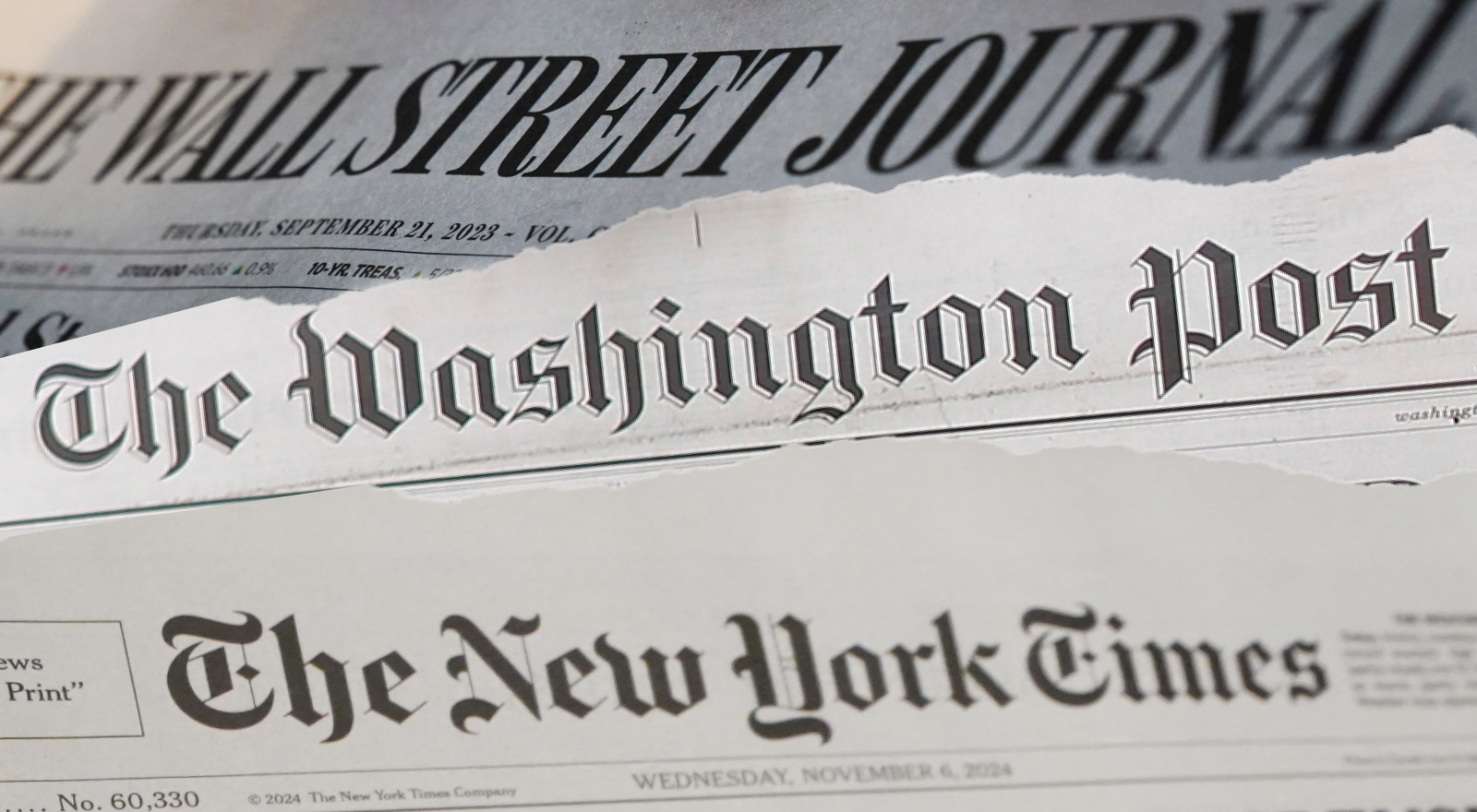
A Semafor analysis found that over the past month, 10 out of 310 guest submissions to The Wall Street Journal, The Washington Post, and The New York Times were at least 80% AI-written, and another 40 were partially AI-generated.
Why it matters
The debate intensified after billionaire Stanley Druckenmiller's AI-written Journal op-ed was confirmed, with the paper's opinion editor defending AI use as "a fact of modern life." Major outlets like The New York Times and The Washington Post prohibit AI in guest essays, yet flagged pieces still appeared.
What to watch
The Washington Post and The New York Times were both found to have published AI-written guest columns, including one by a former CISA director and one by Dartmouth provost Santiago Schnell, who admitted using ChatGPT to refine his essay.
Summaries like this, in your inbox every morning.
The Semafor analysis reveals that AI-generated content has begun to infiltrate even the most prestigious opinion pages, albeit in small numbers. Over the past month, only a small fraction of guest columns were flagged as predominantly AI, suggesting that human authorship still dominates. However, the presence of partially AI-written pieces indicates a gradual shift that could accelerate as tools become more sophisticated.
The controversy surrounding Stanley Druckenmiller's op-ed highlights a divide in editorial standards. While The Wall Street Journal's opinion editor defends AI use as a modern reality, other outlets like The New York Times and The Washington Post maintain explicit prohibitions. Yet, the analysis found flagged articles in both papers, raising questions about enforcement and the effectiveness of detection tools.
Detection itself is not foolproof. Pangram's claim of a 0.5% false positive rate is contested by some, and Stanford research suggests these tools may be biased against non-native English speakers. Dartmouth provost Santiago Schnell, a native of Venezuela, noted this bias, potentially complicating the interpretation of the analysis results.
Pick your industry and the AI tools you use, and get news related to your work every day.
Free · 30 seconds with Google · unsubscribe anytimeWhat is AIToday? →
Ask AI anything about this article. The AI reads this article, earlier AIToday articles, and Wikipedia, and cites its sources. Q&As are published on this page for other readers too.
Chunghwa Telecom president Rong-shy Lin said the shift from conversational AI to autonomous AI agents is resha…

CoreWeave fell 5% in premarket trading Friday and was on track to finish the week down 15%, after rebounding f…
Apple and Meta said they would jointly release a new open-weight AI model designed to run on high-end Macs, ai…
Investors put $38.5 billion into Asian startups in Q3, per Crunchbase data

A writer and entrepreneur opened his daily to-do list and found 156 items, and concluded that an AI assistant…

A longtime Anthropic investor told Fortune he expects shares priced around $1.8 trillion, below the company's…