
What happened
Collibra BV unveiled Live Map, Maestro, Guardian Agents and Agent Contracts — runtime governance tools meant to cut manual verification, rework and risk, which CEO Felix Van de Maele calls the "hallucination tax."
Why it matters
Van de Maele says governance has shifted from design-time policy documents to runtime, since the human judgment that used to sit in the middle is gone — so agents must be checked before they act, not after.
What to watch
Van de Maele claims Maestro lets customers automate up to 80% of governance work; the test is whether that holds when Guardian Agents block an action in a live AI gateway. He gave no pricing or launch dates.
WHO IT HITSThis lands on governance, risk and compliance teams plus the platform engineers running AI gateways and agent orchestration — the people responsible for the business context an agent receives and the boundaries it stays inside.
Summaries like this, in your inbox every morning.
Van de Maele's argument starts from a change in how enterprise AI is deployed. Two or three years ago, he said, there were people in the middle whose judgment could be counted on. That layer has gone away, and agents now take action across enterprise systems rather than only answering questions — which is why he frames governance as a runtime problem rather than a documentation and policy-setting exercise.
The pieces Collibra is pitching map onto that shift. Live Map handles context, pulling reusable relationships out of curated unstructured documents such as SharePoint files so a model does not re-parse the same data for every question, with Collibra's broader Knowledge Graph based on Neo4j supporting traversal among enterprise assets. Maestro applies agents to governance tasks traditionally done through manual stewardship, and Van de Maele said it can automate up to 80% of that work. Agent Contracts set out permitted behavior based on data sensitivity, operating context and risk, and Guardian Agents enforce them by compiling the contracts into a customer's existing AI gateways or orchestration tooling and blocking an action that does not align.
Van de Maele is candid that no single retrieval mechanism fits every task — vector stores, structured files, semantic search and graph grounded in business ontology all have a role, and the real question is routing the right context to the right mechanism at the right time. The stakes therefore seem to hinge on whether contract-based blocking holds up inside live gateways, where a false block and a missed one carry very different costs. Compliance and platform teams evaluating agent deployments may find the automation figure and the pre-action enforcement model the points worth testing first.
For example, today's edition would include:
AI-summarized, only the topics you pick: one digest a day via Email, LINE, or Slack.
Free · 30 seconds with Google · unsubscribe anytimeWhat is AIToday? →
Ask AI anything about this article. The AI reads this article, earlier AIToday articles, and Wikipedia, and cites its sources. Q&As are published on this page for other readers too.
CoreWeave completed the industry's first bring-up and validation of Nvidia Vera Rubin NVL72 on CoreWeave Cloud…

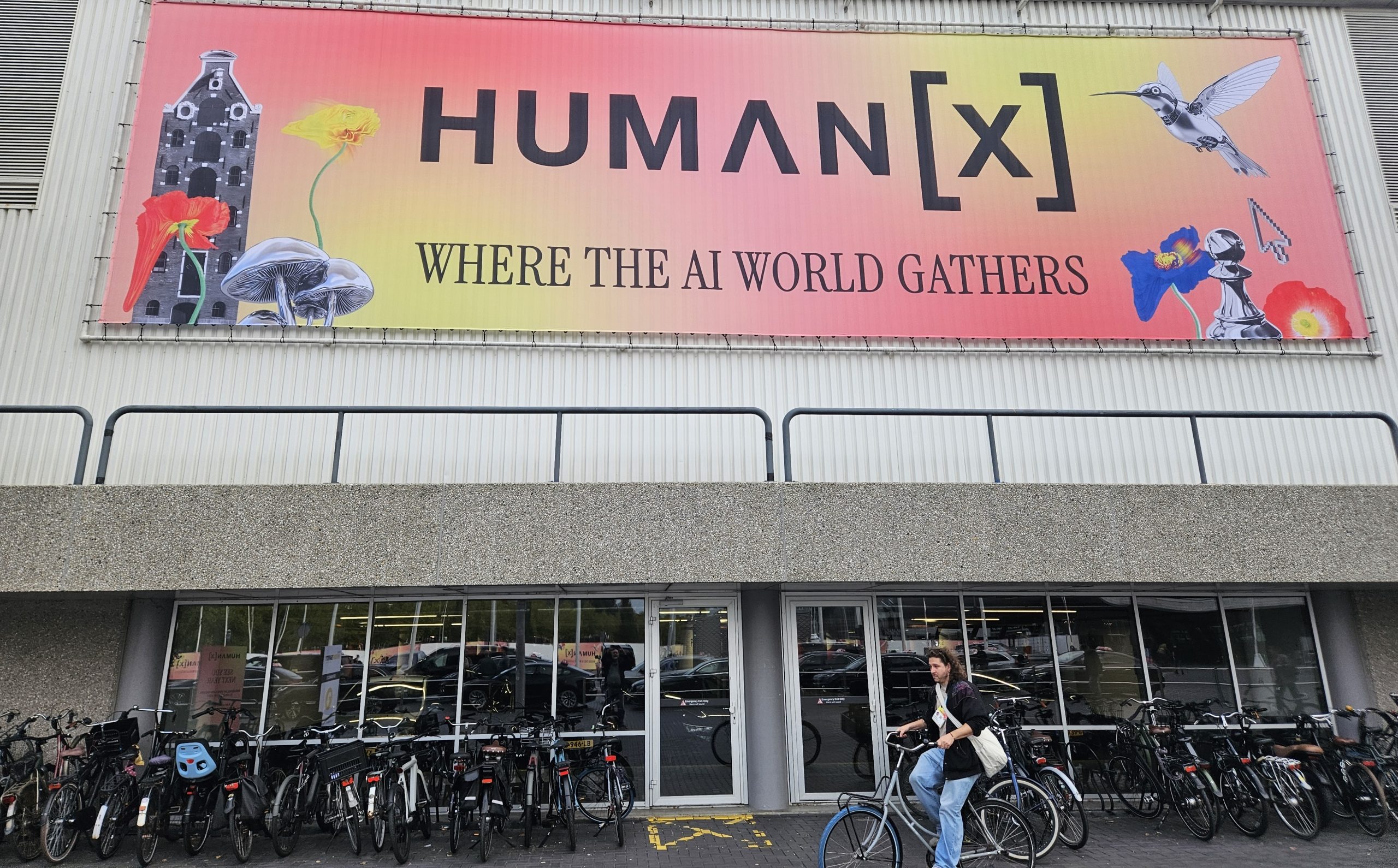
At HumanX Amsterdam 2026, Intellyx's Jason Bloomberg named 10 European startups — among them Distil labs, Lang…
Google Cloud revenue grew 82% year over year, and CEO Sundar Pichai highlighted a $514 billion backlog

Nscale, a British AI neocloud, announced $3.36 billion in convertible financing
Runway launched its first AI filmmaking course in 2024 at NYU’s Martin Scorsese Virtual Production Center, and…

McDonald's unveiled "Archy," an English- and Spanish-speaking AI drive-thru system it says exceeds 90% accurac…