AIToday

Deezer: AI tracks now over 50% of daily uploads

TechCrunch AI5h ago
Deezer: AI tracks now over 50% of daily uploads

Key takeaway

Music streamer Deezer reported that AI-generated music now accounts for more than 50% of daily uploads on its platform, up from just 10% in January 2025. To combat fraud and protect artist earnings, the company will remove AI tracks that have not been streamed in six months or are involved in schemes to artificially inflate revenue. The move reflects a broader struggle across the industry—there is no consensus yet on how much AI music streaming services should host, with platforms like Bandcamp banning it entirely while others like Spotify and Apple Music allow it under different conditions.

Summaries like this, in your inbox every morning.

Sign up free →

3 Key Points

  • What happened

    Music streaming platform Deezer announced that AI-generated music now represents more than 50% of daily uploads on its service. The company tracked uploads since last year and found the share has climbed steadily—from 10% (10,000 tracks per day) in January 2025 to 50% by June 2026 (90,000 tracks per day at peak).

  • Why it matters

    The flood of AI music is forcing streaming services to set their own rules. Deezer, which has been fighting music-streaming fraud for nearly two years, is now taking AI-music removal steps to protect artist payouts. Other platforms have adopted different approaches—Bandcamp bans AI tracks outright, Tidal cuts off their pay, while Spotify and Apple Music allow them with varying controls.

  • What to watch

    Deezer will remove AI-generated tracks that have not been streamed in the past six months or are tied to fraudulent streaming schemes. The company has also released detection technology that identifies tracks made with Suno and Udio (AI-music startups facing copyright lawsuits) and made the tool available to other platforms, though uptake remains unclear.

In Depth

Deezer, a music streaming service, announced on an unspecified date in 2026 that AI-generated music now makes up more than 50% of the tracks uploaded to its platform daily. The company has been monitoring AI-music uploads since the previous year, observing a consistent rise. This milestone marks a dramatic shift: in January 2025, AI-generated uploads accounted for only 10,000 tracks, or 10% of daily uploads. The share climbed to 18% (20,000 tracks) by April 2025, then to 28% (30,000 tracks) by September 2025. In November 2025, uploads reached 50,000 tracks per day, representing 34% of all daily uploads. The acceleration continued into 2026—by January, AI uploads hit 60,000 tracks (39% of daily uploads), and by April 2026, they had reached 75,000 tracks (44%). The peak came in June 2026, when AI-music uploads averaged 90,000 tracks per day.

The explosion of AI-generated music has created friction across the streaming industry. Some platforms have adopted restrictive policies: Bandcamp bans AI-generated tracks outright, and Tidal has cut off monetization for them. Others have taken a more measured approach—Apple Music uses a voluntary AI-tagging system, and Spotify has developed its own policy governing how much AI is used in music production. Deezer, which says it has been fighting music-streaming fraud related to AI music for nearly two years, is now adding new controls.

Deezer CEO Alexis Lanternier said in a statement: "Deezer has been at the frontline of fighting fraud and reducing payment dilution related to AI music for almost two years. Now that half of all daily uploads are AI-generated tracks, we are taking additional steps to safeguard the rights of artists and songwriters, while maintaining focus on music that fans actually love." The company's new measure will remove AI-generated tracks that have not been streamed in the past six months or are involved in fraudulent streams designed to inflate revenue. This approach aims to preserve legitimate AI music while filtering out content that appears to have little audience engagement or is part of schemes to manipulate payouts.

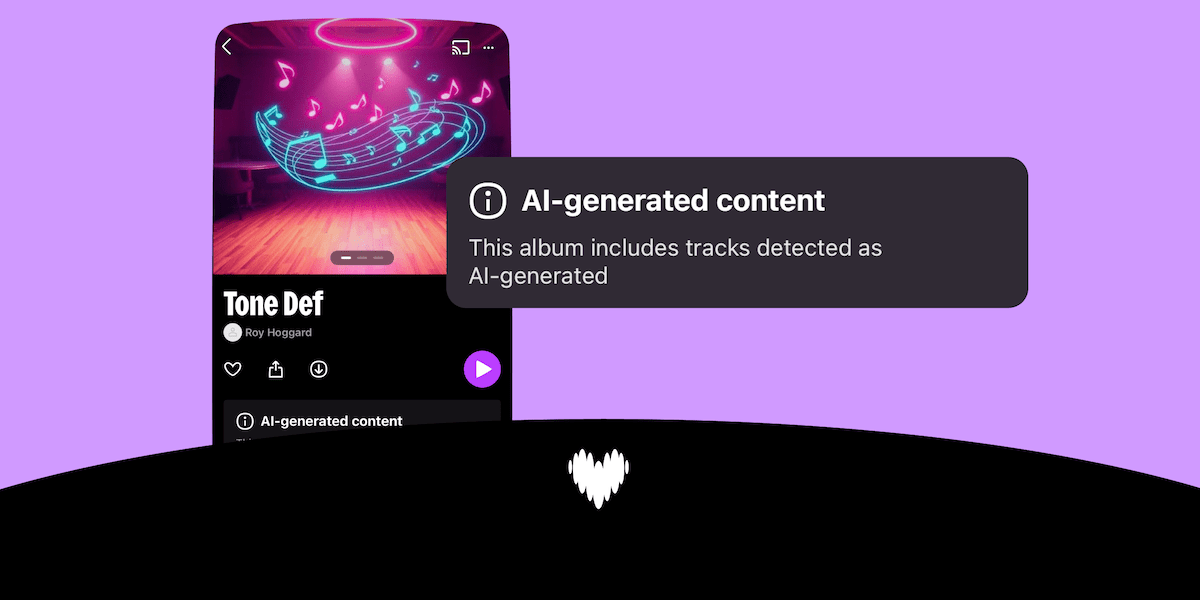
Deezer has also invested in technology to detect AI music. The company started labeling AI tracks on its platform last year and can identify tracks made with models from Suno and Udio, two AI-music startups that are currently embroiled in copyright lawsuits. Earlier in 2026, Deezer released its detection technology to other platforms, though it remains unclear whether any major streaming services have adopted it. Last month, Deezer also released a separate tool that allows users to scan Apple Music and Spotify playlists to identify AI-generated tracks.

Context & Analysis

Deezer's disclosure reflects the scale of AI music flooding streaming platforms and underscores the lack of industry-wide consensus on how to handle it. The company has been tracking uploads since last year and documented a sharp acceleration—the share more than quintupled from 10% in January 2025 to over 50% by June 2026. This trajectory forced the platform to act: Deezer says it has been fighting music-streaming fraud tied to AI music for nearly two years, but the volume now demands stricter enforcement.

How platforms respond to AI music varies widely. Bandcamp and Tidal take hard lines—one bans such tracks entirely, the other cuts off their monetization—while Spotify and Apple Music have adopted more permissive approaches with their own tagging and disclosure systems. Deezer's new removal policy (targeting tracks with no streams in six months and those linked to fraudulent playback schemes) sits somewhere in the middle: it allows AI music to remain but removes what appears to be low-value or inauthentic content. The company has also built detection tools for Suno and Udio models and shared the technology with other platforms, though it is unclear whether major services have adopted it yet.

FAQ

What exactly will Deezer remove?
Deezer will take down AI-generated tracks that have not been streamed in the past six months or are involved in fraudulent streams designed to drive up revenue.
How fast did AI music uploads grow on Deezer?
AI uploads climbed from 10,000 tracks per day (10% of daily uploads) in January 2025 to a peak of 90,000 tracks per day in June 2026, reaching more than 50% of all daily uploads.
Can Deezer detect AI music from specific companies?
Yes. Deezer's detection technology can identify tracks generated with models from Suno and Udio, the AI-music startups involved in copyright lawsuits. Deezer made this detection tool available to other platforms earlier this year.

Get AI news like this every morning

AI-summarized, only the topics you pick — one digest a day via Email, Slack, or Discord.

Free · takes 30 seconds · unsubscribe anytime

Discussion

No discussion yet for this article

Stay ahead with AI news

Get curated AI news from 200+ sources delivered daily to your inbox. Free to use.

Get Started Free

Free · takes 30 seconds · unsubscribe anytime

1 minute a day. The AI essentials.

200+ sources · Email / LINE / Slack

Get it free →