What happened
Magnitude, an open-source inference engine, runs Qwen 3.8 Flash Next, a 180B model, on an M4 Max with 64 GB of memory at 56 tokens/sec with a 2-bit quant and a 64k context.
Why it matters
This shifts the practical limit for running large local models from memory capacity to storage speed, potentially making high-end workstations unnecessary for models of this size.
Summaries like this, every morning.
Running large language models locally has traditionally been constrained by GPU VRAM or unified memory: if the weights didn't fit, the model didn't work. This is why 180B-class open models have required $10-20K workstations. Magnitude changes that by exploiting the sparse mixture-of-experts (MoE) architecture of modern open models like Qwen 3.8 Flash Next, where only about 6B of 180B parameters are active per token. Instead of keeping all weights in memory, Magnitude streams inactive experts from NVMe SSD, keeping only attention and frequently reused experts in fast memory.
A naive SSD streaming approach would crawl at a couple of tokens/sec due to cache eviction, layer-by-layer disk reads, speculative decoding touching more experts, and long prompts flushing the cache. Magnitude addresses all four with expert ranking, prefetching, direct NVMe reads, and prefill-aware caching, achieving 56 tokens/sec on an M4 Max with 64 GB. The engine never writes to SSD, avoiding flash wear, and more RAM or VRAM still helps by keeping more experts hot.
This shifts the bottleneck from memory size to storage speed, potentially making high-end GPUs less necessary for local inference of large models. Magnitude is free, Apache 2.0 licensed, and integrates with popular coding tools via an OpenAI-compatible API.
Pick your industry and the AI tools you use, and get news related to your work every day.
Free · 30 seconds with Google · unsubscribe anytimeWhat is AIToday? →
Ask AI anything about this article. The AI reads this article, earlier AIToday articles, and Wikipedia, and cites its sources. Q&As are published on this page for other readers too.
The Digital Agency said a public call for Japanese-made large language models for ガバメントAI 源内 in 令和9年度(2027年度)…

NVIDIA said on November 27 that its RTX Spark compact desktop is on sale from ASUS, Dell and MSI, with a 20-co…
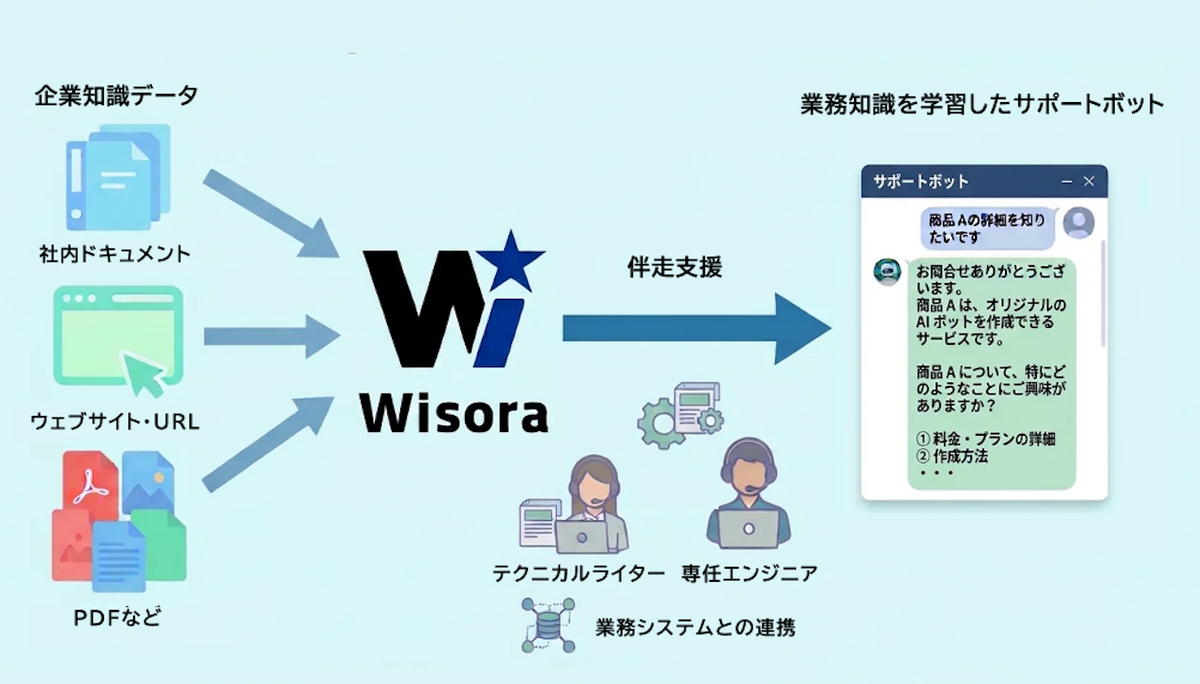
Soracom said on November 27 that Wisora Enterprise now standardly includes technical writers who organize manu…
RayNeo will run a Black Friday sale from November 27 to December 7, 2026, on Amazon.co.jp and its Japan site…

MetAI launched MetAI Creator Studio, which uses AI to propose new titles, descriptions, chapters, thumbnails a…

The Digital Agency is soliciting domestic LLMs — including small and domain-specific models — to be trialled o…

