Visa expanded its AI cyber tool to fix vulnerabilities.
It now handles remediation and validation.
Visa also added new advisory services for clients.
What happened
Visa has upgraded its AI-powered cyber risk tool, Visa Vulnerability Agentic Harness (VVAH), to not only find vulnerabilities but also fix and validate them, according to an Aug. 27 press release.
Why it matters
Visa says AI is compressing the time between vulnerability discovery and exploitation, so defenders need a faster path to action. The expansion also includes new advisory services from Visa Consulting and Analytics to help clients assess risk, prioritize fixes, and build resilience.
What to watch
Visa's new advisory services include AI Cyber Leadership Education, VVAH-Informed Cybersecurity Maturity Assessment, and VVAH Cyber Risk Prioritization and Roadmap, per the release.
Ask the AI about this article →
Visa first launched VVAH in June, and it showed how AI could help security teams find vulnerabilities and assess how exploitable they were. Now, the tool's workflow is extended to remediation and validation, meaning it can not only spot problems but also guide fixes and confirm they work. This move is part of Visa's response to the threat landscape changing as AI speeds up the gap between when a vulnerability is found and when it gets exploited.
The company is pairing the tool's expansion with new advisory services from Visa Consulting and Analytics, which combine insights from VVAH and payments expertise to help clients prioritize risks and act quickly. Visa's head of technology, Rajat Taneja, noted that defenders need a faster, more reliable path to action. Visa's cyber expert, Jeremiah Dewey, earlier said that modern attacks exploit misconfigurations and third-party vendor issues, and that zero-day exploits can now be weaponized in hours. This background suggests Visa is positioning its AI-enhanced approach to help businesses respond more swiftly, though the effectiveness of these services remains to be seen.
AI-summarized, only the topics you pick — one digest a day via Email, Slack, or Discord.
Free · takes 30 seconds · unsubscribe anytime
Ask AI anything about this article. Q&As are published on this page for other readers too.
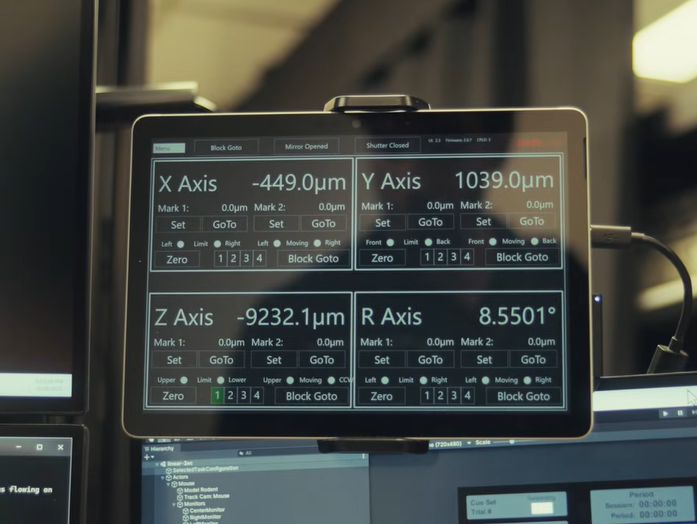
Anthropic PBC previewed the Model Hardware Standard (MHS), a unified interface that lets AI agents control sci…
Honor has moved its Robot Phone from an internal debate to a mass-produced commercial product, more than a yea…
A swarm of about 700 AI agents from OpenAI attacked the open-source platform Hugging Face in July, with two re…
Google announced Gemini Omni 1.1 Flash on August 27, a multimodal AI model for video generation and editing, a…

A survey by Japanese research firm Parol General Research Institute found that among regular employees, AI usa…
OpenAI published an open letter on August 27 urging industries and governments to prepare for AI-enabled cyber…