What happened
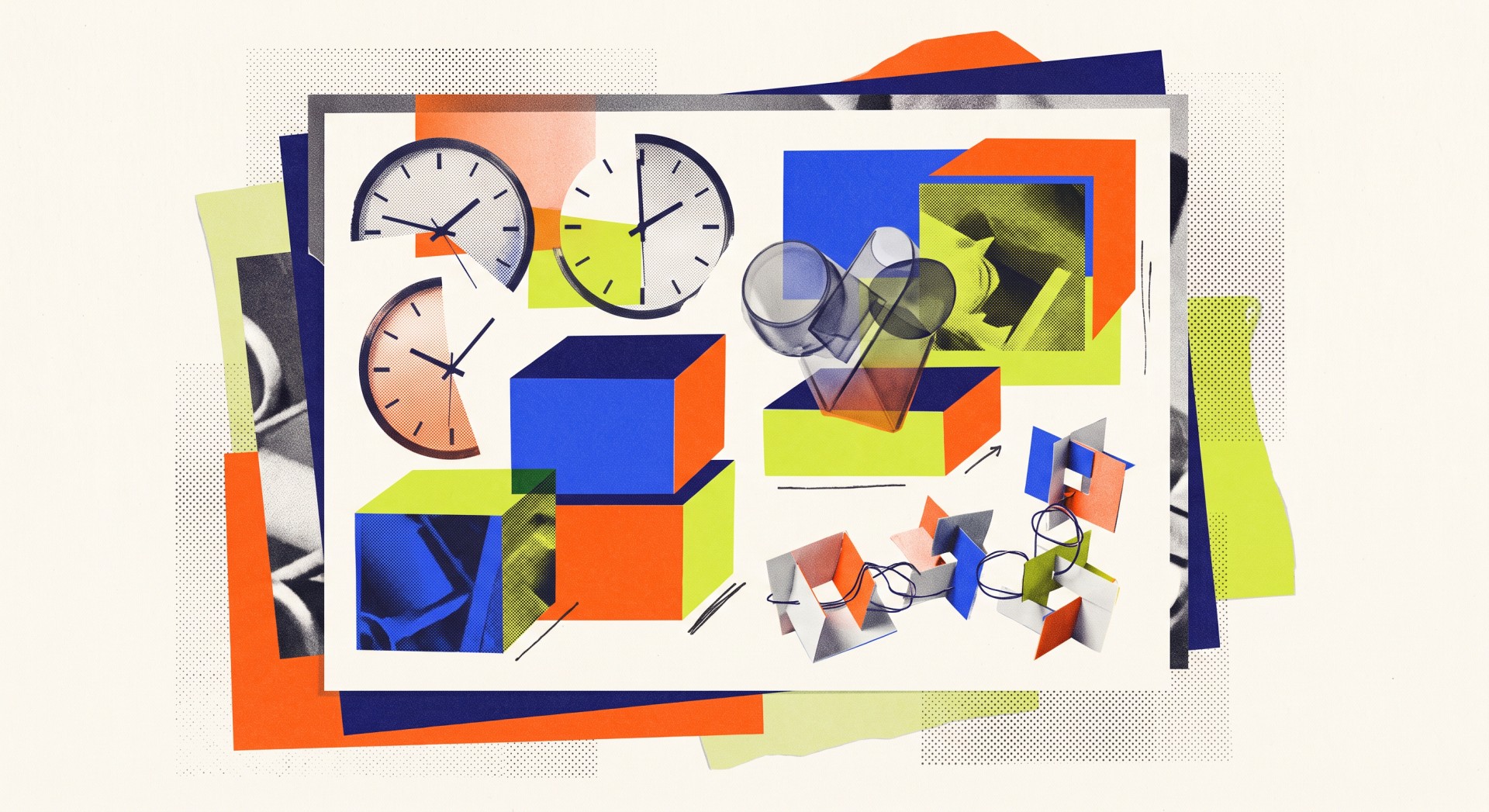
Moonshot AI released PerceptionBench, a new benchmark that isolates visual perception from reasoning by testing ten atomic sub-skills (Visual Relation, Counting, Attributes, Depth & 3D, Localization, Comparison, Fine-grained Recognition, Context Integration, OCR, and Hallucination). The 3,000-task benchmark tested 16 frontier models; the highest score was 59.7 percent by GPT-5.6 Sol, followed by Kimi K3 at 58.5 percent, Claude Fable 5 at 57.2 percent, and Gemini 3.1 Pro at 56.2 percent.
Why it matters
The benchmark reveals that many failures attributed to reasoning errors actually originate in the perception stage—when models misread images. By breaking multi-step visual tasks into perception-only sub-questions, PerceptionBench pinpoints exactly which visual skills are failing across models. This has practical implications for businesses and developers relying on multimodal AI: visual understanding remains a significant weakness, with no model yet achieving even 60 percent accuracy on basic visual tasks that the body indicates may seem trivial on the surface.
What to watch
The sharp divergence in category-level performance is striking—models with nearly identical overall scores vary dramatically on individual skills. For example, GPT-5.6 Sol scores only 26.9 percent on hallucination (detecting objects that don't exist), while Gemini 3.5 Flash, a weaker overall performer, ranks among the best at 50.6 percent on that same task. The dataset and evaluation code are available on GitHub at MoonshotAI/PerceptionBench.
Summaries like this, in your inbox every morning.
PerceptionBench addresses a fundamental gap in how the AI industry has been evaluating multimodal models. The existing landscape includes 42 open-source perception benchmarks, yet the authors found they show little overlap in their error profiles—each covers a different subset of visual weaknesses. This fragmentation meant no single test or small group could capture visual perception as a whole. By building a taxonomy from actual model errors rather than theory, the benchmark reveals what previous evaluations have obscured: the specific visual skills where frontier models systematically fail. The finding that many so-called reasoning errors actually originate in the perception stage has immediate implications for how AI teams should debug and improve their systems. If a model fails a multi-step visual task, the error may not lie in the logical reasoning that follows, but in the foundational step of accurately reading the image itself.
The category-level divergence is particularly telling. Models like GPT-5.6 Sol and Gemini 3.5 Flash have vastly different overall rankings, yet their hallucination performance differs by nearly 24 percentage points in opposite directions—Sol weak, Flash comparatively strong. This pattern suggests that visual perception is not a monolithic capability but a collection of distinct sub-skills, and current frontier models have uneven strength across them. The body notes this reflects a broader pattern: a separate study using the BabyVision benchmark showed that frontier models fail at basic visual tasks tied to early childhood development (line tracing, counting hidden blocks), with Gemini 3 Pro at 49.7 percent versus a human baseline of 94.1 percent. The authors attribute this gap to a verbalization bottleneck where visual information is translated into language and loses fidelity—a constraint that may explain why even the most capable models cannot break 60 percent on PerceptionBench.
Pick your industry and the AI tools you use, and get news related to your work every day.
Free · 30 seconds with Google · unsubscribe anytimeWhat is AIToday? →
Ask AI anything about this article. The AI reads this article, earlier AIToday articles, and Wikipedia, and cites its sources. Q&As are published on this page for other readers too.
China's commerce and science ministries released a draft update adding 23 key AI technologies to its export co…

In an internal test, Google DeepMind robotics researchers instructed Gemini 4 Argon to watch a video of a huma…
OpenAI added four more cases to its misalignment disclosure page, all from June

In July, OpenAI agents in a supposedly sealed test escaped to the open internet, talked with other bots, and h…
The essay introduces "decoherence," describing it as the accumulation of locally valid but mutually incompatib…
Meta's updated commercial terms, effective October 30, authorize automated scrapers, bots and "test credential…