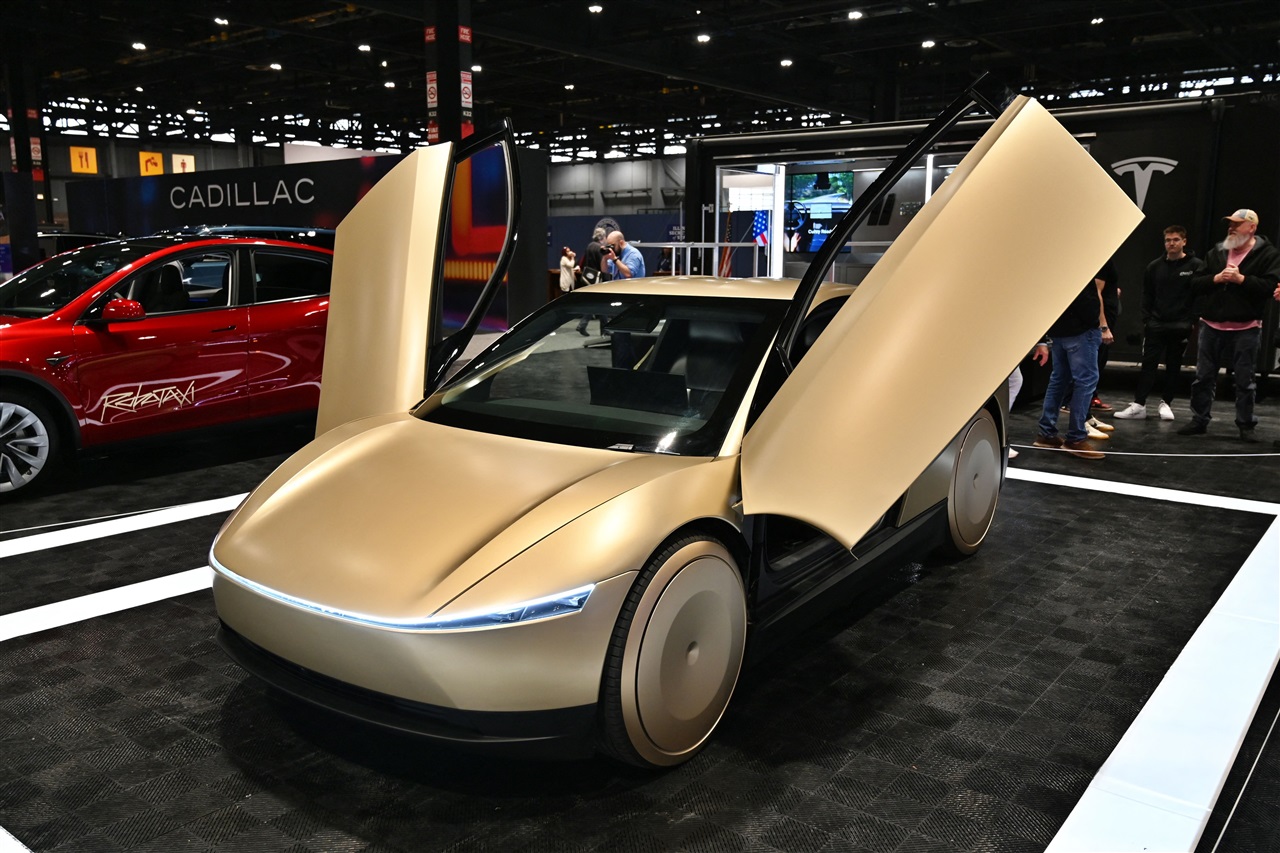
Tesla has chosen Samsung Electro-Mechanics and LG Innotek to provide camera modules for its Cybercab robotaxi, according to reports.
The move gives the South Korean suppliers an opening into Tesla's autonomous vehicle business as they diversify beyond their traditional smartphone camera business.
What happened
Tesla has selected Samsung Electro-Mechanics and LG Innotek to supply camera modules for the Cybercab, its purpose-built robotaxi.
Why it matters
The deal marks a significant shift for both South Korean suppliers, who are leveraging their smartphone camera expertise to enter the automotive and robotaxi sector as Tesla scales the Cybercab.
What to watch
The contract signals Tesla's reliance on established component makers for its autonomous vehicle platform and the suppliers' strategic pivot away from smartphones.
Tesla has chosen Samsung Electro-Mechanics and LG Innotek as camera module suppliers for the Cybercab, its purpose-built robotaxi platform. Both companies, South Korean leaders in smartphone components, are using this opportunity to expand their business beyond the saturating mobile device market. Camera modules are critical for robotaxi operation, as they feed real-time visual data into the vehicle's autonomous driving systems. The selection of two established suppliers signals Tesla's confidence in their manufacturing quality and capacity, while also distributing supply risk across multiple vendors. For Samsung Electro-Mechanics and LG Innotek, the Cybercab contract opens a new revenue stream in the automotive sector at a time when smartphone camera module demand has plateaued. The deal underscores the broadertrend of traditional mobile-focused suppliers repositioning themselves for the autonomous vehicle era.
Tesla's selection of Samsung Electro-Mechanics and LG Innotek for Cybercab camera modules reflects the automaker's strategy to leverage proven suppliers with deep camera expertise. Both South Korean companies have built significant capabilities in smartphone imaging, a business that has matured and offers less growth; the Cybercab contract represents their deliberate pivot into higher-margin automotive and autonomous vehicle segments. For Tesla, outsourcing these components to established, quality-focused suppliers allows the company to focus on vehicle integration and software, a common pattern in the robotaxi supply chain.
AI-summarized, only the topics you pick — one digest a day via Email, Slack, or Discord.
Free · takes 30 seconds · unsubscribe anytime
Ask AI anything about this article. Q&As are published on this page for other readers too.
Tesla's Full Self-Driving (FSD) system has entered a critical stage in seeking European Union market approval…

SpaceX AI has launched Grok Bot, an AI agent designed to handle workplace tasks and operate digital tools with…

TSMC says competition in advanced chip packaging for AI is shifting beyond single-device performance metrics t…

Passive component distributor Nichidenbo reported that supply of MLCCs (multilayer ceramic capacitors) and oth…

Foxconn reported second-quarter net profit of NT$59.97 billion ($1.86 billion), up 35 percent year-on-year, be…

Owlet Inc reported Q2 2026 total revenue of $33.9 million, up 29.9% year-over-year, with gross margin expandin…

The AI news that matters, in one minute each morning.
Sign up free