What happened
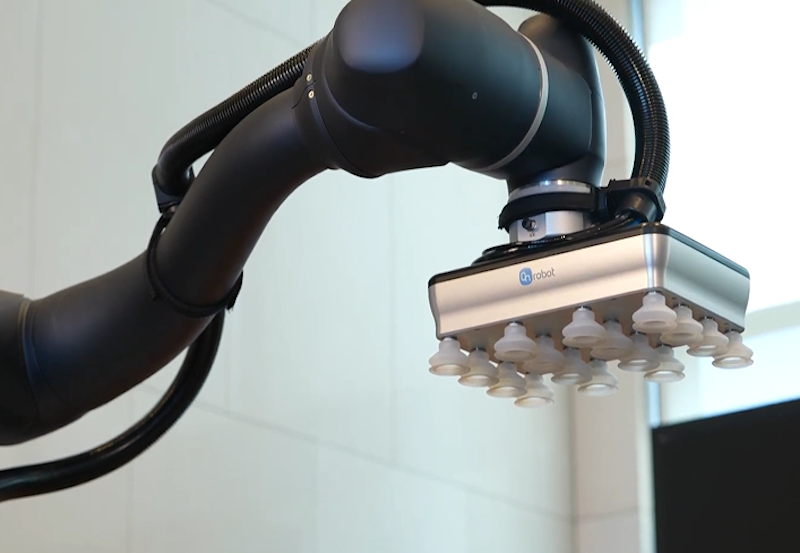
Doosan Robotics unveiled PalletizHD+, an AI-powered palletizing solution that automatically generates pallet patterns and optimizes robot movement without requiring specialist programming. The system can process up to 11 boxes per minute and handle up to four boxes simultaneously, and operators can configure new patterns in under two minutes using a single-screen interface.
Why it matters
Manufacturers struggle to adapt palletizing operations when products, packaging, or production demands change—a task that traditionally demands extensive reprogramming and engineering work. PalletizHD+ eliminates that burden by providing a unified operating environment with drag-and-drop setup, so production teams can respond to change without robotics specialists.
What to watch
PalletizHD+ is built on Doosan Robotics' proprietary PalletizOS platform and combines the company's robotics expertise with over 25 years of automation knowledge from ONExia, acquired last year. The company plans to extend this AI-enabled approach to welding and surface finishing applications on a shared operating platform.
Summaries like this, in your inbox every morning.
Doosan Robotics' launch reflects a broader shift in industrial automation: moving complexity from the factory floor (where production workers operate equipment) to software. Palletizing—stacking boxes onto pallets—has long been a bottleneck for manufacturers running multiple product types or frequent changeovers, because each new box size or pallet layout historically required a robot programmer to rewrite code. PalletizHD+ inverts that model by embedding the engineering intelligence into AI and a visual interface, making reconfiguration a task for operators rather than specialists.
The timing of this launch also signals Doosan Robotics' strategy to consolidate its position in collaborative robotics (robots designed to work safely alongside humans) through vertical integration. The acquisition of ONExia last year brought 25 years of automation domain expertise; PalletizHD+ is the first product integrating that knowledge directly into Doosan's own robotics and software stack. The company has signaled plans to replicate this model—AI-enabled solutions on a shared operating platform—for welding and surface finishing, suggesting a longer-term push to become a software-first automation provider rather than purely a hardware vendor.
Pick your industry and the AI tools you use, and get news related to your work every day.
Free · 30 seconds with Google · unsubscribe anytimeWhat is AIToday? →
Ask AI anything about this article. The AI reads this article, earlier AIToday articles, and Wikipedia, and cites its sources. Q&As are published on this page for other readers too.
AIBotics completed its acquisition of NovaCore Labs' operating assets from PlayJamaica Limited, gaining 10 ser…

In an internal test, Google DeepMind robotics researchers instructed Gemini 4 Argon to watch a video of a huma…
Amulya Vishwanath, who spent seven years leading product marketing for Nvidia's robotics platforms, says robot…

Claire interviewed Rika Antonova of the University of Cambridge on the Robot Talk podcast about using AI to de…

An essay argues that after language models spread through cognitive work like writing and accounting, AI is no…

Skild AI used Nvidia Isaac Sim to give its S1 model one objective — score a goal — and let it compete against…