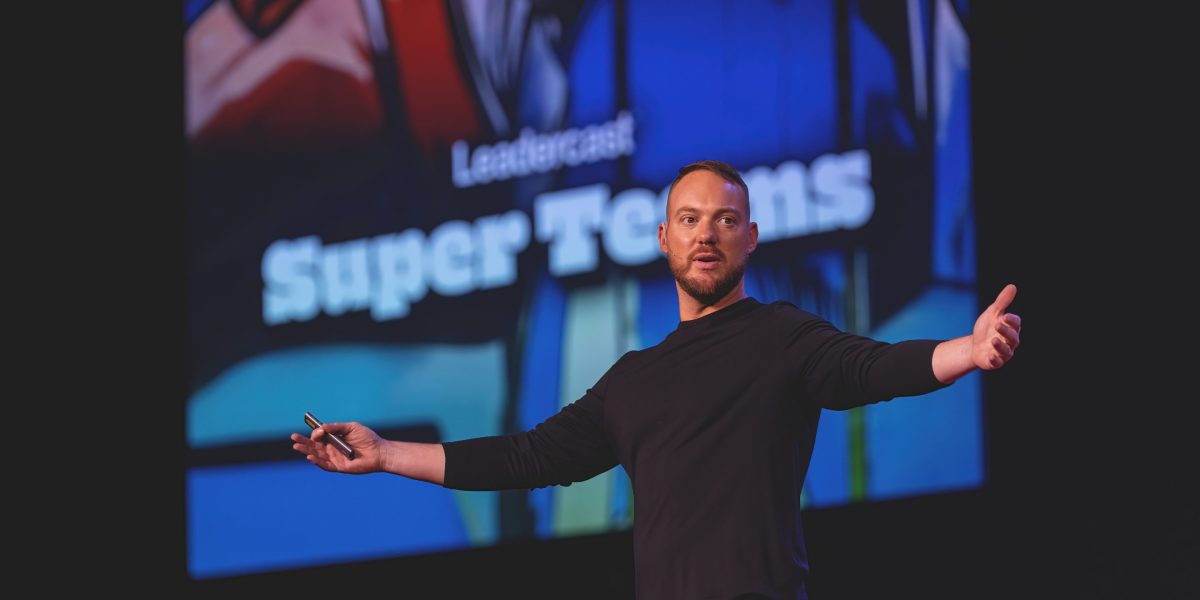
Ryan Hawk, a leadership interviewer with over 700 conversations under his belt, warns that leaders who outsource their thinking to AI tools are losing their best employees first. While AI can generate polished answers instantly, it cannot replace the human skill of translating understanding into meaning—the foundation of trust and inspiration. When employees detect that a leader's speeches and emails are AI-generated, they lose respect and disengage, because they want to work for leaders who have genuinely earned their knowledge through effort and experience.
Summaries like this, in your inbox every morning.
Sign up free →What happened
Ryan Hawk, who has interviewed over 700 leaders on his podcast The Learning Leader Show, has observed that some leaders are using AI tools like Claude, Gemini, and ChatGPT to write speeches and company emails, but their employees immediately recognize the inauthenticity and disengage.
Why it matters
Credible leadership depends on demonstrating genuine understanding—what Hawk calls "Planck knowledge" versus "chauffeur knowledge." When leaders outsource their thinking, they lose the ability to authentically convey meaning and inspire trust, which are fundamentally human skills that build motivation and shared vision. Employees, especially high performers, notice the difference and lose confidence in both the leader and the company's direction.
What to watch
Hawk argues that the smartest and most perceptive employees will be the first to leave when leaders phone it in. The core risk is that leaders who avoid the friction and effort of deep thinking will eventually lose the authority to lead, because they will have no genuine understanding of what they're doing or where they're going.
Ryan Hawk, host of The Learning Leader Show, has conducted over 700 interviews with leaders and high performers over the past 12 years. He has observed a consistent failure pattern: leaders who outsource their thinking to AI tools like Claude, Gemini, and ChatGPT lose credibility with their teams, and their best people are the first to notice and leave.
Hawk begins every coaching engagement by asking leaders about their writing practice. He explains that writing forces messy thoughts out of your head and onto the page, creating clarity. As leaders face overwhelming complexity, they don't know what they think until they can explain it in simple terms. While AI can provide instantaneous answers, it cannot replace the human skill of translating data into meaning—the foundation of building trust and motivation among employees, investors, and the public.
Hawk illustrates the problem with a story attributed to Charlie Munger about Max Planck, the physicist. Planck grew bored of delivering the same lecture on quantum mechanics repeatedly, so he handed the job to his chauffeur, who had memorized it. When a difficult physics question came up during the Q&A, the chauffeur revealed his lack of understanding by saying, "I'm going to ask my chauffeur to reply." This parable captures the difference between repeating words and understanding something deeply enough to answer follow-up questions and defend reasoning. Munger distinguished between "Planck knowledge"—possessed by people who have truly paid the dues and have the aptitude—and "chauffeur knowledge."
Hawk gives a contemporary example: a CEO he knows began using AI to write his speeches and company-wide emails. His employees could tell immediately. The words were polished but didn't sound like him. Employees began deleting his emails without reading them, stopped paying attention during virtual townhalls or multitasked, and his leaders lost respect for him because he had outsourced one of the most important parts of the job. Worse, they lost confidence in the company's future. If the CEO wasn't willing to think hard about where the company was going, why should anyone else?
Hawk argues that authentic leadership comes from earned authority. When leaders speak meaningfully about overcoming challenges, others are inspired to match their efforts. He contrasts this with a culture of shortcuts, citing author David Sedaris, who deliberately chooses to go to the post office rather than use hotel concierge services because the experience—whether remarkable or merely observational—teaches him something. By outsourcing thinking to AI, leaders remove friction, and growth happens because of friction. People are messy, and leaders cannot get better at dealing with that messiness if they remove the mess from their own lives.
Hawk notes that people increasingly value human connection over artificial polish. Concert ticket prices have risen 4 times faster than inflation over the past three decades. Since the 1994 World Cup, U.S. ticket prices have jumped 1,000%, while household incomes grew only 32%. This reflects a hunger for authentic in-person experience. When everyone has chauffeur knowledge, people will follow leaders who actually did the work to understand.
The core warning is stark: outsource your thinking long enough, and you will inevitably lose genuine understanding of what you're doing, where you're going, or how you're going to get there. Like Planck's chauffeur, AI will happily tell you what to think, do, or say. But phoning it in will never inspire anyone to build on what you've accomplished, a core function of leadership. Your team will spot the chauffeur at the podium, and that will erode trust faster than any genuine error in judgment. Your smartest and most perceptive employees will be the first to run for the door.
Hawk's argument rests on a distinction between access to information and understanding. He notes that answers have always been available—through books, essays, and podcasts—but employees have never wanted leaders who merely distribute answers. Instead, they seek leaders who have faced the same challenges and can speak to them honestly. The risk he identifies is that AI removes the friction required for growth: by outsourcing thinking, leaders eliminate the messy, experiential learning that builds both competence and credibility.
The article frames this as a signaling problem. When a CEO outsources writing, employees interpret it as a signal that the leader is unwilling to think hard about the company's direction, which undermines confidence in the company itself. Hawk contrasts this with the observation that people are increasingly hungry for authentic human connection—concert ticket prices have risen 4 times faster than inflation over the past three decades, and U.S. ticket prices have jumped 1,000% since the 1994 World Cup while household incomes grew only 32%. This suggests that in an era of abundant artificial polish, genuine human effort and understanding command a premium.
AI-summarized, only the topics you pick — one digest a day via Email, Slack, or Discord.
Free · takes 30 seconds · unsubscribe anytime
No discussion yet for this article
Get curated AI news from 200+ sources delivered daily to your inbox. Free to use.
Get Started FreeFree · takes 30 seconds · unsubscribe anytime
1 minute a day. The AI essentials.
200+ sources · Email / LINE / Slack