What happened
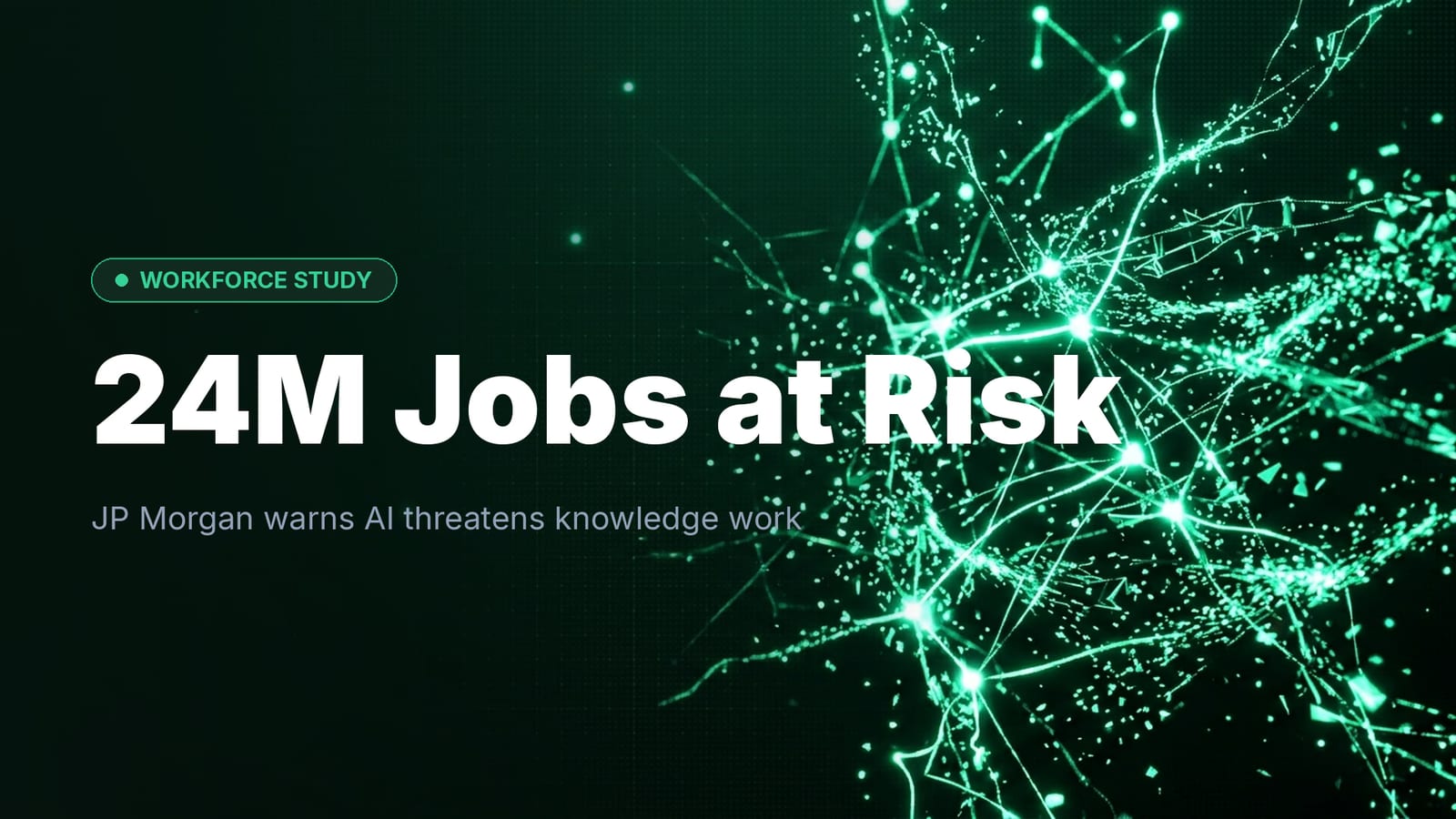
JPMorgan research released November 27, 2026 projects 24 million knowledge-worker positions globally face AI-related displacement within five years — about 8% of such roles surveyed across 15 major economies.
Why it matters
The finding targets white-collar roles in finance, legal, consulting and administrative functions, suggesting professionals long considered insulated from automation now face tools capable of replicating core parts of their expertise.
WHO IT HITSMid-career professionals in analytical, document-heavy roles — financial analysts, paralegals, junior consultants and administrative coordinators — face the most direct pressure to reskill, according to the analysis.
Summaries like this, every morning.
The JP Morgan study lands as enterprises accelerate AI adoption following major model releases throughout 2026. While the headline figure of 24 million positions at risk dominates attention, the research also sketches a more nuanced picture: simultaneous job creation in AI-adjacent technical fields could offset some displacement, yielding a net loss scenario depending on how retraining programs perform. The analysis examined employment patterns across 15 major economies and found that developed markets may see faster adoption due to higher labor costs and existing digital infrastructure, while emerging markets could face delayed but more abrupt transitions as AI tools become cost-competitive with local wages.
Beyond the raw numbers, the research carries clear implications for corporate strategy and policy. JP Morgan recommends phased automation paired with comprehensive retraining rather than abrupt workforce reductions, and points to policy levers such as expanded technical education and wage insurance. The five-year timeline is presented as a narrow window for coordinated response. How much displacement actually materializes will depend heavily on policy choices, corporate strategies, and the pace of human-AI collaboration model development, the study suggests.
Pick your industry and the AI tools you use, and get news related to your work every day.
Free · 30 seconds with Google · unsubscribe anytimeWhat is AIToday? →
Ask AI anything about this article. The AI reads this article, earlier AIToday articles, and Wikipedia, and cites its sources. Q&As are published on this page for other readers too.
Michael Burry closed his remaining Nasdaq 100 puts and semiconductor ETF puts, bought Nvidia calls before Mond…

Liam Byrne, chairing the House of Commons Business, Innovation, Science and Trade Committee, sent a November 2…

On the Hard Fork podcast, Terence Tao described "Big Math," where human-AI teams systematically map thousands…
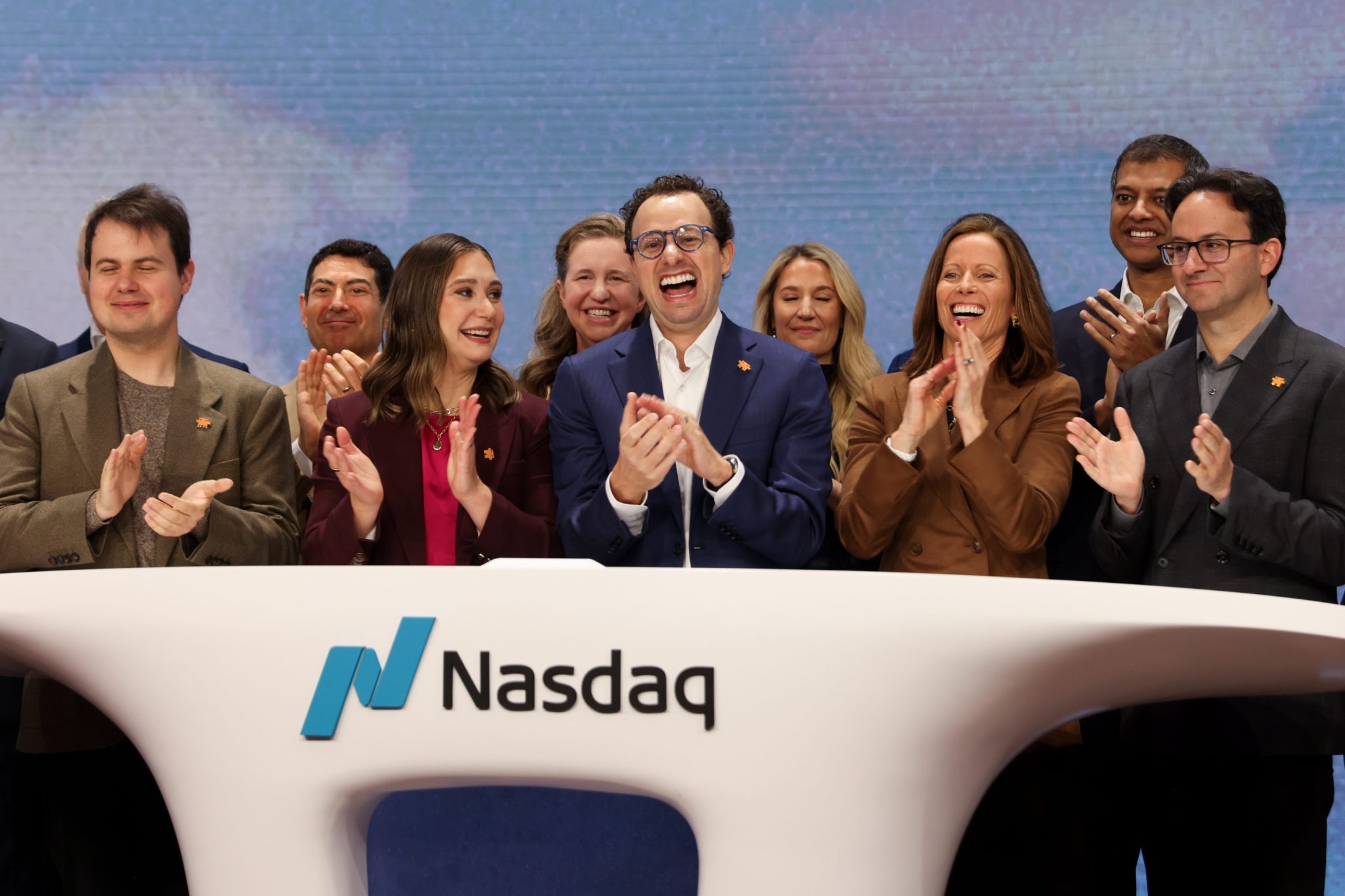
On the day Anthropic priced its IPO shares, the Center for AI Safety and a coalition published the 'MisAnthrop…
LG AI Research is automating data preparation, building expert foundation models, and setting up an autonomous…
SemiAnalysis posted that GPT-6.2 Sol scored 11.5% on its GDPx benchmark at $9.22 per task, within half a point…