
What happened
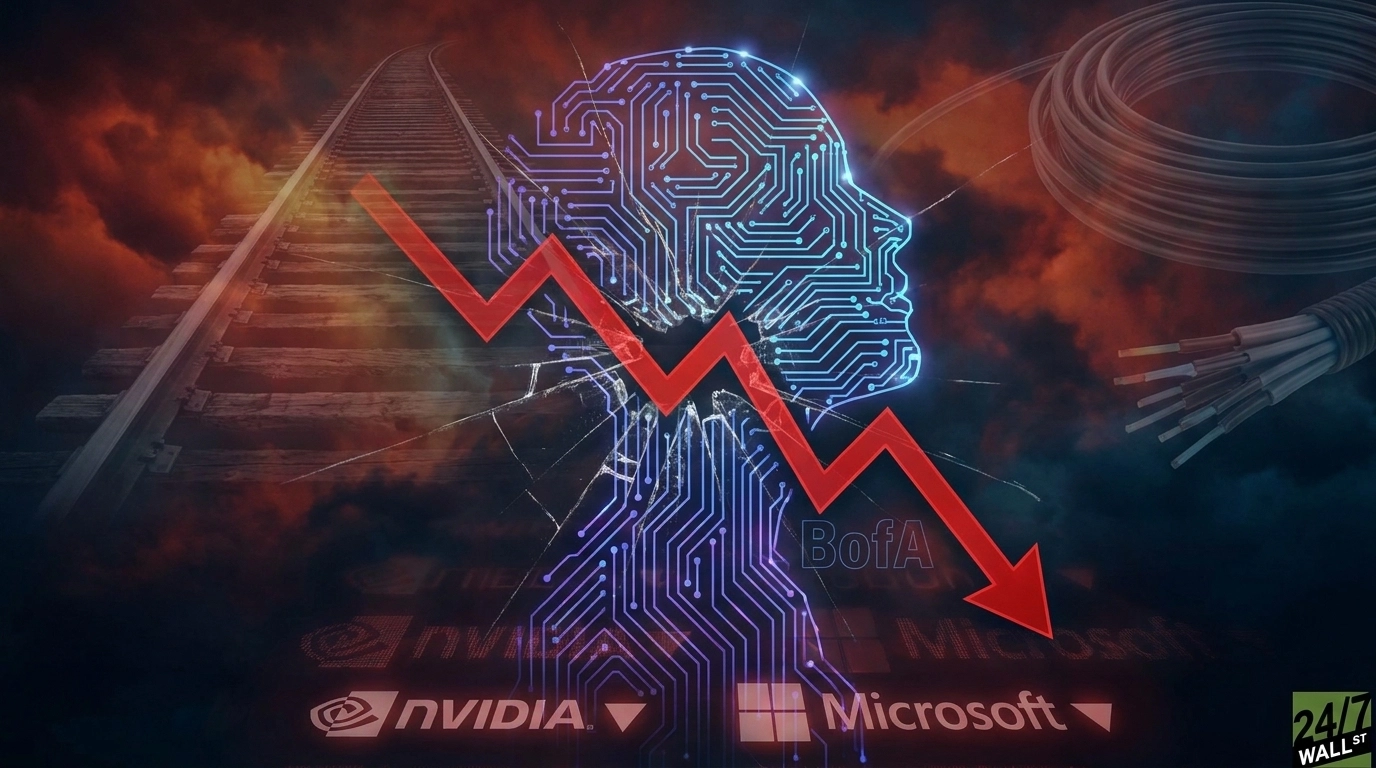
Investment advisers and financial analysts are increasingly warning that an AI investment bubble will eventually burst, with high-profile figures like Jeremy Grantham announcing plans to sell tech shares over concerns that AI deployment has outpaced realistic utility. The warning comes as users report losing confidence in certain AI services and companies discover limits to AI's capabilities in real-world applications.
Why it matters
AI has driven investor focus toward a narrow set of companies—Amazon, Alphabet, Nvidia, Meta, Microsoft, Apple, and Tesla—on major indices like the S&P 500 and Nasdaq. If confidence erodes, the concentrated bets on these stocks could unwind sharply. For businesses, the concern is concrete: AI works well in stable, predictable tasks, but manufacturing and other sectors face challenges—late supplier deliveries, machine failures, fluctuating demand, regulatory constraints—that existing AI cannot yet address, suggesting overinvestment relative to near-term payoff.
What to watch
The disconnect between AI's perceived and actual capabilities is widening. Companies have invested heavily in integrating AI into operations, but as the technology encounters real operational complexity, the value proposition may shift from a revolutionary transformation to a narrower utility—much like electricity or railroads, where profits accrue primarily to service builders rather than the infrastructure itself.
Summaries like this, in your inbox every morning.
Over the past five years, AI has shifted from a science-fiction concept to an embedded part of daily life, integrated into search engines, phone applications, and business operations. This rapid adoption has fueled investor enthusiasm, with billions flowing into a small set of tech giants. However, the article outlines a critical inflection point: as companies deploy AI more widely, the gap between advertised capabilities and actual performance is becoming visible to both users and operators.
The bubble risk centers on what Jeremy Grantham calls the "utility fallacy"—a pattern observed with railways and the internet, where overinvestment follows an initial wave of innovation, but profits ultimately concentrate in the companies that build services around the infrastructure, not the infrastructure providers themselves. The article suggests AI is following this same trajectory: consumers and businesses have been impressed by AI's apparent intelligence, but practical deployment reveals significant limits. Users are losing confidence as AI's limitations surface; manufacturing firms experimenting with AI automation discover that the technology cannot handle the real variability and complexity of production environments—supplier delays, equipment failures, demand swings, and regulatory rules—all of which fall outside the stable, repeatable scenarios where AI currently performs reliably. This mismatch between investment appetite and operational reality is what prompts analysts to forecast a correction.
Pick your industry and the AI tools you use, and get news related to your work every day.
Free · 30 seconds with Google · unsubscribe anytimeWhat is AIToday? →
Ask AI anything about this article. The AI reads this article, earlier AIToday articles, and Wikipedia, and cites its sources. Q&As are published on this page for other readers too.
Bank of America strategist Sebastian Raedler said 12-month forward hyperscaler capex expectations rose from $3…
Danaher announced a collaboration with NVIDIA combining its instruments, automation and workflow software with…

CoreWeave is funding a large AI cloud buildout with heavy borrowing — a US$50b debt load, distressed bonds and…

Cisco Systems heads a sample of three AI networking and server hardware stocks, with its Computer Networks seg…

TSMC boosted its forecast again and said AI chip demand remains far above what it can supply
Lisa Su helped grow AMD's revenue by pivoting toward artificial intelligence, and how many AMD shares she owns…