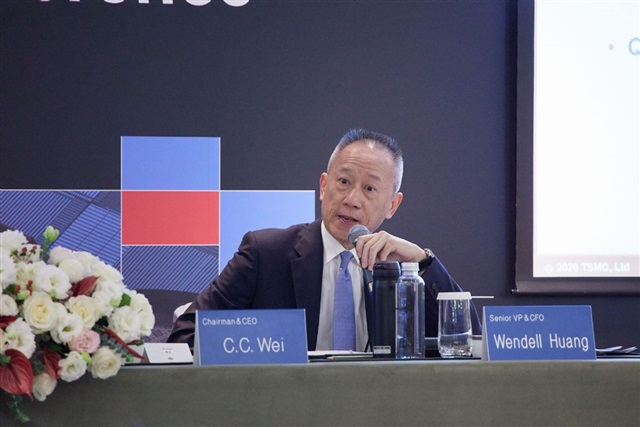
TSMC's chief financial officer has declared that the company sees AI chip demand as structurally strong over the coming years, motivating the company to deepen its investment in Arizona manufacturing. Following a previously announced additional US$100 billion(約16兆円) commitment to the site, TSMC has now raised that capex figure further, reflecting confidence that AI-driven demand will sustain.
Summaries like this, in your inbox every morning.
Sign up free →What happened
TSMC's CFO Wendell Huang stated the company expects AI chip demand to remain strong for years, leading TSMC to continue expanding its Arizona investment. The chipmaker has raised its capex commitment there following an earlier announcement of an additional US$100 billion(約16兆円) investment.
Why it matters
Strong AI demand is reshaping TSMC's capital allocation strategy. By committing to long-term Arizona expansion, TSMC is positioning itself to meet sustained orders from AI customers and reduce concentration risk outside Taiwan—significant for global chip supply chains and for businesses dependent on semiconductor availability.
What to watch
The scale and timeline of TSMC's expanded Arizona capex. TSMC has now increased its US$100 billion(約16兆円) Arizona commitment, signaling confidence in multi-year AI growth, though the exact new capex figure and completion dates remain to be detailed.
TSMC Chief Financial Officer Wendell Huang has communicated the company's expectation that AI chip demand will remain strong for years to come, anchoring TSMC's strategy to expand its manufacturing footprint in Arizona. Huang's statement reflects the company's confidence that AI is not a cyclical demand surge but a structural shift in semiconductor consumption patterns. In support of this outlook, TSMC is committing additional capital to its Arizona operations. Previously, the company had announced an additional US$100 billion(約16兆円) investment earmarked for Arizona. Building on that commitment, TSMC has now raised its capex allocation for the Arizona site, signaling that management believes the earlier US$100 billion(約16兆円) figure may be insufficient to capture the full opportunity presented by sustained AI growth. The decision to expand Arizona production capacity—despite the higher cost of US manufacturing compared to Taiwan—reflects both TSMC's confidence in long-term AI demand and the strategic value of geographic diversification in semiconductor supply chains. For customers and industry observers, this capex increase underscores TSMC's bet that AI-driven chip orders will persist well into the future, supporting capacity additions that would otherwise be difficult to justify.
TSMC's decision to deepen its Arizona investment reflects a shift in how the world's largest chipmaker views the longevity of AI demand. CFO Wendell Huang's statement that the company expects AI chip demand to remain strong for years—rather than treating it as a temporary spike—signals that TSMC leadership sees structural, sustained growth in this market segment. This outlook justifies the company's willingness to commit additional capital to US manufacturing, a step that carries higher costs than production in Taiwan but offers geopolitical and supply-chain diversification benefits. The move follows TSMC's earlier announcement of an additional US$100 billion(約16兆円) Arizona investment, and the decision to raise capex further suggests confidence that the scale of that commitment may prove insufficient to meet anticipated demand. For TSMC's customers—chiefly hyperscalers (large cloud providers) and AI chip designers—this expansion signals manufacturing capacity availability over a multi-year horizon.
AI-summarized, only the topics you pick — one digest a day via Email, Slack, or Discord.
Free · takes 30 seconds · unsubscribe anytime
No comments yet. Be the first to share your thoughts!
Log in to join the discussion



Get curated AI news from 200+ sources delivered daily to your inbox. Free to use.
Get Started FreeFree · takes 30 seconds · unsubscribe anytime
1 minute a day. The AI essentials.
200+ sources · Email / LINE / Slack
