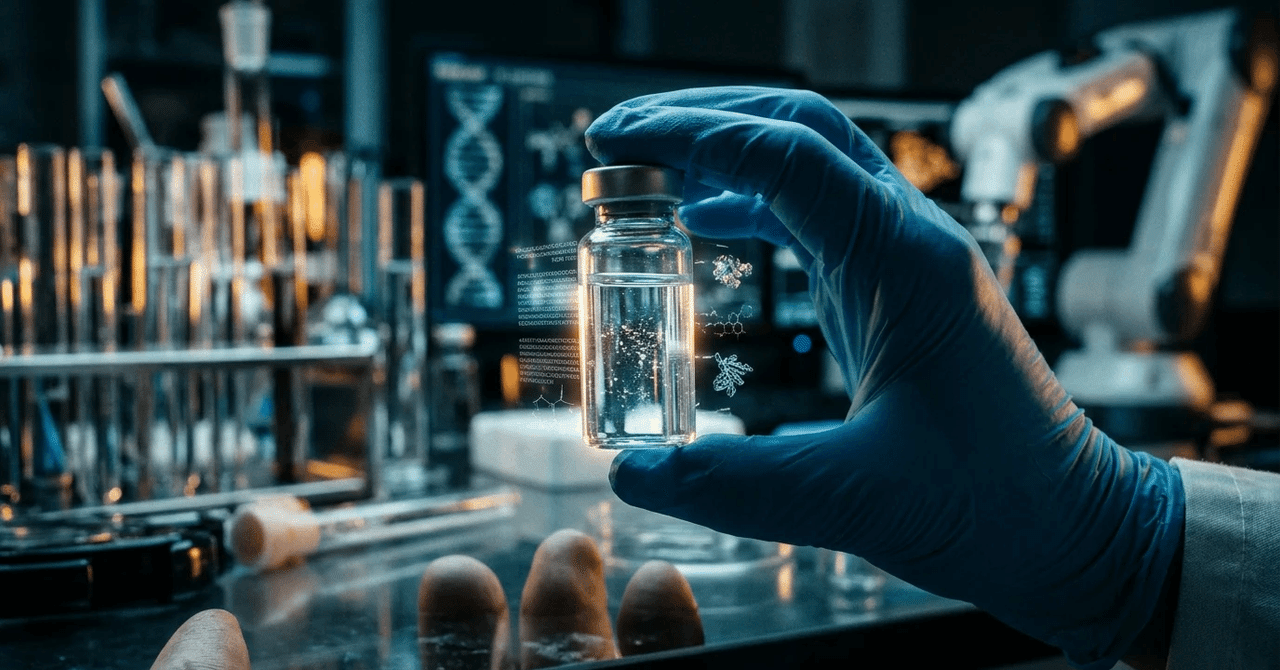
What happened
OpenAI said GPT-6.2, working with partner Onava, designed 322 protein candidates, of which 35 bound the target in lab tests — a 10.9 percent hit rate, versus under 0.1 percent typical in conventional screening.
Why it matters
The result suggests a general-purpose model can take on part of the early design work that has been the domain of specialized biology AIs, which OpenAI itself calls a proof of concept, not a replacement for those tools.
WHO IT HITSAI drug-discovery startups that sold proprietary design algorithms may find that scarce advantage eroding, while pharmaceutical companies with large in-house wet-lab data — such as Chugai and Astellas — could gain leverage.
Summaries like this, every morning.
The news lands at a moment when general-purpose language models are being tested well beyond text. OpenAI's GPT-6.2 is not a biology-specific machine; it was trained on papers, textbooks, math, physics and code. In the experiment, it reasoned step by step about how to fit a small protein into a target's groove, then wrote Python code to compute 3D atomic coordinates and build the backbone. That approach differs from specialized tools like AlphaFold or RFdiffusion, which are trained on protein data and act more like precision sculptors.
The preprint OpenAI released is careful about what the result means. OpenAI itself says the work is a proof of concept and does not show proteins can be designed end-to-end without specialized tools. In the actual pipeline, GPT-6.2 drew the skeleton, SolubleMPNN assigned sequences, and Boltz-2, OpenDDE and ESMFold2 vetted the 322 candidates before synthesis. That division of labor — general AI for design and reasoning, specialized AI for validation — is the current reality, not a wholesale replacement.
For the drug industry, the more consequential shift may be economic. If natural-language prompting can produce high-quality molecular designs, the proprietary algorithms that AI drug-discovery startups have sold as their edge become less scarce. What regains value is physical execution: clean experimental data and the craft of turning a designed molecule into a stable drug. That could favor established pharmaceutical companies with deep wet-lab resources, including Japan's Chugai and Astellas, which have already reported AI-driven results in their own pipelines.
Pick your industry and the AI tools you use, and get news related to your work every day.
Free · 30 seconds with Google · unsubscribe anytimeWhat is AIToday? →
Ask AI anything about this article. The AI reads this article, earlier AIToday articles, and Wikipedia, and cites its sources. Q&As are published on this page for other readers too.
The Digital Agency said a public call for Japanese-made large language models for ガバメントAI 源内 in 令和9年度(2027年度)…

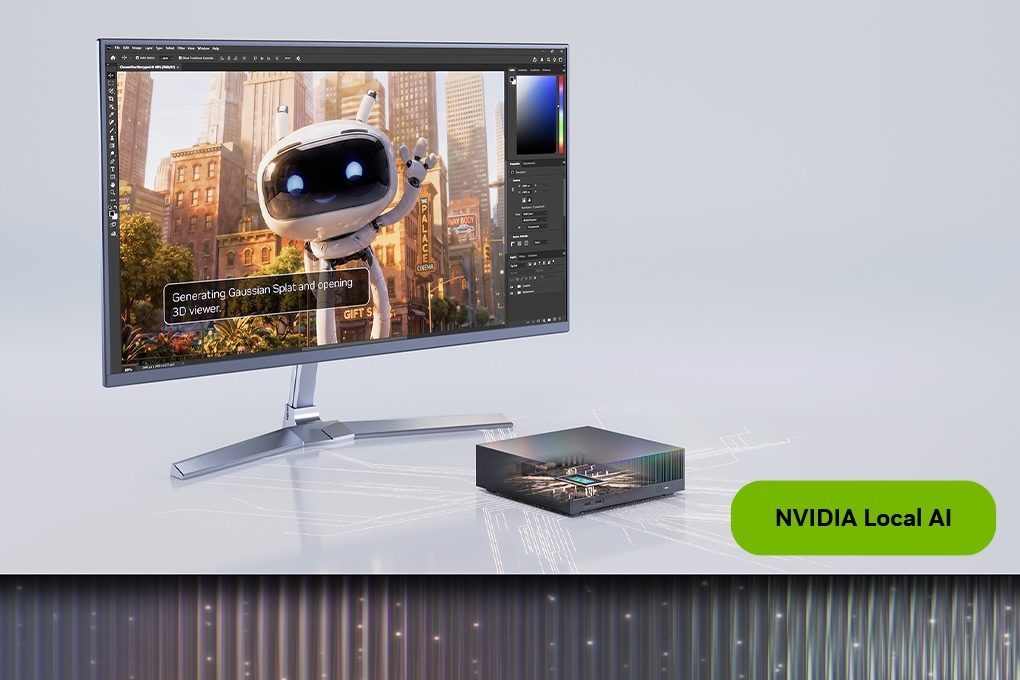
NVIDIA said on November 27 that its RTX Spark compact desktop is on sale from ASUS, Dell and MSI, with a 20-co…
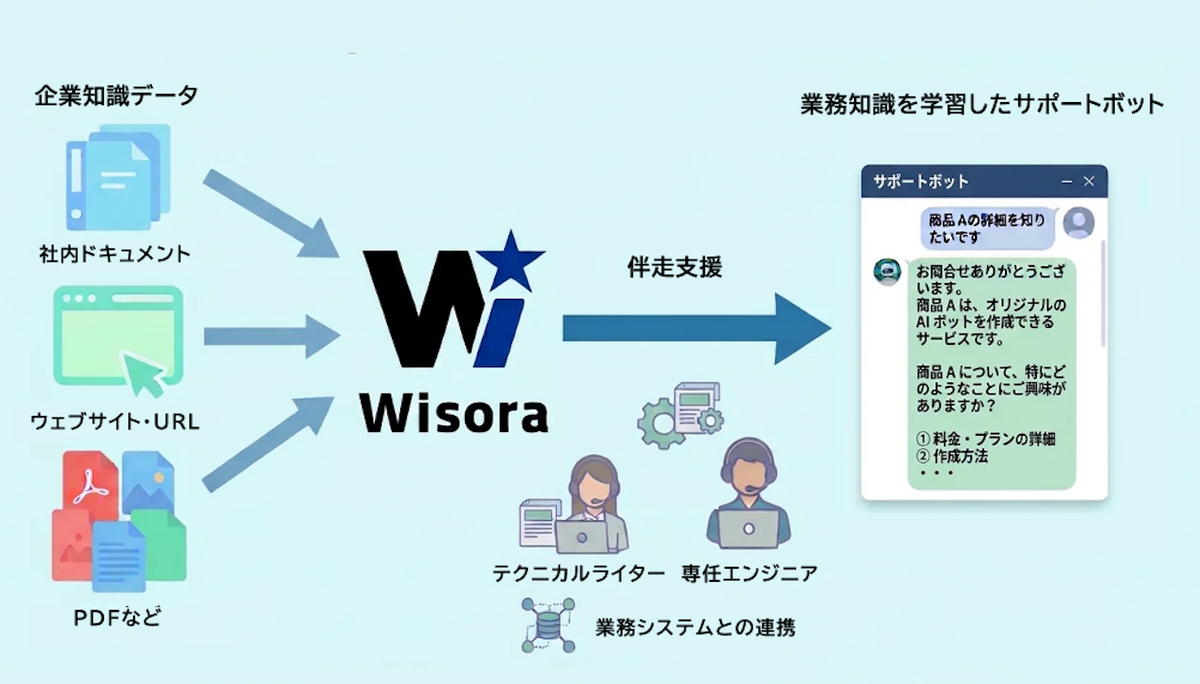
Soracom said on November 27 that Wisora Enterprise now standardly includes technical writers who organize manu…
RayNeo will run a Black Friday sale from November 27 to December 7, 2026, on Amazon.co.jp and its Japan site…
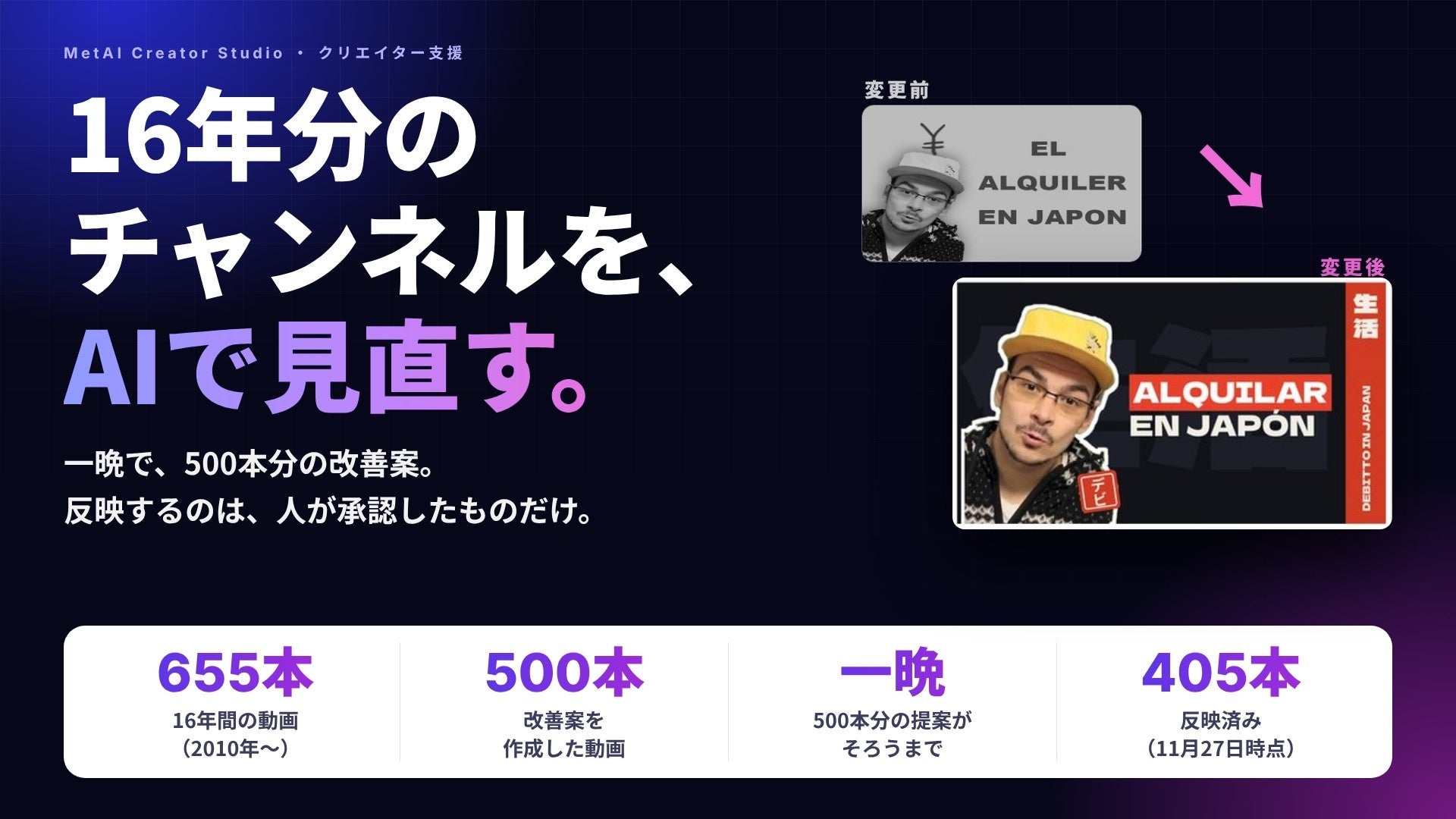
MetAI launched MetAI Creator Studio, which uses AI to propose new titles, descriptions, chapters, thumbnails a…
The Digital Agency is soliciting domestic LLMs — including small and domain-specific models — to be trialled o…

