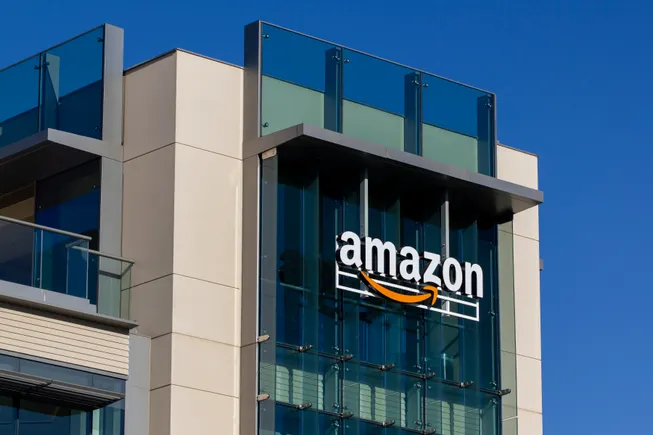
Amazon's 2025 carbon emissions jumped 16% as the company expanded AI data center capacity faster than any competitor, pushing electricity consumption sharply higher. Though emissions rose across all measurement categories, the company's carbon intensity—emissions per dollar of revenue—stayed 38% below 2019 levels thanks to 156% revenue growth since then. The company aims for net-zero by 2040 and remains committed to multiple sustainability targets, though it acknowledged the challenge of balancing AI infrastructure growth with environmental goals.
Summaries like this, in your inbox every morning.
Sign up free →What happened
Amazon's absolute carbon emissions rose 16% in 2025, with scope 2 emissions (from purchased electricity) jumping 34% and scope 3 emissions rising 20%, according to its sustainability report released July 1. The company added more data center capacity globally in 2025 than any other company, including over 1.2 gigawatts in the final quarter.
Why it matters
The spike reflects the energy demands of AI infrastructure buildout. Amazon's Senior Lead for Sustainability Devon Scott described the report as reflecting "the momentum and complexity of this moment in which AI is unlocking solutions at an unprecedented scale while also creating new demands for energy, water, and infrastructure." Despite the increase, Amazon's carbon intensity remains 38% below its 2019 baseline, even as revenue has grown 156% since 2019.
What to watch
Amazon has committed to net-zero global greenhouse emissions by 2040 and multiple 2030 goals, including reaching at least 100,000 electric vehicle delivery vans and replenishing more water than its data centers consume (the company reported being 75% of the way to that water goal). The company also reduced carbon emissions per unit shipped by 7% in 2025.
Amazon released its 2025 sustainability report on July 1, revealing that absolute carbon emissions rose 16% compared to 2024. The increase was broad-based: scope 1 (direct) emissions climbed 2%, scope 2 (purchased electricity) emissions jumped 34%, and scope 3 (value chain) emissions rose 20%. Scope 1 made up 19% of the company's footprint, scope 2 accounted for 5%, and scope 3 comprised the remaining 76%.
The primary driver was AI-related data center expansion. Amazon added more data center capacity globally in 2025 than any other company, deploying over 1.2 gigawatts in the final quarter alone. The company stated it expects "AI and cloud services to continue growing," and identified electricity consumption in data centers—alongside electrification of fleets and buildings—as the main reason scope 2 emissions jumped 34%. Scope 3 emissions, which include data center construction materials and third-party transportation fuel consumption, rose 20% partly because Amazon engages suppliers on emissions reduction targets and is scaling low-carbon materials and fuels.
Despite the absolute emissions increase, Amazon maintained a favorable carbon intensity metric. Though carbon intensity rose 3% in 2025, it remained 38% below the company's 2019 baseline, driven by 156% revenue growth since 2019 (including 12% growth in 2025). Devon Scott, Senior Lead for Sustainability, said the report "reflects the momentum and complexity of this moment in which AI is unlocking solutions at an unprecedented scale while also creating new demands for energy, water, and infrastructure." Amazon reiterated it remains "steadfast in its commitment to sustainability" and acknowledged that "the path to being a more sustainable company is not a straight line."
On other fronts, Amazon reported progress on mid-term goals: it met its 2025 renewable energy targets to match energy use of Echo, FireTV, and Ring devices globally, and matched all global energy consumption with renewable energy. The company reduced carbon emissions per unit shipped by 7% in 2025 and was 75% of the way to its 2030 goal of replenishing more water than its data centers consume. Amazon also met 33 of 35 materials and agricultural sourcing goals for 2025, though it reported sourcing only 94% of palm oil and derivatives from certified sustainable sources in North American private brands (100% in Europe), and reached 17% recycled polyester in apparel, up from 15% in 2024. The company aims for net-zero global emissions by 2040.
Amazon's 2025 emissions spike reflects a broader tension in the tech industry between AI infrastructure scaling and climate commitments. Google and Microsoft both reported similar double-digit emissions increases in 2025, all tied to data center expansion for AI workloads. The timing of these three reports—released within days of one another—underscores how central the energy question has become to AI deployment at scale.
Yet Amazon's case shows that absolute emissions growth does not automatically signal backward progress on climate. Despite a 16% rise in total emissions, the company's carbon intensity (emissions per dollar of revenue) ticked up only 3% and remains well below 2019 levels. This gap exists because revenue has grown 156% since 2019—meaning Amazon has decoupled emissions growth from business growth, even as AI infrastructure demands surge. The company's sustainability lead framed this as "momentum and complexity," acknowledging both the problem-solving potential of AI and the energy burden it creates.
AI-summarized, only the topics you pick — one digest a day via Email, Slack, or Discord.
Free · takes 30 seconds · unsubscribe anytime
No comments yet. Be the first to share your thoughts!
Log in to join the discussion

Get curated AI news from 200+ sources delivered daily to your inbox. Free to use.
Get Started FreeFree · takes 30 seconds · unsubscribe anytime
1 minute a day. The AI essentials.
200+ sources · Email / LINE / Slack
