
Nishio City is training its staff to use generative AI through small-group dialogue sessions.
The format helps employees apply AI to their real jobs.
The city expects AI to become a standard work tool in 3–5 years.
What happened
Nishio City in Aichi Prefecture is running a small-group, dialogue-based generative AI literacy training program, with each session limited to 2–5 participants and about 100 sessions planned per year.
Why it matters
The city found that conventional e-learning and lecture-style training did not get staff to actually use AI in their daily work, so the new format pairs each participant with a dedicated supervisor to help them apply AI to their specific duties. The program is led by the city's DX promotion division, which sees AI as essential for maintaining public services amid a shrinking workforce.
What to watch
Participants have reported being able to think in terms of their own tasks and to use AI for creating meeting minutes, drafting documents, and generating ideas. The city aims for AI to become a normal tool for all staff, not just a special technology, within the next 3 to 5 years.
Ask the AI about this article →
Nishio City's initiative stands out because it moves beyond one-off lectures. By limiting sessions to 2–5 people and pairing each staff member with a dedicated supervisor, the city addresses a common problem: employees may understand AI in theory but cannot integrate it into their daily routines. The program's structure, which includes individual consultations and a portal site, reflects a deliberate effort to make AI usage practical and sustainable.
The city's motivation is tied to a real demographic pressure. With fewer workers, the city sees AI as a way to maintain service quality without overburdening staff. The training is also designed to avoid adding extra work, as sessions are held after 4 p.m., when administrative tasks slow down.
Looking ahead, the city wants AI to become a regular tool across all departments within 3 to 5 years. Early feedback from participants suggests the approach is working: they report being able to apply AI to their specific tasks, such as creating meeting minutes and drafting documents. Whether this success scales beyond the initial sessions will depend on how well the peer-learning model holds up as more officers join.
For example, today's edition would include:
AI-summarized, only the topics you pick — one digest a day via Email, Slack, or Discord.
Free · takes 30 seconds · unsubscribe anytimeWhat is AIToday? →
Ask AI anything about this article. Q&As are published on this page for other readers too.
Israeli startup DataAgent Ltd

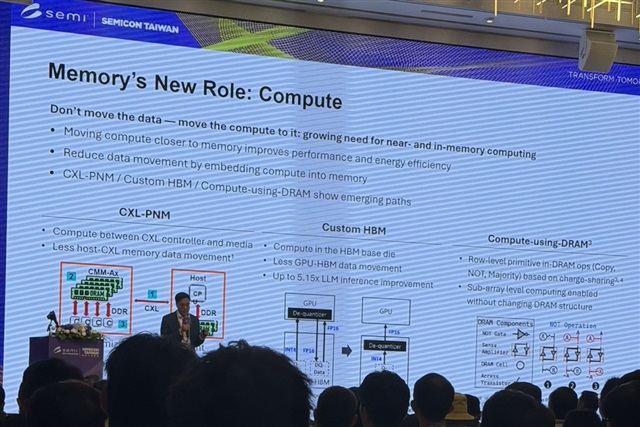
SK Hynix presented a custom HBM concept at SEMICON Taiwan 2026, where compute functions are placed in the base…
Taoyuan is positioning itself as a northern hub for AI data centers (AIDC), citing the Tatan area and an LNG c…
The U.S. Department of Defense announced on August 31 that it has deployed ChatGPT Mil, a customized version o…

Nvidia reported earnings that were both remarkable and boring, reflecting its focus on avoiding a consolidated…

Anthropic has agreed to a $35bn cloud-computing contract with Lambda, a Nvidia-backed cloud provider