What happened
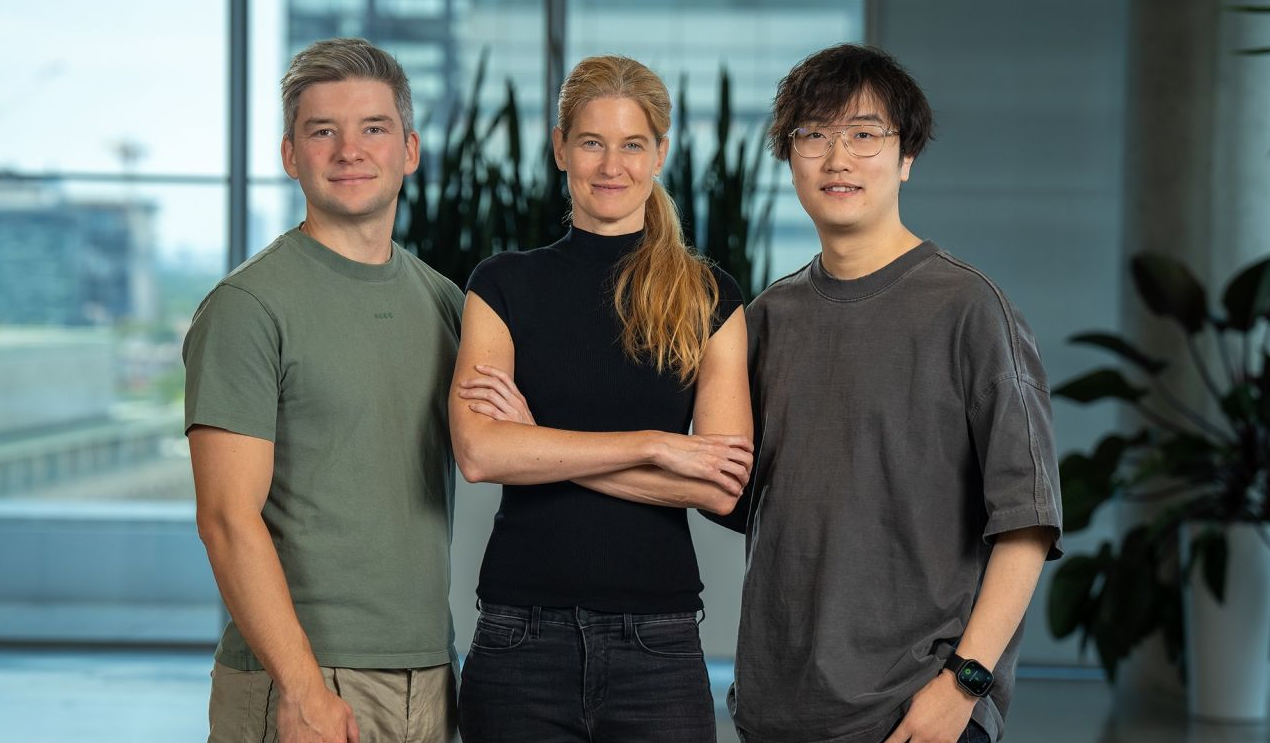
Veeda AI, led by former Nvidia researcher Sanja Fidler, raised $90 million in a seed funding round co-led by Khosla Ventures and Radical Ventures, just three months after the startup was founded. The round is one of the largest seed financings ever raised by a Canadian startup.
Why it matters
Veeda develops multimodal world models—high-fidelity simulated environments that allow robots and AI agents to learn through repeated interactions without the cost, safety risk, and parallelization limits of real-world trial and error. Fidler's LinkedIn post states that robots need simulated reality to scale interactive learning, positioning Veeda's technology as critical infrastructure for physical AI and robotics.
What to watch
The startup's backers are also investing in other world model makers; Khosla led a $750 million round for autonomous trucking company Waabi Innovation Inc. in January, while Radical backed Fei-Fei Li's World Labs Inc., which raised $500 million in January, and Decart.ai Inc., which raised $300 million in May.
Summaries like this, in your inbox every morning.
Veeda AI's $90 million seed round reflects a broader industry shift toward world models as foundational infrastructure for robotics and physical AI. The startup's founding just three months before the round and its ranking as one of the largest seed financings for a Canadian startup signal strong investor confidence in Sanja Fidler's vision and the market opportunity. Fidler's pedigree—establishing and leading Nvidia's Toronto research lab and contributing to Nvidia's first world models for physical AI—provides substantial technical credibility.
The investment also sits within a pattern of major venture backing for world model infrastructure. Both lead investors, Khosla and Radical, are simultaneously backing competing and complementary approaches: Khosla led Waabi's $750 million round for autonomous driving simulation in January, while Radical backed Fei-Fei Li's World Labs (which raised $500 million in January) and Decart.ai ($300 million in May). This clustering of large rounds suggests venture capitalists view simulated environments as a critical enabling layer for multiple robotics and autonomous systems applications, each with distinct requirements but unified by the need for high-fidelity simulation at scale.
Pick your industry and the AI tools you use, and get news related to your work every day.
Free · 30 seconds with Google · unsubscribe anytimeWhat is AIToday? →
Ask AI anything about this article. The AI reads this article, earlier AIToday articles, and Wikipedia, and cites its sources. Q&As are published on this page for other readers too.
Hewlett Packard Enterprise stock is down 5% at $55.87

The Motley Fool argues Amazon is the AI company of the two, since AWS was just 21% of first-half 2026 revenue…

OpenAI is launching the Rosalind Academic Plan, offering eligible research labs at US universities up to 30 fr…

Google Deepmind's Gemini 4 Argon scored 97.5 percent on ARC-AGI-3 at a cost of $4,800, second only to GPT-6 As…

Cammarata reinterprets InceptionV1's cat-car neuron as a V-shape detector, not two unrelated concepts
Microsoft's Surface Laptop Ultra, using Nvidia's RTX Spark platform, starts at $2,599 (up to $5,899)