What happened
OpenAI announced its support for the European Commission's Code of Practice on Transparency of AI-Generated Content, which helps implement the EU AI Act.
Why it matters
The company has worked on provenance standards since 2024, starting with C2PA metadata on DALL-E 3 images, and now adds watermarks and a public verification tool. This support follows its 2025 signing of the EU's General-Purpose AI Code of Practice.
What to watch
The Code's implementation hinges on whether provenance methods stay practical and flexible. OpenAI says it will keep improving verification tools and standards.
Summaries like this, in your inbox every morning.
OpenAI's endorsement of the EU Code follows years of internal work on provenance, aiming to give people context about AI content online. The company joined the C2PA Steering Committee in 2024 and has expanded its approach to include watermarks and a verification tool. The Code is part of broader EU AI regulation, which OpenAI already supported by signing the General-Purpose AI Code in 2025.
The company acknowledges that provenance methods are not foolproof—metadata can be stripped, watermarks can degrade, and labels only work where users see them. Therefore, the Code's success likely depends on whether these techniques remain practical and flexible as they evolve. OpenAI has committed to improving verification tools and cooperating with EU authorities and other stakeholders, suggesting that implementation will be a gradual, collaborative process rather than an immediate change.
Pick your industry and the AI tools you use, and get news related to your work every day.
Free · 30 seconds with Google · unsubscribe anytimeWhat is AIToday? →
Ask AI anything about this article. The AI reads this article, earlier AIToday articles, and Wikipedia, and cites its sources. Q&As are published on this page for other readers too.
Amazon introduced Bee Frontier, a wearable personal AI, for $74.99 in Onyx, Lavender and Sage, and Bee Eclipse…

Wall Street ended down sharply, with worries about the AI trade and high oil prices weighing on the market

Citi has become the latest US bank to restrict AI agents from accessing accounts, per the Financial Times

Dell says its AI Data Platform uses a four-engine architecture and a Unified Semantic Layer to connect siloed…
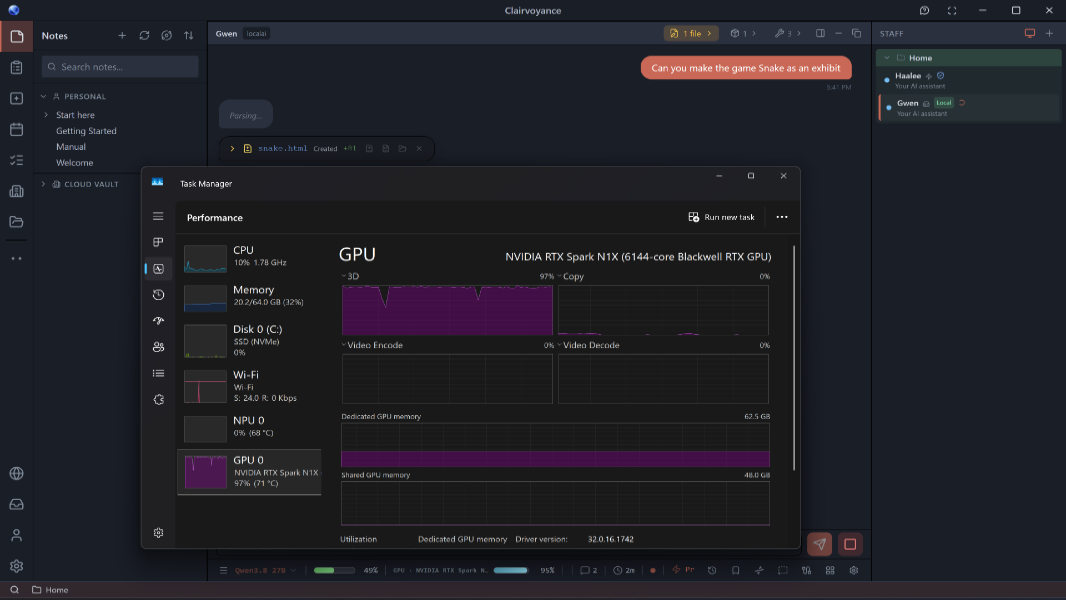
Microsoft and Nvidia are promoting RTX Spark, a new class of Windows PCs for local AI, with a top configuratio…
Microsoft AI CEO Mustafa Suleyman told employees that MAI-Base-2, announced Thursday, is a stronger pre-traine…