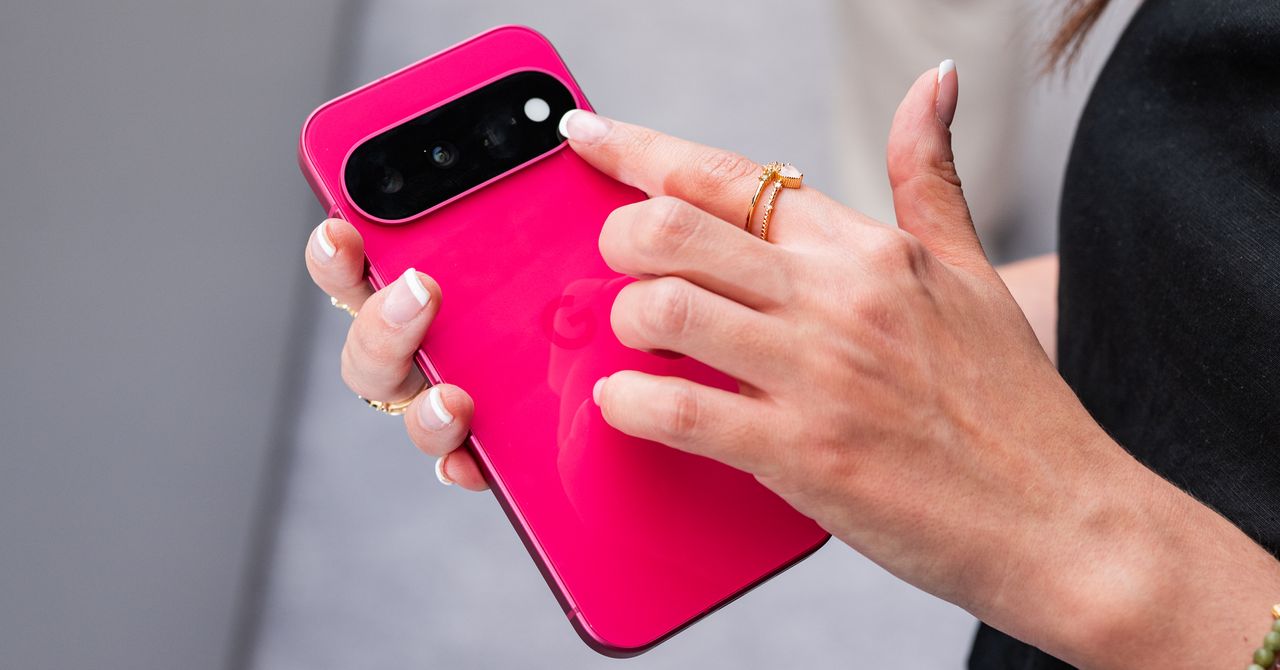
Google announced the Pixel 11 series today with AI-powered camera features designed to make photography easier and more intentional.
Magic Capture uses Gemini AI to automatically extract the best photos from a two-minute video recording so users can stay present at events, while Instant Night Sight on the Pro models is 4.5 times faster than the standard version.
The Pixel 11 Pro can zoom up to 120X—a significant jump from last year's 100X—and new Camera Looks presets let users customize the sensor-level appearance of photos before capture.
What happened
Google announced the Pixel 11 series today with four major camera upgrades: Magic Capture (an AI mode that records a 2-minute video and automatically extracts photos of peak moments), Instant Night Sight (4.5 times faster than standard Night Sight on the Pixel 11 Pro and Pro XL), Camera Looks (customizable sensor-level presets available before capture), and Creator Suite (video tools including a built-in teleprompter that syncs to your speech). The Pixel 11 Pro can now zoom up to 120X, up from 100X on last year's Pixel 10 Pro.
Why it matters
Google's Pixel Camera chief, Isaac Reynolds, argues that year-to-year camera upgrades remain critical because they can help casual photographers develop new interests—for example, the 30X Super Res Zoom on the 2022 Pixel 7 Pro led users to shoot zoom photos dramatically more often, potentially nudging them toward investing in professional camera gear. Magic Capture directly addresses a real friction point: people miss events because they're focused on filming rather than being present.
What to watch
Magic Capture records at 1080p by default, but Pixel 11 Pro owners can use Video Boost to upgrade it to 4K. Instant Night Sight is exclusive to the Pixel 11 Pro and Pro XL. Camera Looks must be selected before you take the photo, not after—Reynolds notes users engage more intentionally when the choice happens upfront. The Pixel 11 and Pixel 11 Pro Fold have upgraded 48-megapixel primary cameras that absorb 56 percent more light; the Pixel 11 Pro's new 48-megapixel telephoto has 30 percent more light sensitivity.
Google's Pixel Camera chief, Isaac Reynolds, introduced four major camera features for the Pixel 11 series, announced today. The centerpiece is Magic Capture, a new mode that sits alongside the Photo/Video tabs in the Pixel camera app. Users select Magic Capture, and the phone records a two-minute video. Rather than holding the phone in front of your face, you hold or prop it up pointing at your subject—a concert, a birthday moment, a child's recital—then set it aside and actually pay attention. Google's Gemini AI analyzes the video, examining more than 500 frames to identify peak moments and automatically extracts full-quality photos, as if you had manually tapped the shutter at those moments. The video itself is restricted to 1080p, but owners of the Pixel 11 Pro can use Video Boost to upgrade it to 4K. At a demo with live dancers, the feature extracted surprisingly well-composed shots, some of which Gemini had lightly cropped based on its judgment of better framing. Reynolds called it reminiscent of Google Clips, a failed 2018 camera, but said Magic Capture feels more intentional and useful.
Instant Night Sight addresses low-light photography. The new Tensor G6 processor on the Pixel 11 Pro and Pro XL enables the feature to operate 4.5 times faster than standard Night Sight, reducing the pronounced shutter delay users expect when capturing multiple frames in dim conditions. Hardware upgrades boost light sensitivity: the Pixel 11 and Pixel 11 Pro Fold received a 48-megapixel primary camera that absorbs 56 percent more light, while the Pixel 11 Pro's new 48-megapixel telephoto gains 30 percent more light sensitivity. Reynolds noted that low light and zoom are features he prioritizes every single year, because user studies with thousands of respondents consistently show people want more capability in both.
Camera Looks represent a shift in philosophy. Google is now offering sensor-level presets—Original, Natural (relaxed details), Shadows (deeper contrast), and Vanilla (warm, golden glow)—similar to Apple's Photographic Styles. Users can swipe to access additional looks like Digi, Black Tie, Minimal, Editorial, Classic, and Velvet, then customize brightness, contrast, and highlights to taste. Crucially, these must be selected before capture, not applied afterward as filters. Reynolds explained that user engagement with the feature differs dramatically when the choice is presented upfront; people think about it differently and enjoy it more than if it were a post-capture filter.
The Creator Suite caters to video creators by adding tools directly to the Pixel camera app's video settings. Users can save videos to project folders, enable an audio visualizer to confirm the microphone is recording, use Google's Speech Enhancement to boost the video subject's voice, and overlay a social media grid to preview framing across platforms. A built-in teleprompter lets users paste text that automatically tracks their speech pace, ensuring the scroll matches their delivery—a feature that requires the selfie camera but particularly benefits the Pixel 11 Pro Fold, which has a large interior screen. Reynolds also highlighted additional improvements: camera launch latency improved 30 percent, power efficiency increased 9 percent, Portrait Video now supports 4K, Pro Stable Video is available for Video Boost on the Pixel 11 Pro to smooth shaky footage, Circle to Search now works in the camera app, and the Pixel 11 Pro and Pro XL can zoom up to 120X with Pro Res Zoom (up from 100X on the Pixel 10 Pro), while the Pixel 11 and Pro Fold are capped at 30X with Super Res Zoom.
Google's camera strategy reflects a deliberate philosophy: computational photography software, paired with hardware improvements and AI, can open new creative possibilities for everyday users. Reynolds notes that even features some dismiss as incremental—like 30X zoom on the Pixel 7 Pro from 2022—drive measurable behavior change; users adopted that zoom far more than expected, suggesting that the right tool can nudge someone from casual interest toward deeper investment in a hobby. This year's upgrades follow that logic: Magic Capture removes the friction of choosing when to record, letting AI handle the timing; Instant Night Sight solves a decades-old smartphone camera problem (the need to hold perfectly still); and Camera Looks shifts toward customization rather than the #nofilter aesthetic that defined early Pixel marketing.
The hardware side is also significant. The Pixel 11 and Pro Fold's primary camera absorbs 56 percent more light; the Pro's telephoto gains 30 percent more light sensitivity. These are not trivial gains for a smartphone sensor. Combined with software improvements (camera launch latency up 30 percent, power efficiency up 9 percent), the upgrades suggest Google is still willing to invest in camera innovation at a time when some in the industry view year-to-year phone improvements as negligible.
AI-summarized, only the topics you pick — one digest a day via Email, Slack, or Discord.
Free · takes 30 seconds · unsubscribe anytime
Ask AI anything about this article. Q&As are published on this page for other readers too.

The AI news that matters, in one minute each morning.
Sign up free
