
What happened
On August 11, IBM announced a multi-year $240 million agreement with Together AI to deploy NVIDIA HGX B300 systems on IBM Cloud using NVIDIA's Spectrum-X Ethernet networking. Days later, on August 13, IBM joined OpenAI's elite partner tier, embedding frontier models like GPT-5.6 and Codex into IBM Consulting Advantage.
Why it matters
IBM is positioning its Consulting division as a key integrator for enterprise AI workflows, leveraging $24.6 billion in annual software recurring revenue. However, IBM's Q2 2026 revenue of $17.2 billion grew modestly and missed Wall Street estimates, prompting a trimmed full-year revenue growth guidance to 4–5%, whereas NVIDIA's Q1 fiscal 2027 revenue surged 85% year-over-year to $81.6 billion—illustrating a widening gap in financial scale and AI infrastructure dominance.
What to watch
IBM's Consulting division (which generated $5.3 billion in Q2 2026 revenue) and Red Hat (which grew 11%) will be key to measuring whether the OpenAI and Together AI partnerships translate into sustained enterprise AI adoption. The deal's success depends on how effectively IBM can differentiate through consulting and integration while relying on third-party silicon.
Summaries like this, in your inbox every morning.
IBM's $240 million investment in NVIDIA infrastructure and its entry into OpenAI's elite partnership tier reflect a deliberate strategy to position Consulting as the integrator layer for enterprise AI—the lucrative middle ground between AI hardware makers like NVIDIA and end-user companies. This makes strategic sense: IBM's software business brings $24.6 billion in annual recurring revenue and its Consulting division generated $5.3 billion in Q2 2026, giving it a revenue cushion and customer relationships to build on. Red Hat's 11% growth in Q2 signals that open-source integration remains a live opportunity.
Yet the financial backdrop is sobering. NVIDIA's $81.6 billion Q1 fiscal 2027 revenue (up 85% year-over-year), driven by $75.2 billion in Data Center revenue alone, dwarfs IBM's entire quarterly result of $17.2 billion and reflects the enormous cash pull from the underlying AI chip buildout. IBM's modest year-over-year growth and missed estimates, coupled with management's downward guidance revision to 4–5% for the full year, signal that the broader enterprise transformation is proceeding slower than hoped. The body notes that Consulting spending remains sensitive to macroeconomic delays and that IBM's reliance on third-party silicon (rather than in-house chips) could constrain its ability to compete in cloud AI offerings—a structural disadvantage against vertically integrated players.
Pick your industry and the AI tools you use, and get news related to your work every day.
Free · 30 seconds with Google · unsubscribe anytimeWhat is AIToday? →
Ask AI anything about this article. The AI reads this article, earlier AIToday articles, and Wikipedia, and cites its sources. Q&As are published on this page for other readers too.
Nvidia was rising early Friday, even as the wider chip sector kept falling, Barron's reported

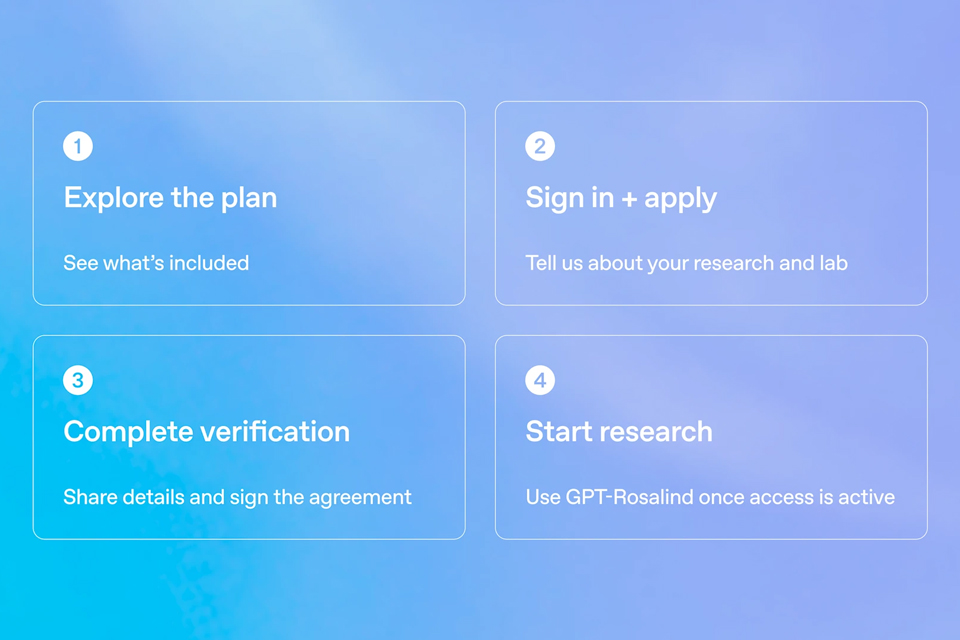
On October 15, OpenAI announced the Rosalind Academic Plan, giving approved US university labs free access to…
Neostellar Capital principal Evan Schlossman said CoreWeave's $103.7 billion in remaining performance obligati…

Supermicro Computer appointed Mark Long as chief financial officer, bringing an experienced technology finance…

Holtek Semiconductor unveiled its 2026 product roadmap on October 15, focusing on four core areas: smart prote…

TSMC reported about NT$763.1b in Q3 net profit and confirmed that demand for advanced processors is running ah…